
24/7 Customer Support

Free returns

Same-day & Next-day Delivery

Quality Guaranteed

Unlock Your Welcome Offers: FREE Delivery | Up to 80% OFF | Free 30-day JoyPlus trial
Download the APP
Rice noodles are a practical cupboard staple for UK home cooks, whether you are preparing Pad Thai, pho, Chow Fun, hot pot or a quick noodle salad. However, packs labelled Asian rice noodles, rice vermicelli or rice sticks can vary considerably in width, ingredients and preparation time.
The wrong type may turn soft in a wok, remain chewy in soup or require more preparation than expected. Use this guide to compare the key specifications before buying and match your choice to the dishes you cook most often.
Thin rice vermicelli may only need a short soak, while wide flat rice noodles can require 20–30 minutes before they are ready for a stir-fry. Some products also need brief boiling after soaking. Ignoring the pack instructions can leave noodles either brittle or overcooked.
“Thai rice noodles” is a broad description. A 3mm rice stick offers a different bite from a 5mm or 10mm noodle. Thin strands suit light soups and salads, whereas wider noodles are more suitable for sauces and robust stir-fries.
Many plain products contain rice and water only, but recipes can include tapioca starch, corn starch or other ingredients. Manufacturing facilities may also handle wheat or soya. If you need gluten-free rice noodles, check the ingredients, allergen statement and packaging rather than relying on the product name alone.
For a simple noodle base, look for an ingredient list such as rice and water. Bamboo Tree Rice Vermicelli, for example, lists rice batter and water, while some noodles include tapioca or corn starch to influence texture.
Plain rice noodles are usually suitable for vegetarian recipes, but instant seasoned products require closer inspection. HAOHUANLUO Luosifen includes several seasoning packets and lists peanuts, soya and sulphites among its allergens. A product can also be rice-based without being suitable for every dietary requirement.
Use width as a practical guide:
Umee Guilin Rice Noodles are described as smooth and springy, with preparation instructions recommending a 20–30-minute soak. By contrast, Itsu Rice Noodles are designed for a quicker four-minute meal format.
A 400g dried pack is useful for family meals or regular cooking, while 150g–180g packs may suit single servings and occasional use. Multipacks can reduce the need to reorder, but only if the noodles match your usual recipes.
Also check whether the noodles need soaking, boiling or both. After opening, store dried noodles in a cool, dry place and transfer them to an airtight container where the packaging recommends it. Always follow the best-before and preparation information printed on the pack.
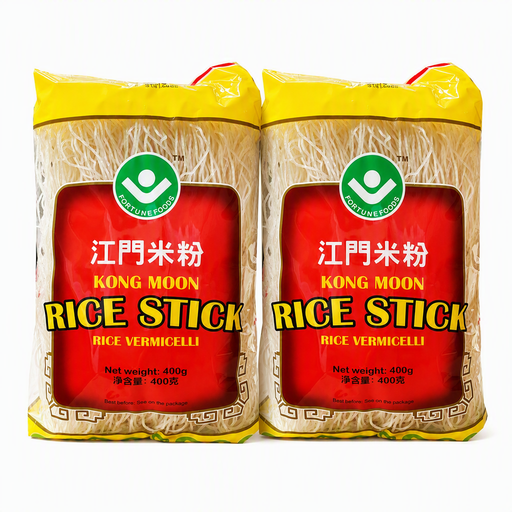
Why This Fits Their Persona: The two-pack gives newer Asian food enthusiasts enough noodles to practise soups, stir-fries and hot pot recipes without choosing several different formats.
The listed instructions specify a 15–20-minute warm-water soak followed by brief cooking, making the preparation process clear.
Rice is listed as the ingredient; the noodles are described for soups, stir-fries, cold dishes and rice noodle bowls.
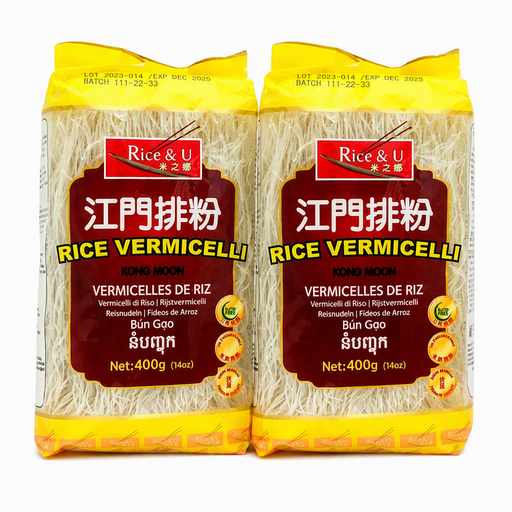
Why This Fits Their Persona: Cooks recreating Chinese dishes can choose a larger multipack of flat Jiangmen-style noodles for Chow Fun, soups and cold noodle salads.
The product is identified as dried flat rice noodles, so shoppers can match the ribbon shape to Chow Fun rather than guessing from a generic noodle label.
Ingredients are rice and water; the 400g ×2 format supports repeated cooking and batch meal preparation.
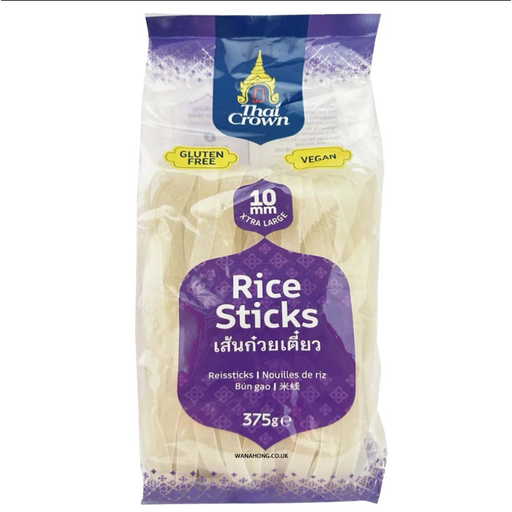
Why This Fits Their Persona: Frequent Thai food cooks wanting wide noodles for Pad See Ew, curries and substantial stir-fries get a clearly defined 10mm format.
The 10mm width is stated clearly, and the instructions specify a 25–30-minute soak before final cooking.
The listed ingredients are rice flour and water; the broad shape is intended to absorb sauces in stir-fries and soups.
We have compiled a complete, real-time list of products that fully satisfy these strict selection criteria and UK safety regulations.
Some plain rice noodles are made from rice and water and may be suitable for a gluten-free diet. However, recipes, shared facilities and seasoning sachets differ. Check the current packaging and allergen information every time, particularly if avoiding gluten for medical reasons.
Preparation varies by thickness. Thin vermicelli may need only a few minutes of soaking and brief boiling, while wider Thai rice sticks can require 25–30 minutes of soaking before being finished in a wok or soup. Follow the specific product instructions.
Keep unused dried noodles in a cool, dry place away from moisture and direct sunlight. Once opened, reseal the pack or transfer the noodles to an airtight container. Check the packaging for any additional storage guidance and avoid using noodles with unusual odours, mould or damaged packaging.