Salt-conscious one-person diners
If you normally eat half a tin, the salt declared for that portion matters alongside the per-100g figure used to compare products.


For a half-can serving from the three 400g tins compared here, Stamford Street Co. has the lowest declared salt: Sainsbury's lists 0.16g per half-can and 0.08g per 100g, while ASDA lists 0.20g per half-can for Just Essentials and 0.22g for standard Ambrosia. Each tin contains two portions, so if avoiding leftovers matters more, consider a smaller portion but check its own salt label rather than assuming it contains less salt.
If you normally eat half a tin, the salt declared for that portion matters alongside the per-100g figure used to compare products.
A smaller ready-to-eat portion may be more practical if you do not want to divide a 400g tin and store the remainder.
If salt is not your only concern, compare sugars, energy and fat for the amount you will eat, and read the milk allergen information.
Sainsbury's and ASDA present the compared 400g tins as two-serving products. Compare salt per 100g for the tins, then use the declaration for the portion you intend to eat.
| Concern | What to check | Who this matters to |
|---|---|---|
| Salt in the portion | Compare salt per 100g, then check the figure for the amount you will eat. A lower figure alone does not establish a reduced-salt claim. | If salt decides my choice, I want a like-for-like tin comparison and a figure for my half-can serving. About 33% of consumers put portion salt first. |
| One-person portioning | Check pack weight, stated servings and the storage instructions for anything left after opening. | I would rather open a small portion than plan what to do with half a tin after one meal. For about 45% of consumers, avoiding leftovers is the primary concern. |
| The rest of the label | Read sugars, energy, fat and the allergen statement on the exact product. | When choosing a dessert, I need its other nutrition figures and milk ingredients to fit my requirements too. About 22% of consumers prioritise that broader label check. |
Having the lowest declared salt among these tins does not, by itself, establish a regulated reduced-salt claim. UK nutrition-claims rules published on legislation.gov.uk require a qualifying comparison and specify a 25% difference for sodium or its equivalent salt value.
Describe what the labels actually show, and check a product's claim and comparator before relying on ‘reduced salt’ wording.
The compared tins list two portions. Eating the whole tin means the half-can nutrition figures no longer describe the amount eaten.
Decide how much you will serve, calculate from the label if necessary, and follow the particular tin's instructions for storing any remainder.
Those descriptions do not state the salt content. Tesco lists reduced-fat and light rice-pudding lines, which need their own label comparison.
Read salt per 100g and per intended portion on the exact pack, whatever its other nutrition claims.
The ASDA Groceries and Sainsbury's listings give different sugars and energy figures for these half-can portions, and the compared tins contain milk.
If those details affect your choice, compare the full nutrition and allergen labels as well as salt.
Its 400g rice pudding tin is listed by Sainsbury's as a two-serving product.
ASDA Groceries lists its 400g rice pudding tin as providing two servings.
ASDA Groceries lists a standard 400g Ambrosia tin; Tesco also lists smaller Ambrosia rice-pudding products.
Tesco Groceries lists Tesco Rice Pudding 400g and Tesco Reduced Fat Rice Pudding 400g.
These Joybuy selections are baby-food rice pudding in small pots or a pouch, not standard tinned rice pudding. Their portion formats may help with leftovers, but their age labelling and intended use matter when comparing them with an ordinary dessert tin.
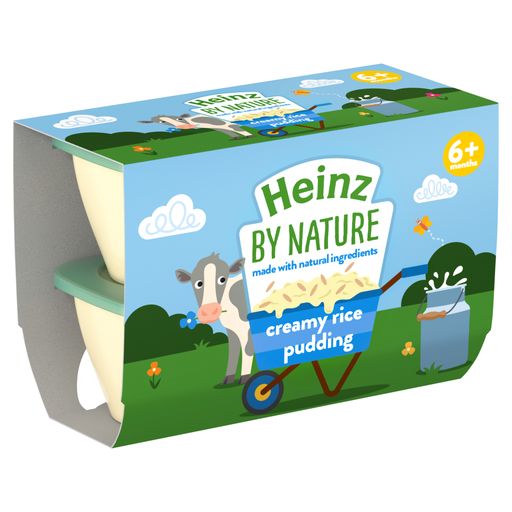 No image available
The 4 x 100g pot format offers individual portions without dividing a 400g tin. This is labelled for babies aged 6+ months rather than presented as a standard tinned dessert; check the current pack's salt declaration if salt is your deciding factor.
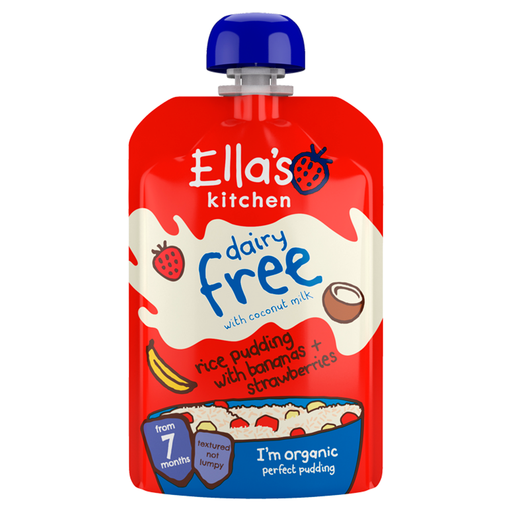 No image available
The 80g pouch is a small individual portion. It is labelled for babies aged 7+ months, not as a tinned dessert; check the current ingredients and salt declaration against your intended use.
Do not treat a lower salt number as proof of a reduced-salt claim. UK nutrition-claims rules published on legislation.gov.uk require a qualifying comparison and specify a 25% difference for sodium or its equivalent salt value. Compare the declared salt figures for these tins without assuming they meet that claim.
Stamford Street Co. Rice Pudding 400g has the lowest declared half-can figure among the three tins compared: Sainsbury's lists 0.16g salt, against ASDA Groceries' listings of 0.20g for Just Essentials and 0.22g for standard Ambrosia. That comparison assumes you eat half the tin.
Follow the instructions on the exact tin. The ASDA Just Essentials and Sainsbury's Stamford Street Co. listings say to transfer the remainder to a non-metallic container, refrigerate it and use it within two days; the standard Ambrosia listing gives a three-day refrigerated use period after removing the remainder from the can.
Yes. The ASDA Groceries and Sainsbury's listings identify milk in the three compared 400g products. For an allergen decision, read the current label on the exact pack rather than relying on another rice-pudding variant.