Single-portion delivery shoppers
If each meal delivery needs one ready-to-eat dessert, a separately sealed pot avoids dividing a larger tin. Check the pack’s storage instructions for the chosen product.


For a ready-to-eat dessert that can be opened one serving at a time, choose a sealed 120g or 150g rice-pudding pot; a multipack provides several separate servings, while a 400g tin needs portioning. Among Ambrosia’s 150g pots, Light is the reduced-sugar and reduced-fat option, whereas the standard pot has higher listed energy per serving. Check the recipient’s dietary requirements and the current pack label before choosing either.
If each meal delivery needs one ready-to-eat dessert, a separately sealed pot avoids dividing a larger tin. Check the pack’s storage instructions for the chosen product.
Ambrosia’s standard and Light pots are both 150g servings. The choice depends on whether reduced sugar and fat or the standard pot’s higher listed energy better fits the recipient’s requirements.
East Suffolk and North Essex NHS Foundation Trust includes a pot of rice pudding among its snack examples. Where someone has an assessed dietary plan, use that plan when deciding whether a particular pot is appropriate.
Decide whether each dessert must arrive as its own sealed portion, then compare the recipe and serving information on the pack.
| Concern | What to check | Who this matters to |
|---|---|---|
| One portion at a time | Check the size of each pot and whether a multipack contains separately sealed servings. | If a dessert needs to be opened with each meal, I do not want someone to divide a larger tin. About 42% of consumers put individual-portion convenience first. |
| Reduced sugar and fat | Compare the standard and Light Ambrosia nutrition panels per complete 150g pot, and confirm the variant on the pack. | For a recipient whose priority is the reduced recipe, I would compare the whole pot rather than rely on its name. Reduced sugar and fat come first for about 33% of consumers. |
| Fit with a dietary plan | Check the recipient’s dietary instructions, portion size and current ingredient and allergen label. | When choosing a snack for someone with a poor appetite, I need it to fit any existing care plan. That is the primary concern for about 25% of consumers. |
A tin needs dividing, while the Ambrosia 150g pots and 4 x 120g pack provide individual portions.
Choose separately sealed pots when one unopened dessert is needed for each meal; use a tin only where someone can manage serving and leftovers.
Ambrosia lists less sugar and fat for its Light 150g pot than for its standard pot, but also lists less energy per pot. Neither detail establishes what an individual recipient needs.
Compare the complete-pot nutrition panels against the recipient’s dietary requirements and any existing care plan.
Ambrosia’s listed standard and Light 150g recipes contain milk ingredients. Storage before opening does not indicate whether a product is suitable for someone with a milk allergy.
Read the ingredient and allergen information on the current physical pack before serving it.
Ambrosia lists standard and Light 150g rice-pudding pots, a 4 x 120g pot pack and a 400g tin. The pots and multipack are the relevant formats when servings need to remain separate.
This selection is a pack of individual rice-pudding pots. Its stated age range is for babies from 6 months, so confirm whether the product and its 100g portions suit the intended recipient before buying it for meals-on-wheels use.
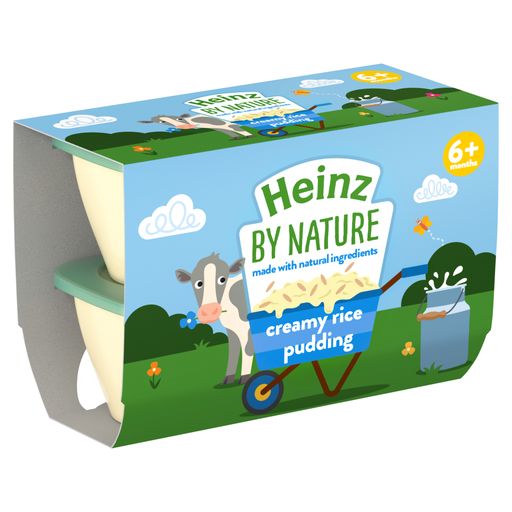 Image unavailable
Four individual 100g pots avoid dividing a larger container. This product is labelled for babies from 6 months; check whether it is appropriate for the intended adult recipient, including their dietary requirements, before choosing it.
They can be when each dessert needs to remain sealed until it is served. The listed Ambrosia 150g pots and 4 x 120g pack provide individual portions; check the recipient’s dietary requirements and ability to open and eat the chosen product.
Choose between Ambrosia’s 150g versions according to the recipient’s dietary requirements: the manufacturer lists 147 kcal and 13.8g sugars per standard pot, compared with 116 kcal and 9.0g sugars per Light pot. Light is the reduced-sugar and reduced-fat recipe, but lower energy is not necessarily the desired trade-off for every recipient.
Yes. Ambrosia says its listed standard and Light 150g pots can be eaten hot or cold. If warming one, follow the instructions on its current pack.
The listed standard and Light 150g recipes contain milk ingredients, so they are not suitable for someone who must avoid milk. Check the physical pack’s allergen information before serving it, as recipes can change.
A pot is a dessert or snack, not a substitute for deciding what the recipient needs across their meals. NHS guidance considers dietary balance across a day or week; where someone has an assessed dietary plan, follow that plan when choosing foods.