Consumers who want a defined portion
If you want dessert for one without dividing and storing an opened can, an individual pot keeps the serving clear. Ambrosia lists its Light pot as 150g, with 116 kcal per pot.


Choose an individual pot if you want one defined dessert portion without dividing a can: Ambrosia lists 116 kcal, 2.0g fat and 9.0g sugars for its 150g Light pot. A low-fat 400g can can also work if you are happy to portion and store it; Sainsbury's lists half its Be Good To Yourself can as one serving. Whichever format you choose, compare the amount you will eat, not just the figures per 100g, and check sugars and milk ingredients on the current pack.
If you want dessert for one without dividing and storing an opened can, an individual pot keeps the serving clear. Ambrosia lists its Light pot as 150g, with 116 kcal per pot.
If a low-fat claim is central to your choice, read the fat figure per 100g, then check sugars and energy for the portion you intend to eat. A low-fat label does not describe those other figures.
If you are comfortable dividing a can, check its labelled serving size and instructions for the remainder. Sainsbury's describes its 400g Be Good To Yourself Low Fat Rice Pudding as two servings.
For a one-person meal, settle on the portion you will actually serve before comparing nutrition figures. A sealed pot and a divided can solve that practical question differently.
| Concern | What to check | Who this matters to |
|---|---|---|
| A defined serving | Pot weight and nutrition for the whole pot. | When I want dessert just for myself, a sealed pot avoids dividing an opened can. About 42% of consumers put a ready-defined portion first. |
| Fat and sugars | Fat per 100g; sugars and energy for the portion you will eat. | If I am choosing by fat content, I still want to know how much sugar is in my serving. About 33% of consumers make that label comparison their primary concern. |
| Dividing a can | Labelled servings and the pack's instructions after opening. | A larger can works for me when I can serve part now and store the rest as directed. For about 25% of consumers, portioning and leftovers are the main consideration. |
A comparison with a product's standard version does not show how it compares with every other rice pudding. The nutrition-claims annex published by legislation.gov.uk specifies no more than 3g fat per 100g for a low-fat claim on solid foods; Marks & Spencer lists 5.6g fat per 100g for its Creamy Rice Pudding.
Check the current product's fat figure per 100g, then look at the nutrition for the serving you would eat.
Sainsbury's labels its 400g Be Good To Yourself Low Fat Rice Pudding as two servings. Its stated nutrition for one serving therefore describes half the can, not the whole pack.
Serve the labelled amount if those are the figures you are comparing, and follow that can's instructions for what remains.
Ambrosia lists 9.0g sugars per 150g Light pot, while Sainsbury's lists 14.0g sugars per stated half-can serving of its low-fat rice pudding.
Compare sugars for the amount you plan to eat alongside fat and energy; the serving sizes differ.
Ingredients and nutrition information can change. That matters particularly when you are checking a milk ingredient or comparing a specific nutrition figure.
Read the current pack before buying or serving the product rather than relying on an earlier listing.
Ambrosia Light is listed as a 150g individual pot and a 400g can, giving shoppers a choice of portion formats.
Be Good To Yourself Low Fat Rice Pudding comes in a 400g can labelled as two servings.
Tesco Groceries lists its Reduced Fat Rice Pudding 400g alongside Ambrosia rice pudding in can and individual-pot formats.
Asda Groceries lists the 150g Ambrosia Light pot as an individually portioned option.
M&S Creamy Rice Pudding is a 400g canned product to compare when a low-fat choice is not essential.
Waitrose & Partners lists the 150g Ambrosia Light Rice Pudding Dessert Pot, which it describes as suitable for eating hot or cold.
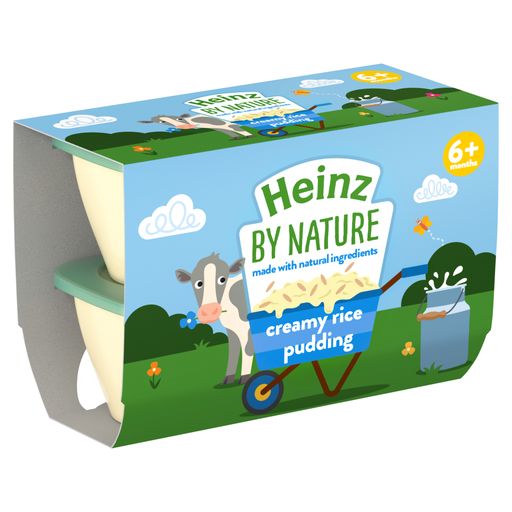
This Joybuy selection is an individual-pot alternative to a tin, rather than either of the adult low-fat products discussed above. Its 6+ Months designation matters if you are choosing rice pudding for an adult meal.
 No image available
Four individual 100g pots provide a defined amount without opening a can. This is a 6+ Months product rather than a tinned adult dessert; check that the intended product and portion suit your use. Compare fat, sugars and energy for a 100g pot on the current label, and check the ingredients if milk is a concern.
Start with fat per 100g, then check the figure for your serving. The nutrition-claims annex published by legislation.gov.uk specifies no more than 3g fat per 100g for a low-fat claim on solid foods. The serving figure tells you how that product fits the amount you intend to eat.
No: a low-fat claim does not describe sugars or energy. Ambrosia lists 9.0g sugars per 150g Light pot, while Sainsbury's lists 14.0g per stated half-can serving of its low-fat rice pudding. Check each product's serving size before comparing the figures.
Not necessarily. Sainsbury's labels its 400g Be Good To Yourself Low Fat Rice Pudding as two servings, so its per-serving figures apply to half a can. If you want one sealed portion without leftovers, an individual pot avoids that dividing step.
Yes. Low-fat wording does not describe allergen ingredients, and the Ambrosia Light and Sainsbury's products discussed here contain milk ingredients. Read the current pack when choosing for someone who needs to avoid milk.
Follow that product's own storage and use instructions rather than applying a time limit from another brand. For example, M&S says its Creamy Rice Pudding should be eaten within 24 hours once opened; check the can you actually buy before planning a later serving.