Single-portion shoppers avoiding leftovers
If you want one pudding without opening a larger tin, Sainsbury’s describes the Ambrosia 150g pot as a single serving that does not need chilling before opening.


Choose a 150g rice-pudding pot when you want one sealed serving, or a 4 x 120g multipack when you need several smaller, separate servings during the week. A 400g tin is labelled as two portions, so it suits a shared dessert or planned leftovers rather than a single unopened portion. Check the exact pack’s allergen information and storage instructions before buying.
If you want one pudding without opening a larger tin, Sainsbury’s describes the Ambrosia 150g pot as a single serving that does not need chilling before opening.
If lunches or desserts happen at different times, the Ambrosia 4 x 120g pack listed by Sainsbury’s supplies four individual pots in one purchase.
A 400g tin can work when both portions will be used. Sainsbury’s labels its own-brand 400g tin as two servings and directs shoppers to refrigerate any transferred leftovers after opening.
Decide whether avoiding an opened second serving, stocking several portions or comparing the Light recipe matters most; then check the pack format and label.
| Concern | What to check | Who this matters to |
|---|---|---|
| A separate serving | Check whether the pack is a single pot, individually portioned multipack or two-serving tin. | If I want dessert for one eating occasion, I would rather leave the next serving unopened. About 42% of consumers put avoiding opened-pack leftovers first. |
| Planning several portions | Compare the number and size of servings, then read the opened-pack instructions for tins. | When I stock desserts for different days or people, I need portions that fit those plans. For about 33% of consumers, organising several servings is the main concern. |
| Comparing the Light recipe | Read the current nutrition and ingredient panels; compare the stated claim with its named standard product. | I may still need an individual pot but want to compare Ambrosia Light with the standard recipe. That comparison comes first for about 25% of consumers. |
Sainsbury’s identifies its 400g tin as two servings, whereas its Ambrosia 150g pot is described as single-serve. Opening a tin for one person leaves another portion to handle.
Choose a single pot if avoiding leftovers matters, or check the exact tin’s instructions before planning to keep the remainder.
Sainsbury’s description compares the Ambrosia Light pot with standard Ambrosia rice pudding; that comparison does not describe every nutrient or ingredient on the pack.
Read the current nutrition panel, ingredients and allergen statement if the recipe difference affects your choice.
The checked Ambrosia pot, Sainsbury’s tin, Waitrose Ambrosia tin and M&S chilled pudding list milk ingredients or milk allergen information.
Check the allergen statement on the pack you intend to buy, particularly if its recipe or packaging has changed.
Its listed rice-pudding formats include 150g standard and Light pots, a 4 x 120g pot multipack and 400g tins.
Its own-label 400g creamed rice-pudding tin is a larger-pack option for a weekly shop.
Tesco’s category listings show own-label 400g tins alongside Ambrosia individual pots and a pot multipack.
Waitrose lists Ambrosia 150g pots, a 4 x 120g multipack and 400g tins.
Its listed 2 x 170g clotted-cream rice puddings are a chilled dessert alternative, not a cupboard-stable tin.
The selection here is a smaller pot format intended for babies aged 6+ months, rather than a conventional rice-pudding tin for a general household dessert.
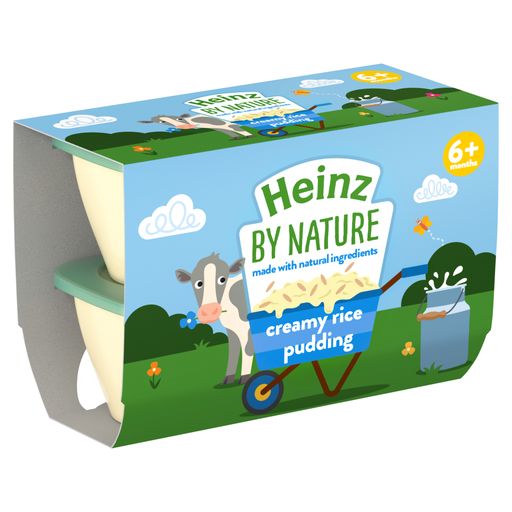 Image unavailable
For a weekly shop that includes food for a baby aged 6+ months, this 4 x 100g pot format offers smaller portions than the 120g and 150g pots discussed above. It is not a tin; check the current pack’s allergen and opened-pot storage instructions before use.
No. The Ambrosia individual servings listed by Sainsbury’s are pots, while the larger 400g products discussed here are tins. If one unopened serving is the priority, check for a single pot or individually portioned multipack.
Choose the 150g Ambrosia pot for one serving, or the 4 x 120g pack if four smaller, separate servings fit your week. Sainsbury’s describes both formats as not needing chilling before opening.
Follow the instructions on that tin. Sainsbury’s says to transfer leftovers from its own-label 400g tin to a non-metallic container, refrigerate and use within two days; Waitrose’s Ambrosia 400g listing gives a three-day consume-after-opening period.
Follow the heating directions on the exact pack. Sainsbury’s instructs shoppers to empty its 400g tin into a microwaveable dish before microwaving, while its Ambrosia individual-pot listing gives pot-heating directions. Do not put a metal tin in the microwave.
GOV.UK explains that a use-by date concerns food safety, while a best-before date concerns quality. Check the date and storage directions on the dessert you buy: the M&S chilled rice puddings, for example, have a use-by date and refrigeration instructions.