Desk-drawer lunch packers
If office-fridge space is limited, an unopened pot labelled for cool, dry storage can be kept without using it. Ambrosia describes its 150g pots as suitable to eat cold, so a microwave is not needed for those versions.


Choose an ambient, single-serve pot if you need a ready-to-eat dessert that can stay in a cool, dry place until lunch. Ambrosia's standard and Light 150g pots can be eaten cold; the Light version has less sugar and fat than its standard counterpart, while a four-pack of 120g pots offers smaller portions for several lunches. Check the exact pack for storage directions, ingredients and allergens: the identified Ambrosia versions contain milk.
If office-fridge space is limited, an unopened pot labelled for cool, dry storage can be kept without using it. Ambrosia describes its 150g pots as suitable to eat cold, so a microwave is not needed for those versions.
Someone choosing between Ambrosia's standard and Light 150g pots can compare nutrition for the same serving size. Ambrosia lists 147 kcal and 13.8g sugars for the standard pot, against 116 kcal and 9.0g sugars for Light. Both contain milk.
A multipack provides separate pots for several packed lunches. Tesco lists a four-pack of Ambrosia 120g pots, while Joybuy describes its four-pack as individually wrapped; check whether the smaller serving suits each lunch.
Start with the unopened pot's storage directions, then compare the serving you will actually pack and the ingredients on that version's label.
| Concern | Buying check | Who this matters to |
|---|---|---|
| Storage and eating cold | Check for cool, dry storage before opening and whether the pot is ready to eat cold. | If I cannot rely on an office fridge or microwave, I need a pot I can store as directed and eat cold. About 36% of consumers put that convenience first. |
| Per-pot nutrition | Compare values for the whole pot; use per-100g figures when comparing different serving sizes. | If I am choosing between the standard and Light 150g recipes, the amounts in the pot I will eat matter most to me. Roughly 29% of consumers make per-pot nutrition their main concern. |
| Portion planning | Compare a 150g single pot with four separate 120g pots according to the lunches you are packing. | When I am preparing several lunches, I want individual portions that suit each day rather than a larger tin to divide up. Around 21% of consumers put portion planning first. |
| Milk ingredients | Read the current ingredients and allergen information; do not treat a Light label as meaning dairy-free. | If I need to avoid milk, I must check the exact pot before packing it; the identified standard and Light Ambrosia pots both contain milk. About 14% of consumers make that ingredient check their primary concern. |
Ambrosia gives cool, dry storage directions for the identified unopened 150g pots. That does not establish the storage requirements of other rice puddings, including chilled desserts.
Check the storage instructions on the pot you are buying and follow them before and after opening.
Ambrosia lists 147 kcal and 13.8g sugars for its standard 150g pot and 116 kcal and 9.0g sugars for its Light 150g pot. A 120g cup is a different serving size, so its per-cup values are not a like-for-like recipe comparison.
Use per-pot figures to assess the portion you will eat at work, and per-100g figures to compare recipes across different pot sizes.
Ambrosia's Light and standard 150g rice puddings both list milk ingredients. A nutrition comparison does not tell you whether a product meets an ingredient restriction.
Read the current pack's ingredients and allergen information rather than relying on the variant name.
Ambrosia lists standard and Light 150g rice-pudding pots, alongside a smaller 120g multipack format relevant to packed lunches.
Tesco's rice-pudding-pots category lists Ambrosia in several individual formats, including 150g pots and a four-pack of 120g pots.
Asda lists an individual Ambrosia standard rice-pudding pot in the 150g format.
Waitrose lists the standard Ambrosia 150g dessert pot as an individual option.
This individual rice-pudding option is labelled for babies aged 6+ months, rather than presented as a conventional adult dessert. Consider its intended use and 100g portion when planning an office lunch.
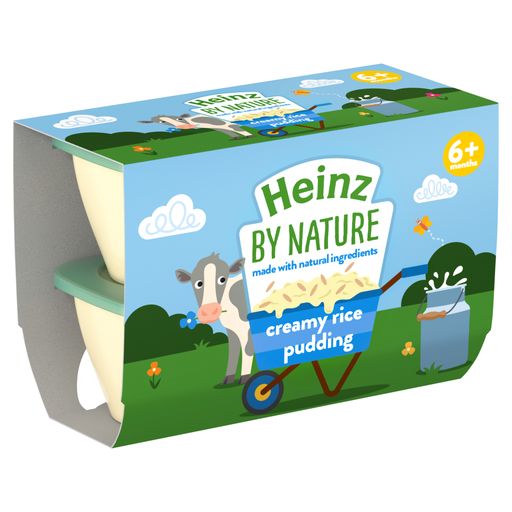 Image unavailable
The four individual 100g pots offer a smaller portion for a packed lunch, but this is a product labelled for babies aged 6+ months. Check that its intended use and portion suit your plans, and read the current pack for storage directions and milk ingredients.
The identified unopened Ambrosia standard and Light 150g pots have cool, dry storage directions, so they do not require office-fridge space before opening. Follow the storage and date information on the exact pot you buy; do not apply those directions to every rice pudding.
Ambrosia describes its standard and Light 150g pots as suitable to eat hot or cold. If you choose to heat one, follow the instructions on that pot, including its directions for the lid.
Ambrosia lists 116 kcal and 9.0g sugars per 150g Light pot, compared with 147 kcal and 13.8g sugars per 150g standard pot. The manufacturer also describes Light as having 30% less sugar and fat than its standard rice pudding. Both versions contain milk.
No. The identified Ambrosia Light 150g pot lists milk ingredients, as does the standard version. If you need to avoid milk, check the ingredients and allergen information on the current pack rather than using the Light name as a guide.
Check the current packaging. The UK Food Standards Agency states that prepacked food must carry an ingredients list and that allergens present must be emphasised in it. An online product description should not replace the label on the pot you are buying.