What to check before buying
Start with the nutrition and ingredient labels, then choose a pack format that fits how you expect to serve and store it.
| Concern | What to check | Who this matters to |
|---|
| Labelled sugars and fat |
Compare figures per 100g, then for the amount you intend to serve. Check ingredients rather than treating total sugars as free sugars. |
If I am choosing between recipes for tea time, I want their label figures on the same basis before deciding. About 31% of consumers put this comparison first. |
| Cupboard storage |
Check unopened storage directions and the pack’s date; follow different instructions once opened. |
When I keep a dessert in the cupboard for a later tea time, I need to know how to store it until then. Keeping an unopened option ready is the primary need for about 31% of consumers. |
| Portions and leftovers |
Check pack size and stated servings, then the instructions for refrigerating and using any remainder. |
A whole tin may be more than I plan to serve at once, so I need a workable plan for what remains. About 23% of consumers place portion and leftover management first. |
| Serving convenience |
Check whether the product can be served cold or how its label instructs you to heat it. |
On a busy tea-time day, I would rather choose a format that fits the preparation time I have. Quick serving comes first for about 15% of consumers. |
Individual pots on Joybuy
This selection covers an individual-pot alternative for tea time: a four-pack of 100g Heinz rice puddings labelled for ages 6 months and over. It is not a 400g tin.
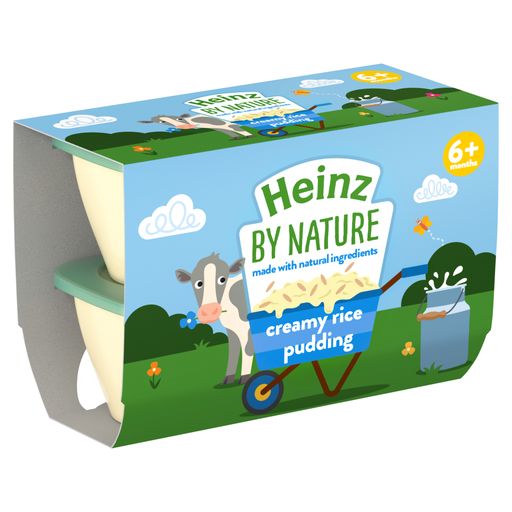 Image unavailable
Heinz Creamy Rice Pudding 6+ Months, 4 × 100g
Consider this pot format if a measured 100g pack suits your tea-time plans better than opening a 400g tin.
The product name specifies four 100g pots and an age label of 6+ months. Check the current pack for ingredients, allergens, serving directions and instructions after opening.
View on Joybuy
Questions about serving and storage
Does total sugars on the label mean free sugars?
No. The NHS explains that nutrition labels report total sugars, including sugars naturally present in milk, which are treated differently from free sugars. Compare products using the same per-100g basis, but do not read a total-sugars figure as a free-sugars figure.
Is a 400g tin one child’s serving?
Do not assume it is. The Tesco and Essential Waitrose 400g examples state two servings; a stated serving or adult reference-intake figure does not decide how much to put in a child’s bowl. Decide what you intend to serve, then follow the pack’s instructions for any remainder.
How long can I keep rice pudding after opening a tin?
Follow the particular pack’s instructions. The listed M&S example says to eat it within 24 hours; the Tesco, Sainsbury’s and ASDA examples specify two days, and standard Ambrosia and Essential Waitrose specify three days. Where directed, transfer leftovers from the tin to a covered, non-metallic container and refrigerate them.
Can I microwave rice pudding in its tin?
No. The listed Tesco, Sainsbury’s, ASDA and Waitrose microwave directions call for transferring the contents to a suitable dish. Use the heating, stirring and standing instructions on the product you buy rather than placing the metal tin in the microwave.
Are these rice puddings suitable for a child with a milk allergy?
Do not assume so: the listed Ambrosia, Tesco, Sainsbury’s, ASDA, M&S and Waitrose examples contain milk ingredients. Check the physical pack’s allergen information before serving, particularly if you switch products or the recipe changes.


