
24/7 Customer Support

Free returns

Same-day & Next-day Delivery

Quality Guaranteed

Unlock Your Welcome Offers: FREE Delivery | Up to 80% OFF | Free 30-day JoyPlus trial
Download the APP
Choosing rice vermicelli noodles in the UK can be less straightforward than it appears. Packs may use terms such as Asian rice noodles, Chinese rice vermicelli, Vietnamese rice vermicelli or rice sticks, while the actual thickness, soaking time and texture can vary considerably.
The right product depends on how you plan to cook it. A fine noodle for spring rolls may become soft in a long-cooking soup, while a thicker Jiangxi or Jiangmen-style noodle can provide more bite in a stir-fry. Use the guide below to avoid common buying mistakes and match the noodles to your kitchen routine.
Some dried rice noodles need only a few minutes in hot water. Others require a 15–30-minute soak followed by boiling. If you use a long-soak noodle in a quick stir-fry, it may not soften evenly. If you boil a fine noodle for too long, it can break or become sticky.
Always check the preparation instructions on the pack rather than relying on the general description of “quick cooking”.
Rice vermicelli usually refers to thin, round strands used in noodle salads, spring rolls, soups and Vietnamese-style bowls. Jiangmen-style noodles, also known as Ho Fun or Shahe Fen, are generally flatter and broader. They are more suitable for dishes such as beef chow fun, although they can also be used in soups and cold dishes after rehydration.
The noodle shape affects both cooking time and how sauce clings to the surface.
Many rice noodles contain only rice and water, making them suitable for vegan cooking and naturally free from wheat ingredients. However, recipes, seasonings and manufacturing environments can introduce allergens. For shoppers with coeliac disease or a medically diagnosed allergy, check the current packaging for allergen and cross-contact information before buying.
Also remember that dried noodles are a raw ingredient. They should be prepared as directed and not eaten straight from the pack.
Thickness is one of the most useful practical indicators:
A finer noodle can be convenient for cold dishes, while thicker strands are often easier to handle in a wok.
Look for a clear ingredient list. Several options in this range use simple combinations such as rice and water, while some Jiangxi-style products include tapioca starch to alter the texture.
For a vegan noodle bowl, a plain rice-based product can provide a suitable base, but sauces and toppings still need separate checking. For gluten avoidance, review the allergen statement rather than relying on the product name alone. The Bamboo Tree and several Longdan listings state that no listed allergens are present, while the 200g Wai Wai listing identifies sesame and possible traces from shared facilities.
Check whether the noodles require soaking, boiling or both. For example, some fine vermicelli softens in hot water within 2–5 minutes, whereas thicker products may need 20–30 minutes in warm water before cooking.
Pack size also matters. A 400g bag suits regular family cooking, while 400g ×2 packs are more practical for frequent noodle meals, batch cooking or keeping a spare pack in the cupboard. Store opened noodles in a sealed or airtight container in a cool, dry place away from moisture and direct sunlight.
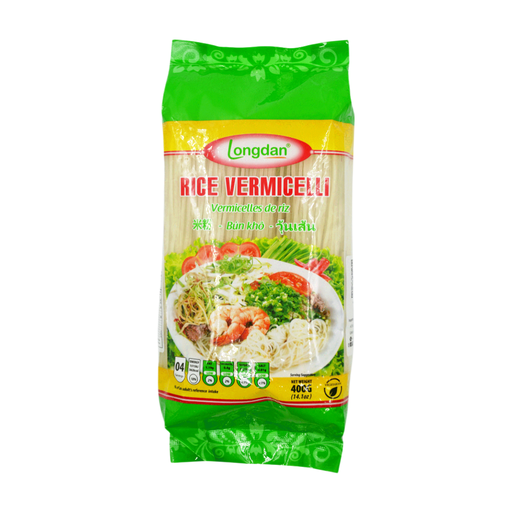
Why This Fits Their Persona: A 400g pack gives occasional home cooks a manageable quantity for trying noodle salads, soups, spring rolls and stir-fries without committing to a multi-pack.
The stated 0.8mm thickness and preparation guidance make its delicate format clear, reducing the risk of expecting a thick, chewy noodle.
Rice and water-based ingredients; suitable for a range of Vietnamese and Southeast Asian-style dishes.
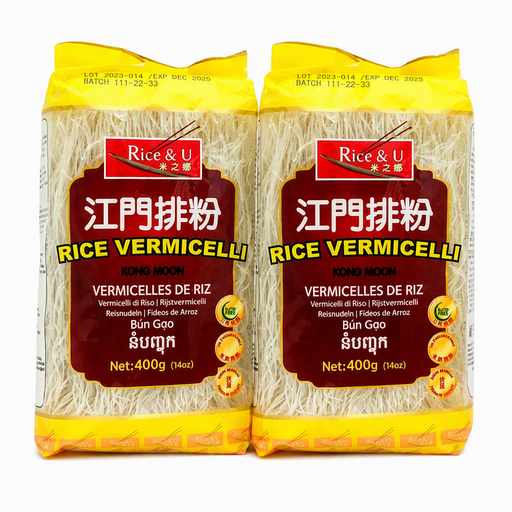
Why This Fits Their Persona: Designed for cooks seeking a broader, silky noodle for Chinese-style dishes, especially sauce-led stir-fries and chow fun-inspired meals.
Its Jiangmen-style flat format is identified clearly, so shoppers can distinguish it from fine Chinese rice vermicelli before ordering.
Rice and water ingredients; 800g total quantity; suitable for stir-fries, soups and rehydrated cold salads.
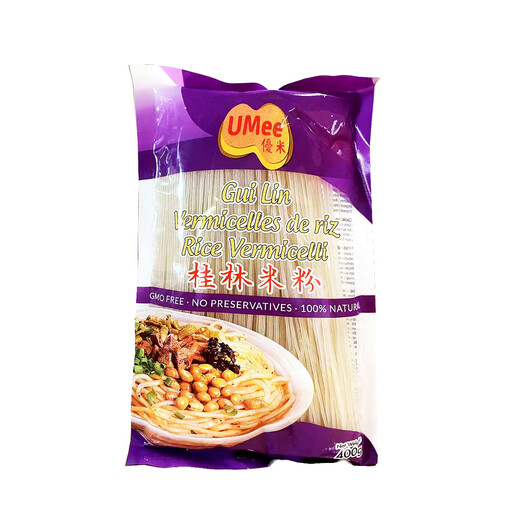
Why This Fits Their Persona: A practical choice for regular soup makers, hot-pot cooks and anyone preparing hearty rice noodle bowls for several people.
The listed 20–30-minute soak and 2–3-minute boil provide a clear process, helping avoid undercooked centres or over-softened strands.
Smooth, springy texture; suitable for soups, stir-fries, hot pot, cold dishes and noodle bowls.
We have compiled a complete, real-time list of products that fully satisfy these strict selection criteria and UK safety regulations.
Many products made solely from rice and water are free from gluten-containing ingredients. Some also contain tapioca starch. However, manufacturing conditions differ, so check the packaging and allergen statement, particularly if avoiding gluten for medical reasons.
The unopened shelf life is shown on the packaging. After opening, transfer the noodles to an airtight container and keep them in a cool, dry cupboard away from moisture and sunlight. Discard them if the packaging is damaged or the noodles develop an unusual odour, mould or discolouration.
Yes. Soak or boil them according to the instructions, drain well and add them towards the end of cooking. Fine Vietnamese rice vermicelli works well with vegetables and dressing, while thicker Jiangxi noodles or flat Jiangmen-style noodles can provide more structure for sauce-based stir-fries.