
24/7 Customer Support

Free returns

Same-day & Next-day Delivery

Quality Guaranteed

Unlock Your Welcome Offers: FREE Delivery | Up to 80% OFF | Free 30-day JoyPlus trial
Download the APP
Rice vinegar is a useful store-cupboard ingredient for UK kitchens, but bottles labelled rice vinegar, sushi vinegar and aromatic vinegar are not interchangeable. The right choice depends on acidity, added sugar and salt, flavour intensity and the dishes you plan to prepare.
At Joybuy, the Joybuy Product Recommendation Officer’s approach is simple: separate useful product information from vague marketing language, then match each bottle with a realistic cooking need.
Seasoned rice vinegar already contains ingredients such as sugar and salt. This can be convenient for sushi rice, but it may make a stir-fry, dressing or dipping sauce unexpectedly sweet or salty.
Plain white rice vinegar is more flexible because you control the seasoning yourself. Always check the ingredient list rather than relying only on the front label.
Sushi rice needs a balanced sweet, sour and salty seasoning. A plain Japanese rice vinegar can work, but you may need to add sugar and salt separately. A ready-to-use sushi vinegar is more convenient, although its nutritional profile can differ considerably.
For example, Yuho Sushi Vinegar lists sugar and salt among its ingredients and provides a ready-to-use blend. By contrast, Mizkan Rice Vinegar is listed as rice vinegar with 5% acidity, allowing you to season the rice according to your recipe.
A 500ml bottle may offer good value for frequent cooks, while a 125ml or 200ml bottle can be more practical if you only make sushi occasionally. Check storage instructions, too. Some products recommend refrigeration after opening, while others can be kept sealed in a cool, dry place.
Acidity is often stated as a percentage or in degrees. Mizkan Rice Vinegar lists 5% acidity, while Tao Xi Yongchun Aromatic Vinegar lists total acidity of at least 5.5g per 100ml. These figures help indicate sharpness, but they do not describe the entire flavour profile.
A mild vinegar is useful when you want acidity without dominating delicate vegetables or sushi rice. A more aromatic Chinese rice vinegar may be more suitable for dumpling dips, braised dishes or sauces where a stronger flavour is welcome.
Read the back label for:
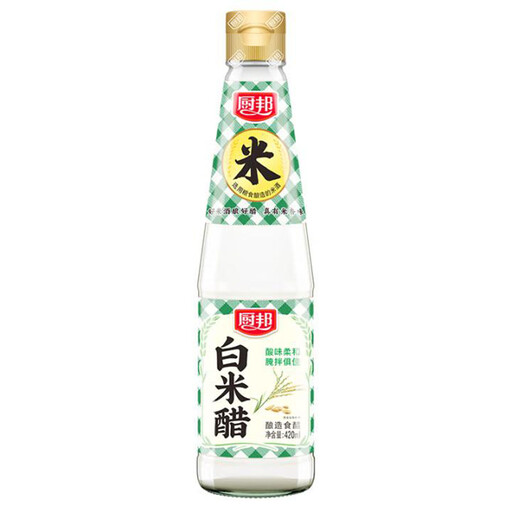
Why This Fits Their Persona: A practical plain vinegar for UK cooks building a versatile Asian pantry without buying several specialised bottles.
It is listed as white rice vinegar with water, rice and salt, rather than a pre-sweetened sushi blend.
420ml volume; clear, mild sourness; suitable for pickling, seasoning and general cooking.

Why This Fits Their Persona: Suits cooks seeking a region-specific Chinese vinegar for dumplings, seafood, cold dishes and layered sauces.
The listing identifies it as a Zhenjiang PGI product and states glutinous rice, wheat bran and rice among the ingredients.
500ml bottle; ready to use; listed for dipping, dressing, marinating and braised dishes. Contains wheat.
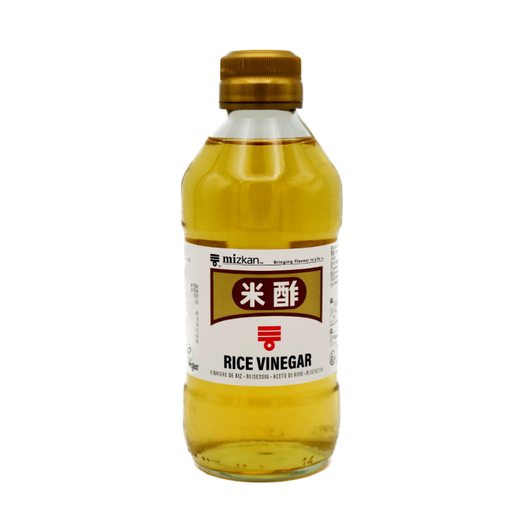
Why This Fits Their Persona: A manageable bottle for home sushi, Japanese salads, pickles and marinades where a clean rice vinegar flavour is required.
It is plain rice vinegar, so sugar and salt can be measured separately instead of being hidden in a ready-seasoned blend.
275ml size; 5% acidity stated; listed for sushi rice, dressings, marinades, pickling and cooking.
For sushi rice, follow the rice and vinegar proportions in your recipe and add seasoning gradually. Fold the vinegar through hot rice rather than stirring aggressively, which can make the grains lose their shape.
Plain vinegar can be combined with sugar and salt for a homemade sushi seasoning. For dipping sauces, start with a small amount and balance it with soy sauce, sesame oil, chilli or ginger. White rice vinegar is suitable for light pickles and dressings, while black rice vinegar and Zhenjiang vinegar can add more colour and aroma to dumplings, noodles and braised dishes.
Keep bottles tightly closed and follow the label’s storage advice. Refrigerate after opening where instructed, particularly for seasoned products. Check the best-before date and discard any product whose packaging is damaged or whose smell or appearance has changed noticeably.
We have compiled a complete, real-time list of products that fully satisfy these strict selection criteria and UK safety regulations.
No. Plain rice vinegar contains the vinegar itself, while sushi vinegar is generally seasoned with sugar and salt. Check the ingredients and nutrition panel before substituting one for the other.
For Chinese dumplings and seafood, aromatic vinegar, black rice vinegar or Zhenjiang vinegar may provide a fuller flavour. A plain white rice vinegar is useful when you want to create a lighter dip and adjust the salt, sugar and soy sauce yourself.
Follow the storage and use guidance printed on the bottle. Many plain vinegars can be stored sealed in a cool, dry place, while some seasoned or Japanese products recommend refrigeration after opening. Keep the cap clean and tightly closed to preserve flavour.