Among the plain rice cakes compared, Sainsbury’s lists 2.4g fat per 100g and M&S lists 2.5g; Kallo Organic Lightly Salted lists 2.7g per 100g and carries a low-fat claim, according to their product information. For a quick breakfast, use rice cakes as a base alongside a protein source and fruit or vegetables, in line with NHS Grampian’s breakfast guidance. Check how many cakes you plan to eat and read the current allergen label.
Who might choose rice cakes?
People short of time at breakfast
Plain rice cakes can be kept in the cupboard and eaten with toppings that need little preparation. If they are replacing breakfast rather than serving as a small snack, NHS Grampian’s guidance offers a way to assemble the meal: include a carbohydrate source, a protein source and fruit or vegetables.
Shoppers comparing listed fat
Fat per 100g provides a like-for-like way to compare plain products, while fat per cake helps with the amount you intend to eat. The checked Sainsbury’s, M&S, Kallo and Tesco product information lists different figures, so a low-fat claim is not a substitute for reading the nutrition panel.
Shoppers checking dietary and allergen labels
Gluten-free or vegan-recipe wording does not replace a product-specific allergen check. Kallo warns of possible milk, sesame and soya cross-contact, while Sainsbury’s says its plain rice cakes are not suitable for customers with a milk allergy because of manufacturing methods.
What should you check before buying?
Start with the nutrition panel for the amount you expect to eat, then consider what will accompany the cakes and whether the current pack suits your dietary requirements.
| Priority |
What to check |
Your needs |
| Listed fat |
Compare fat per 100g across plain cakes, then fat per cake for your planned portion. Sainsbury’s lists 2.4g per 100g, M&S 2.5g, Kallo Organic Lightly Salted 2.7g and Tesco Lightly Salted 3.1g, according to their respective product information. |
I want to compare the cakes themselves, not assume that a claim on the front of the pack tells me which has the lowest listed fat. |
| Portion |
Check the number of cakes you will eat and whether the panel gives figures per cake, per serving or per 100g. Tesco Groceries lists 27 kcal and 0.2g fat per cake for Kallo Organic Lightly Salted. |
A single-cake figure is useful, but I may eat several cakes and add toppings at breakfast. |
| Breakfast additions |
Consider what you will have alongside the rice cakes. NHS Grampian describes a well-planned breakfast as including a carbohydrate source, a protein source and fruit or vegetables. |
If rice cakes are my breakfast rather than a snack, I want to plan the rest of the meal too. |
| Allergens |
Read the current ingredient list and precautionary statements, even when a product is labelled gluten-free or made to a vegan recipe. Kallo warns that its cakes may contain milk, sesame and soya; Sainsbury’s gives a milk-allergy warning for its plain cakes. |
I need to judge the particular pack against my dietary requirements, not rely on a general description of rice cakes. |
| Storage |
Check the pack’s instructions for storage after opening and choose an amount you expect to use. Keep opened cakes sealed as directed on the pack. |
I want cakes ready to take out in the morning without leaving an opened pack unused for too long. |
What is easy to overlook?
-
Treating “reduced fat” and “low fat” as interchangeable
Reduced fat describes a comparison with another product; it does not tell you the fat content of every cake on the shelf or what else is in your breakfast.
Read the fat figures per 100g and for the amount you plan to eat. If the wording of a claim matters to you, check the exact claim on the pack rather than applying it to all plain rice cakes.
-
Planning breakfast around one cake’s figures
A per-cake nutrition figure describes one cake, not a breakfast of several cakes with toppings. Tesco Groceries lists 27 kcal per cake for Kallo Organic Lightly Salted, for example.
Work out the portion you expect to eat and check the nutrition information for any additions separately.
-
Assuming a dietary label settles an allergen question
Product-specific warnings can matter even when a rice cake is described as gluten-free or made to a vegan recipe. Kallo gives a possible milk, sesame and soya warning, and Sainsbury’s gives a manufacturing-method warning concerning milk allergy.
For an allergy, read the ingredient and allergen information on the current physical pack before eating it.
-
Leaving an opened pack for future breakfasts
An opened pack brings storage instructions into the decision, particularly if you eat rice cakes only occasionally.
Check the pack’s directions after opening, reseal it as instructed and choose a pack size that fits how often you expect to eat it.
Which brands are relevant?
These brand references describe the particular rice cake products and information considered here, not every product made by each brand.
Kallo
Kallo offers lightly salted wholegrain rice cakes, including an organic 130g variant with a low-fat claim. Tesco Groceries lists 2.7g fat per 100g and 0.2g per cake for that organic product.
- The organic product is listed as suitable for vegans and gluten-free.
- Its product information warns that it may contain milk, sesame and soya.
Sainsbury’s
Sainsbury’s 135g plain rice cakes list 2.4g fat and 3.9g fibre per 100g, with 29 kcal and less than 0.5g fat per cake.
- The listed fat per 100g is lower than that of the other plain products compared here.
- Sainsbury’s says this product is not suitable for customers with a milk allergy because of manufacturing methods.
M&S
M&S Lightly Salted Rice Cakes are made from puffed wholegrain brown rice. Marks & Spencer lists 2.5g fat and 3.4g fibre per 100g and suggests adding spreads or toppings for a light meal.
- The plain, lightly salted format leaves the choice of breakfast toppings open.
- Check the current pack for ingredient, nutrition and allergen information before relying on an earlier listing.
Tesco
Tesco Lightly Salted Rice Cakes 130g provide another plain option. Tesco Groceries lists 3.1g fat per 100g and 0.2g per cake for this product.
- Per-cake figures make it possible to assess a planned portion alongside the per-100g comparison.
- Its listed fat per 100g is higher than the Sainsbury’s, M&S and Kallo plain products compared here; read its own label rather than assuming it carries a low-fat claim.
Snack a Jacks
Snack a Jacks is a rice-cake brand with a snack-focused range. Its general brand information does not establish the fat content of a particular cake for this breakfast comparison.
- Choose a specific product and check its nutrition panel and ingredients before comparing it with plain rice cakes.
Joybuy rice cake options
These Joybuy options include a plain Kallo cake and two flavoured cakes. If your priority is listed fat, compare each product’s current nutrition panel on the same per-100g basis; a flavoured cake is not automatically equivalent to a plain one.
 No image available
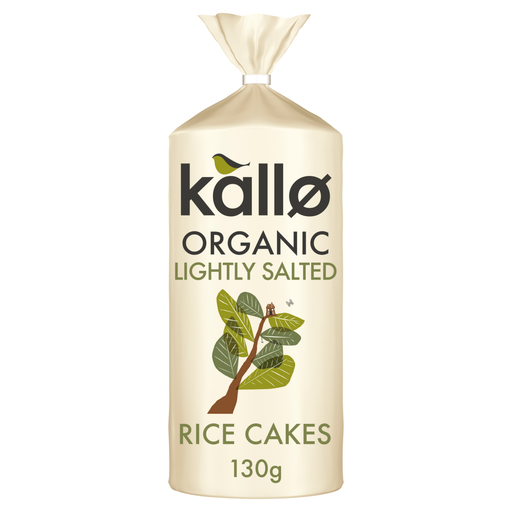
Kallo Organic Lightly Salted Rice Cakes 130g
A plain, lightly salted option to use as a breakfast base with toppings or other foods. Tesco Groceries lists 2.7g fat per 100g, 0.2g fat and 27 kcal per cake for the organic 130g product, which carries a low-fat claim. Check the current pack if milk, sesame or soya cross-contact matters to you.
View on Joybuy
 No image available
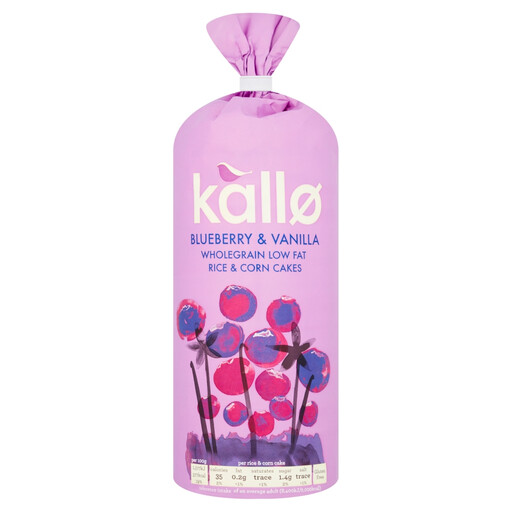
Kallo Blueberry and Vanilla Rice and Corn Cakes 131g
A blueberry-and-vanilla rice-and-corn cake for a flavoured breakfast option. If you are comparing it with plain cakes, check the current pack’s fat and sugar figures per 100g, along with its ingredients and allergen information.
View on Joybuy
 No image available
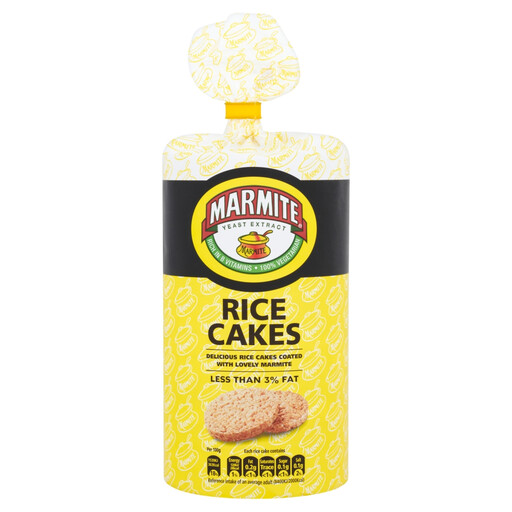
Marmite Rice Cakes 110g
A Marmite-flavoured alternative when you want a savoury rice cake rather than a plain base for varied toppings. Check the current nutrition and ingredient labels before comparing it with plain cakes, particularly if gluten-free suitability matters to you.
View on Joybuy
Questions about rice cakes for breakfast
Do “reduced fat” and “low fat” mean the same thing?
No. As nidirect explains, a reduced-fat claim compares a food with a standard version; a low-fat claim is different wording. Neither tells you what else a breakfast contains. Compare the fat figures per 100g and for the portion you intend to eat.
Are plain rice cakes enough for breakfast on their own?
Rice cakes can provide a quick base, but plain cakes alone do not cover all the components in NHS Grampian’s example of a well-planned breakfast. Consider having them with a protein source and fruit or vegetables when they replace a meal.
Does a gluten-free or vegan description rule out other allergens?
No. Kallo warns that its lightly salted cakes may contain milk, sesame and soya, and Sainsbury’s says its plain cakes are not suitable for customers with a milk allergy because of manufacturing methods. Check the current pack for the particular product you intend to eat.
How should I keep rice cakes after opening?
Follow the storage directions on the pack and keep it sealed as instructed after opening. If you use rice cakes only occasionally, consider whether you will finish the pack within the period stated on its label.


