Rich Tea shoppers
If you want a crisp, mildly sweet biscuit with tea, start with plain Rich Tea. Compare individual packs for ingredients, allergens and nutrition rather than assuming all plain biscuits are alike.


Choose Rich Tea if you prefer a crisp, subtly sweet biscuit; choose an original digestive if you prefer a wheatmeal biscuit. Tesco lists 449 kcal per 100g for its Rich Tea, while Sainsbury’s lists 483 kcal per 100g for McVitie’s Original Digestives, but those figures describe two specific products rather than every biscuit of either type. If you need to avoid an ingredient or allergen, check the current pack instead of relying on the biscuit’s name.
If you want a crisp, mildly sweet biscuit with tea, start with plain Rich Tea. Compare individual packs for ingredients, allergens and nutrition rather than assuming all plain biscuits are alike.
If you prefer a wheatmeal biscuit, an original digestive is the other standard route. Compare its per-100g nutrition with the particular Rich Tea pack you are considering.
Look for a product specifically labelled for the ingredient you need to avoid. A free-from biscuit can still contain other allergens or carry a precautionary warning.
Choose the biscuit style you prefer, then compare the packs on the measures and ingredients that matter for your tea break.
| Priority | What to check | Your needs |
|---|---|---|
| Flavour and texture | Compare the pack descriptions: the cited Rich Tea products are described as crisp and sweet, while the cited original digestive has a wheatmeal profile. Do not assume a particular biscuit will hold together better when dunked. | I would rather have a crisp, mildly sweet biscuit with tea—or I may prefer the wheatmeal flavour of an original digestive. |
| Nutrition | Start with values per 100g, then check the amount per biscuit and its weight. Tesco lists 449 kcal per 100g for its Rich Tea; Sainsbury’s lists 483 kcal and 21.3g fat per 100g for McVitie’s Original Digestives. | When biscuit sizes differ, I want to compare the same quantity before deciding what suits my usual tea break. |
| Allergens | Read the current ingredients list, emphasised allergens and any precautionary statement. The cited standard Rich Tea and original digestive products contain gluten-containing cereals; free-from recipes differ too. | If I need to avoid an allergen, the exact pack matters more than whether it says Rich Tea, digestive or free from. |
| Dietary labels | Check precisely what a free-from label covers. The cited Schär Rich Tea is labelled gluten and wheat free but contains egg and milk; the cited Sainsbury’s Free From Digestives are labelled milk and gluten free and contain oats. | I need a label that addresses the ingredient I avoid, followed by a check for other ingredients and warnings that affect me. |
Biscuits can differ in weight, making serving figures less useful for comparing two products.
Compare nutrition per 100g first, then look at the figures for the number of biscuits you would normally have.
The biscuit’s name does not establish an effect on digestion. The Siro sugar-free digestive listing explicitly cautions against that interpretation.
Choose using the ingredients, nutrition and flavour you want, rather than an assumed effect from the name.
The cited gluten-free Schär Rich Tea contains egg and milk. The cited milk- and gluten-free Sainsbury’s digestive carries a nut-allergy warning related to its manufacture.
Match the precise label and precautionary statements to the ingredients you need to avoid.
Retailer product information can change, including ingredients and allergen details.
Use a listing to narrow your choice, then read the current physical pack before buying, particularly where an allergy matters.
These examples illustrate different biscuit styles and labels; a brand name alone does not establish the ingredients of every product it makes.
The cited range includes classic Rich Tea and Original Digestives.
The cited own-label Rich Tea is a standard 300g pack.
The cited own-label products include standard wheatmeal digestives and a separate milk- and gluten-free digestive.
M&S describes its cited Rich Tea biscuits as crisp and subtly sweet.
The cited Schär Rich Tea is specifically labelled gluten and wheat free.
These options are digestives: an original recipe, a gluten-free variant and a sugar-free variant. They do not stand in for a comparison with a particular Rich Tea pack.
 No image available
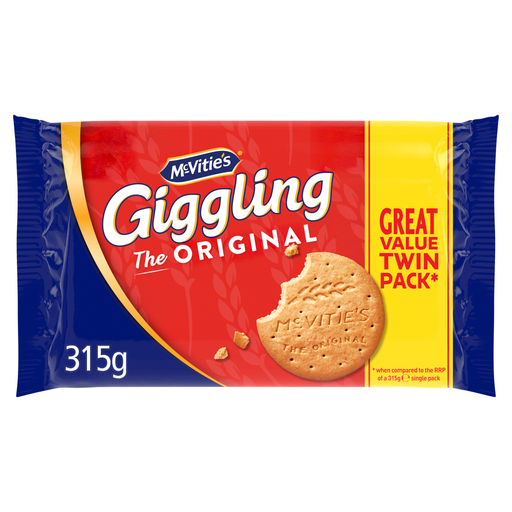
An original digestive option if you prefer this biscuit style to Rich Tea. This listing is a 2 x 315g pack; check its own label when comparing nutrition and allergens with another pack.
 No image available
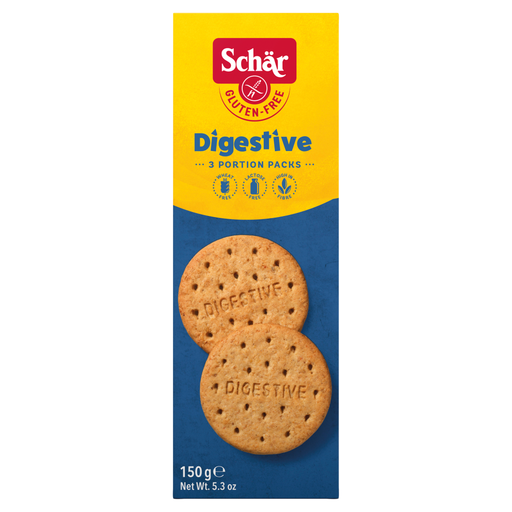
A gluten-free digestive option in a 150g pack. Check the current ingredients and precautionary statements for any other allergens you need to avoid; a gluten-free label does not address every allergy.
 No image available
A sugar-free digestive variant in a 400g pack, rather than the standard original recipe. Compare its own nutrition panel and check the ingredients and any sweetener warnings before choosing it.
Of the two cited products, Tesco Rich Tea has fewer calories per 100g: Tesco lists 449 kcal, while Sainsbury’s lists 483 kcal for McVitie’s Original Digestives. Compare the current packs per 100g and per biscuit before applying that difference to another recipe or pack size.
No effect on digestion should be assumed from the name. The cited Siro sugar-free digestive listing explicitly says that “digestive” does not mean the biscuit has specific digestive characteristics.
The cited Tesco and M&S Rich Tea products contain wheat and barley, so those particular biscuits are not gluten-free choices. If you need to avoid gluten, choose a specifically labelled product and check its current pack.
Yes. The cited Schär gluten- and wheat-free Rich Tea contains egg and milk and may contain soya and lupin. Read the full current label for the ingredients and warnings relevant to you.
Check the current ingredients list, emphasised allergens and any precautionary statement for the exact biscuit. GOV.UK guidance on pre-packed food says the ingredients list must emphasise the allergens that are required to be declared; an online retailer description is not a substitute for checking the pack.