Everyday tea-break shoppers
If the biscuit’s flavour and bite matter most, compare the mild, crisp descriptions of rich tea with the wheatmeal recipe and salty-sweet description of McVitie’s Original Digestives. Which you prefer is personal.


Choose rich tea if you prefer the mild, crisp biscuit described in the listed products; choose a plain digestive if a wheatmeal biscuit and the salty-sweet flavour described for McVitie’s Original appeal more. These are product descriptions, not a taste test across brands. Check the exact pack’s ingredients, allergens and nutrition: neither biscuit type automatically suits a particular dietary requirement.
If the biscuit’s flavour and bite matter most, compare the mild, crisp descriptions of rich tea with the wheatmeal recipe and salty-sweet description of McVitie’s Original Digestives. Which you prefer is personal.
Branded, own-label and twin packs come in different quantities. Check the pack weight and how many biscuits you expect to use rather than choosing by pack size alone.
Ordinary wheat-based biscuits and specifically labelled dietary alternatives are not interchangeable. Read the ingredients and allergen warnings on the exact pack you intend to buy.
Start with the biscuit you would enjoy with tea, then compare pack quantity, nutrition on the same basis and any ingredients you need to avoid.
| Priority | What to check | Your needs |
|---|---|---|
| Flavour and texture | Check the recipe and product description. Tesco describes its rich tea as smooth and snappy; McVitie’s describes its Original Digestive as salty-sweet and lists wholemeal wheat flour. | I’d choose by whether a mild, crisp biscuit or a wheatmeal, salty-sweet one sounds more appealing with tea. |
| Pack quantity | Compare the stated pack weights and whether the biscuits come as a single pack or twin pack. A larger pack does not tell you how much you will use. | For an occasional tea break, I’d consider whether I’ll get through a twin pack; for a shared tea break, quantity may matter more. |
| Nutrition and portion | Compare sugars and energy per 100g for different recipes, then per biscuit for the number you plan to serve. Sainsbury’s lists McVitie’s Classic One rich tea at 18.6g sugars per 100g and its Original Digestive at 15.1g per 100g; their per-biscuit figures refer to different-sized biscuits. | I want to compare recipes fairly without mistaking a smaller biscuit’s per-biscuit figure for a lower-sugar recipe. |
| Ingredients and allergens | Read the exact pack’s ingredients, dietary labels and precautionary warnings. The listed ordinary Tesco rich tea and McVitie’s Original Digestives contain wheat; Sainsbury’s separately lists an oat-based gluten-free digestive with a nut-allergy warning. | If someone eating the biscuits has a specific requirement, I need the label for that particular product—not an assumption based on “rich tea”, “digestive” or “free from”. |
Biscuit weights differ. Sainsbury’s lists McVitie’s Classic One rich tea at 38 kcal per biscuit and 460 kcal per 100g, and McVitie’s Original Digestives at 71 kcal per biscuit and 483 kcal per 100g. The two measures answer different questions.
Use per 100g to compare recipes, and per-biscuit figures when deciding how many to serve.
The M&S rich tea listing marks the biscuits suitable for vegans but carries milk, nut and peanut allergy cautions. Sainsbury’s oat-based Free From Digestive listing carries a nut-allergy warning.
Check the purchased pack’s ingredients and precautionary statements against the eater’s specific allergies.
A twin pack contains more biscuits than a smaller single pack, which may not suit an occasional tea break.
Choose a quantity that fits how many biscuits you expect to use.
These examples describe particular listed biscuits, not every product made by each brand.
The listed Classic One rich tea twin pack and Original Digestives offer two different biscuits for tea.
Tesco lists an own-label 300g rich tea biscuit.
Its listed own-label range includes an ordinary wheatmeal digestive and a separate oat-based Free From Digestive.
Ocado lists separate M&S rich tea and digestive biscuits.
Waitrose lists 250g rich tea finger biscuits for shoppers who prefer that shape.
These options include rich tea, digestive variants and a gluten-free Hobnob for a different kind of tea-break biscuit. A chocolate digestive is not the same choice as a plain digestive.
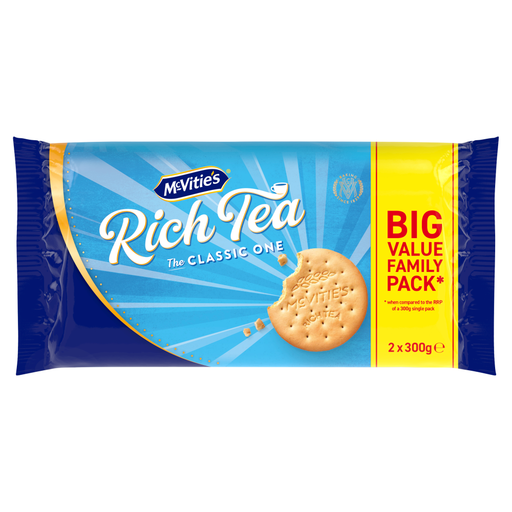 No image available
A rich tea option if you prefer the light, crisp biscuit described for this twin-pack variant. It contains two 300g packs; check the ingredients and allergens on the pack before serving.
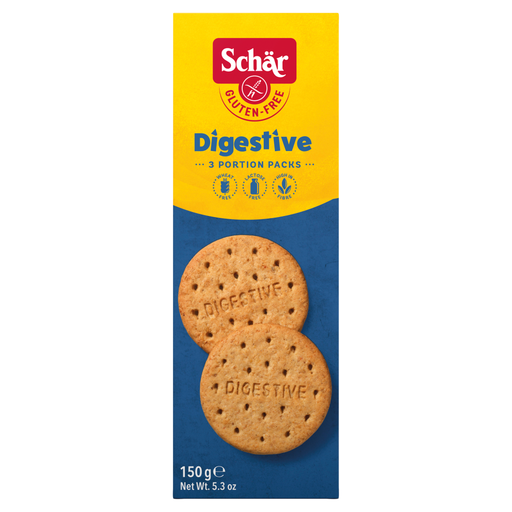 No image available
A 150g digestive option explicitly named gluten-free. If you are buying for a specific allergy, check this product’s full ingredient and precautionary statements rather than relying on the gluten-free label alone.
 No image available
A 400g digestive variant labelled Zero Sugar Free. Its listed ingredients include sweeteners, and its warning says excessive consumption may produce a laxative effect. It contains wheat; check the full pack label for your requirements.
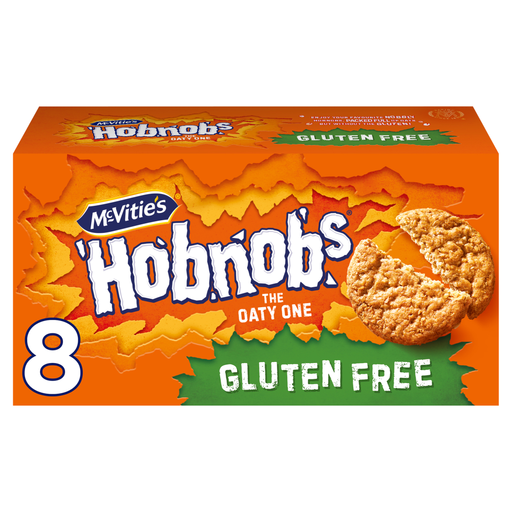 No image available
A 150g gluten-free Hobnob if you want an oaty biscuit with tea. It is neither rich tea nor a digestive, so it does not stand in for either side of that flavour comparison. Check its full allergen statement before serving.
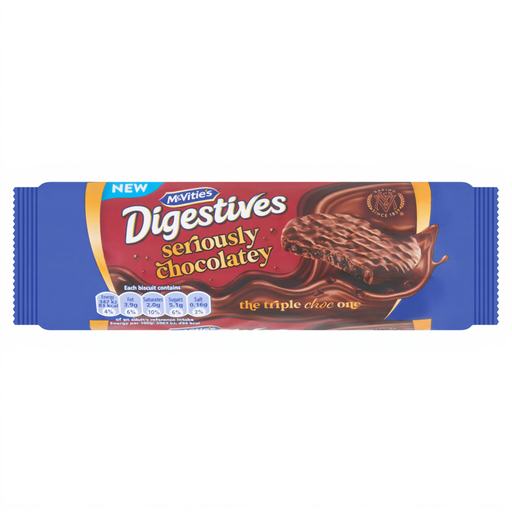 No image available
A 250g chocolate digestive variant for a tea break where chocolate is part of the choice. It is not the plain McVitie’s Original Digestive used in the rich-tea-versus-digestive comparison; check this variant’s own nutrition and allergen label.
No health benefit follows from the name. The listed McVitie’s Original Digestive is described as a wheatmeal biscuit; compare its ingredients and nutrition for the choice you are making.
Use per-100g nutrition to compare recipes and per-biscuit figures to consider the number you will serve. Waitrose lists its rich tea finger at 23 kcal per biscuit and 456 kcal per 100g, so the per-biscuit figure alone is not a like-for-like comparison with a larger digestive.
Follow the instructions on the pack you buy. The listed Tesco rich tea and Sainsbury’s digestive packs advise a cool, dry place and an airtight container after opening.
Check the purchased pack’s ingredients list and relevant precautionary warnings. GOV.UK guidance says that, for UK prepacked food, any of the 14 specified allergens present as ingredients must be clearly labelled within the ingredients list; that requirement does not mean a biscuit suits every allergy.