Tea-break snackers wanting a plain biscuit
If elevenses is a hot drink with a small biscuit, plain Rich Tea is worth comparing by serving. Sainsbury’s lists 35 kcal and 1.3 g sugars per biscuit for its 200 g Rich Tea pack.


Choose plain Rich Tea if you want a small biscuit alongside tea, or an original digestive if its wheat-and-wholemeal recipe appeals more. Sainsbury’s lists 35 kcal and 1.3 g sugars per Rich Tea biscuit, while Waitrose & Partners lists 71 kcal and 2.2 g sugars per McVitie’s Original Digestive; these figures compare two specific products and their stated servings, not every biscuit in either category. For a reduced-sugar or gluten-free option, check the claim and allergen information on the exact pack.
If elevenses is a hot drink with a small biscuit, plain Rich Tea is worth comparing by serving. Sainsbury’s lists 35 kcal and 1.3 g sugars per biscuit for its 200 g Rich Tea pack.
These are different reasons to choose a biscuit. Tesco lists 1.1 g sugars per biscuit for McVitie’s Rich Tea The Light One; Waitrose & Partners describes McVitie’s Original Digestive as 70% wheat and wholemeal. Compare the exact packs rather than treating either feature as a property of the whole category.
Look for a product explicitly labelled for your dietary requirement. Sainsbury’s standard Rich Tea lists wheat and barley, while its separate Free From Digestive is labelled suitable for coeliacs and carries a nut-allergy manufacturing warning.
Start with the portion you expect to eat, then check the recipe and any dietary labelling that matters to you.
| Priority | What to check | Your needs |
|---|---|---|
| Serving and nutrition | Compare kcal and sugars per biscuit, then check per 100 g when biscuit sizes differ. Sainsbury’s lists 35 kcal and 1.3 g sugars for its Rich Tea; Waitrose & Partners lists 71 kcal and 2.2 g sugars for McVitie’s Original Digestive. | For a short tea break, I’d compare the number of biscuits I’m likely to eat, not assume that all Rich Tea or digestive servings are alike. |
| Reduced sugar | Read the claim’s stated comparator and the sugars value on the named pack. Tesco lists McVitie’s Rich Tea The Light One at 1.1 g sugars per biscuit and describes its 30% reduction against a typical semi-sweet biscuit. | If I want a reduced-sugar Rich Tea, I’d check that particular product’s label rather than expect every Rich Tea to carry the same claim. |
| Recipe and fibre | Check the ingredients and fibre declaration for the exact digestive. Waitrose & Partners lists McVitie’s Original Digestive as 70% wheat and wholemeal; the word “digestive” alone does not specify a recipe. | A wheat-and-wholemeal recipe may be what I’m looking for, but I’d choose it for its stated ingredients rather than assume a nutritional benefit from its name. |
| Allergens | Read the current ingredients, dietary label and manufacturing warnings. Sainsbury’s standard Rich Tea lists wheat and barley; its Free From Digestive is labelled suitable for coeliacs but carries a nut-allergy warning. | If I need to avoid gluten or another allergen, an ordinary Rich Tea or digestive name is not enough to establish suitability. |
| Biscuit format | Check the pack weight, biscuit shape and stated serving size before comparing figures per piece. Waitrose & Partners lists 23 kcal and 1.0 g sugars per Rich Tea Finger, which is a different format from a round biscuit. | When I prefer a finger biscuit with tea, I’d compare the amount I would actually eat rather than treat one finger and one round biscuit as equal portions. |
Sainsbury’s lists 35 kcal and 1.3 g sugars per biscuit for its standard Rich Tea, while Tesco lists 38 kcal and 1.1 g sugars for McVitie’s Rich Tea The Light One. A category name does not establish the values on another pack.
Compare the nutrition panel and ingredients of the version you intend to buy, using the same serving basis where possible.
The McVitie’s Original Digestive listed by Waitrose & Partners contains wheat. Sainsbury’s separately labels its Free From Digestive suitable for coeliacs, but that product has a nut-allergy manufacturing warning.
If gluten or another allergen matters, check the current pack’s explicit dietary wording, ingredients and warnings.
A Rich Tea Finger and a round biscuit are different serving units, so figures per piece need the portion in context.
Check pack format and serving size, and use per-100-g nutrition figures when comparing differently sized biscuits.
These named listings illustrate different biscuit routes; their details do not describe every product from the same brand or retailer.
The named products span reduced-sugar Rich Tea and an original digestive with a wheat-and-wholemeal recipe.
Its cited own-label listings provide a standard Rich Tea and a separately labelled Free From Digestive.
Its Rich Tea, oat and digestive category includes classic and reduced-sugar Rich Tea listings alongside digestives.
Waitrose & Partners lists Rich Tea Fingers as a format distinct from a round Rich Tea biscuit.
Marks & Spencer describes its 300 g Rich Tea Biscuits as crisp and subtly sweet for a tea or coffee break.
These options include a Rich Tea twin pack, digestive-style biscuits and a gluten-free Hobnob. A Hobnob offers a different biscuit style; it is not a Rich Tea or a digestive.
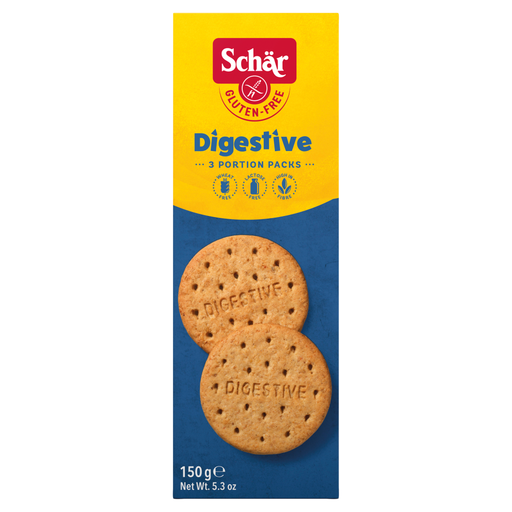 No image available
A gluten-free digestive option for elevenses. If other allergens matter, check the current pack for soya and possible lupin; the product information also includes a choking warning for young children.
 No image available
A sugar-free-labelled digestive rather than a reduced-sugar Rich Tea. It contains wheat, and its product information warns that excessive consumption may produce a laxative effect. Check the pack’s serving basis if comparing it with other biscuits per piece.
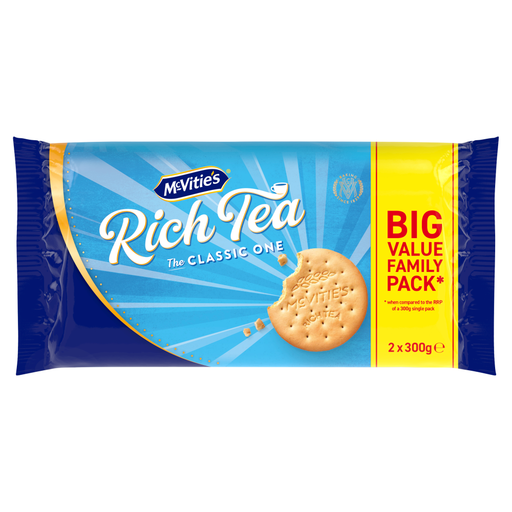 No image available
A plain Rich Tea choice supplied as two 300 g packs. It contains wheat and barley, so check the ingredients if you need to avoid either cereal. Nutrition figures for other Rich Tea products should not be applied to this twin pack.
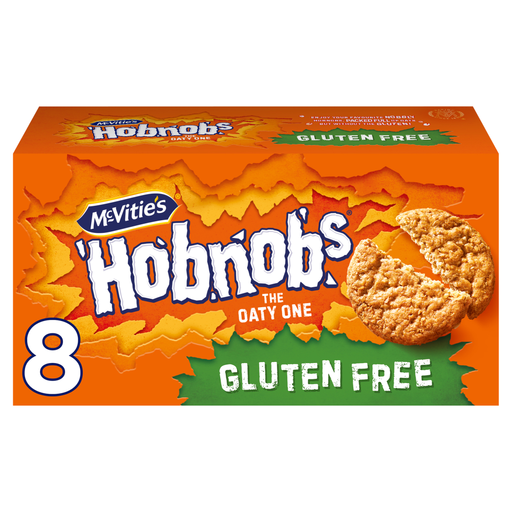 No image available
A gluten-free Hobnob for a tea break, not a Rich Tea or digestive. Check the current allergen information if oats, nuts, milk, egg or soya matter to you, and use the pack’s serving size for nutrition comparisons.
It is for the two cited servings: Sainsbury’s lists 35 kcal per biscuit for its Rich Tea, while Waitrose & Partners lists 71 kcal for McVitie’s Original Digestive. Biscuit sizes and recipes differ, so check the packs before extending that comparison to other products.
No. Check the named product’s nutrition panel. Waitrose & Partners lists McVitie’s Original Digestive as 70% wheat and wholemeal, but that recipe detail does not establish the fibre content of every digestive.
Do not assume either ordinary variety is suitable. Sainsbury’s listed Rich Tea contains wheat and barley, and the McVitie’s Original Digestive listed by Waitrose & Partners contains wheat. Look for explicit gluten-free labelling on the current pack and check any other relevant allergen warnings.
Check both the per-100-g figures and the stated serving size, then consider the portion you expect to eat. Food Standards Agency guidance explains that traffic-light labels indicate high, medium or low amounts of fat, saturates, sugars and salt; a per-biscuit figure still needs its serving size for context.
Yes, particularly when an allergen or dietary label affects your choice. Read the current pack’s ingredients and warnings for the exact variety: Sainsbury’s listed standard Rich Tea contains wheat and barley, while its separate Free From Digestive carries a nut-allergy manufacturing warning.