
24/7 Customer Support

Free returns

Same-day & Next-day Delivery

Quality Guaranteed

Unlock Your Welcome Offers: FREE Delivery | Up to 80% OFF | Free 30-day JoyPlus trial
Download the APP
Choosing ride-on toys for kids can seem straightforward until you compare age ranges, wheel types, battery requirements, weight limits and available space. A toy that looks suitable online may be too large for a flat, too advanced for a toddler or expensive to run once charging and replacement batteries are considered.
This guide cuts through common marketing distractions and explains what to check before buying kids ride-on cars, tricycles, pedal go-karts and other children’s ride-on toys.
Racing stickers, lights and licensed designs can attract children, but they do not confirm that a toy suits their height or coordination. Check the manufacturer’s recommended age, child height range, seat height and maximum load.
A go-kart designed for children between 95 and 115cm tall may be unsuitable for a smaller toddler, even if the stated age appears close. Likewise, a child near the upper weight limit may outgrow a product quickly.
Product dimensions are often overlooked. A ride-on car measuring nearly 1m long may not turn easily in a hallway or fit conveniently in a shed. Before purchasing, measure:
For outdoor toys for children, also consider whether the wheels are designed for smooth floors, concrete, grass, asphalt or brick.
Electric ride-on cars require charging, storage and battery care. One listed 6V quad bike provides approximately 45 minutes of use after an 8–12-hour charge, depending on intensity. A larger 12V model offers up to approximately one hour per charge, but charging still takes several hours.
For occasional indoor play, push-along cars, rocking horses or pedal-powered options may be more convenient. Pedal go-karts for kids also avoid charging altogether and encourage children to control movement with their own legs.
Treat age guidance as a starting point rather than the only measurement. Compare the child’s height with the listed seat position and check whether their feet can reach the pedals or floor comfortably.
Examples from the range include:
Always leave room for comfortable movement rather than buying solely according to the maximum permitted weight.
Look for a stable base, secure steering and controls that match the child’s ability. Useful features may include:
A pedal model gives the child direct control but requires them to coordinate steering and leg movement. A push-along car gives adults more involvement, while an electric model should only be used with close supervision.
Several listed products reference EN71-1-2-3 safety standards. Some electric models also list EN62115, EMC or RoHS-related information. These details are useful indicators of the product’s stated compliance information, but parents should still read the complete manual and warnings.
Check whether assembly is required, which batteries are included, and whether button or remote-control batteries need to be purchased separately. Keep batteries away from children and follow the supplied disposal instructions. The dinosaur pull-back car set, for example, includes a small-parts warning and is not suitable for children under 36 months.
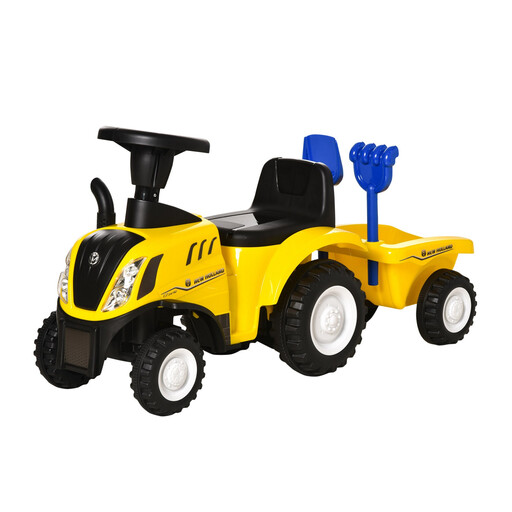
Why This Fits Their Persona: A practical starting point for families with children aged 12–36 months who want a foot-to-floor toy for indoor or garden use without motorised driving.
It avoids charging for movement, has a large steering wheel and uses a foot-to-floor format. The stated 25kg capacity and toddler age range make checking fit straightforward.
Six textured tyres, under-seat storage, a horn, toy lights and included fork and shovel. Assembly is required.
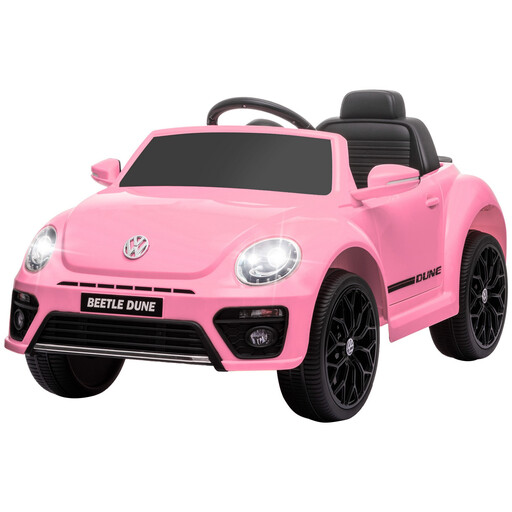
Why This Fits Their Persona: Suitable for gift buyers seeking a feature-rich electric car for flat-surface play, with adult control available when required.
The listing provides clear speed, charging and load information: 3–5km/h, up to one hour of play and a 30kg maximum load. It also includes a remote control.
Soft start, four-wheel suspension, two 12V motors, LED lights, music, FM radio and horn. Recommended age is 3–5 years.
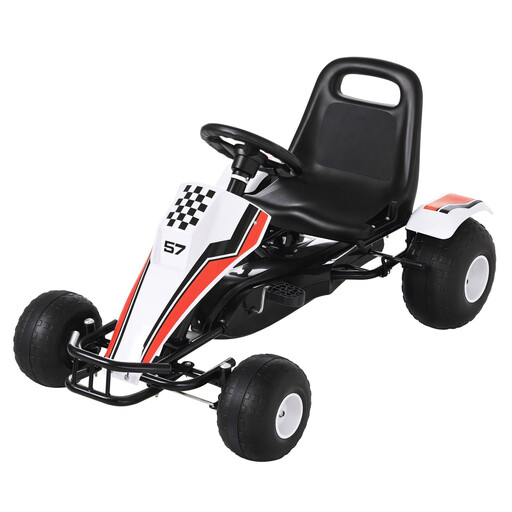
Why This Fits Their Persona: A practical option for children aged 3–6 years who have room to ride outdoors and prefer active, hands-on play without batteries.
There is no charging cycle to manage. An adjustable seat, hand brake, steering wheel and gear lever provide clearly stated controls for active play.
Steel and plastic construction, four wheels, forward and reverse movement and a stated 35kg maximum load. Assembly is required.
For a quieter indoor gift, the AIYAPLAY plush rocking horse has a steel frame, poplar wood base, 40kg capacity and a recommended age of 2–5 years. A tricycle may suit children developing steering and pedalling confidence, while a two-in-one push car can be useful for toddlers who still need adult guidance.
We have compiled a complete, real-time list of products that fully satisfy these strict selection criteria and UK safety regulations.
Some are designed for children from 12 months, but suitability depends on the child’s balance, height and ability to sit securely. Use guardrails, footrests or parent handles where provided, and supervise every ride.
They do not usually require fuel, but they need electricity for charging and may require battery replacement over time. Check the stated charging period and play duration before buying. Pedal and push-along alternatives avoid charging costs.
Lifespan depends on construction, frequency of use, storage and whether the child remains within the recommended size and weight limits. Store electric toys dry, inspect wheels and fasteners regularly, and follow the assembly and maintenance instructions.