Passengers serving drinks after a stop
Individual glass bottles suit a picnic, campsite or accommodation stop when you can carry them in a stable container and secure them for the journey.


Choose individual glass-bottle mixers for drinks at a picnic or destination if you can contain and secure the bottles during travel. Cans are a practical alternative when handling breakable bottles is awkward; plan an alcohol-free drink for the driver, as THINK! advises against drinking alcohol before driving.
Individual glass bottles suit a picnic, campsite or accommodation stop when you can carry them in a stable container and secure them for the journey.
An alcohol-free drink for the driver and a format that avoids loose glass are the priorities. Fever-Tree describes its cans as an on-the-go option.
Compare the nutrition panels on the exact products you might pack. A calorie comparison for one brand’s light tonic does not apply to every light-labelled mixer.
Choose the serving format for the point at which you will open the drinks, then check how you will carry them and whether the exact flavour and ingredients suit your plans.
Choose when: You plan to serve drinks after stopping and can pack the bottles in a stable, secured container.
Bear in mind: Glass needs protection from shifting and breakage in transit.
Choose when: You want individual portions without carrying breakable glass bottles.
Bear in mind: A can will not give you the glass-bottle presentation you may want at the destination.
Choose when: Several people will share a mixer after arrival.
Bear in mind: Check the exact bottle material and size; a shared bottle is less convenient for separate single serves.
| Priority | What to check | Your needs |
|---|---|---|
| Secure packing | Put glass bottles in a stable box or crate and secure it so the bottles cannot shift. The Health and Safety Executive’s load-security guidance recommends containing unstable loads before securing them. | I want to bring glass bottles for drinks after a stop without leaving them loose in the car. |
| Serving size | Check the volume per container and the pack count. Your Coca-Cola UK lists Schweppes Tonic Water as 24 individual 200 ml glass bottles; a Tesco mixer listing also includes 150 ml canned options and larger bottles. | Individual portions suit my planned stop, while a shared bottle makes more sense if several people will use it after arrival. |
| Flavour | Check whether the exact product is tonic water or another mixer, and read its stated flavour and ingredients. Do not assume a canned and bottled variant have identical recipes. | I want a mixer that fits the drink I plan to make when we stop. |
| Ingredients and nutrition | Compare the exact variant’s ingredients and nutrition panel, including the stated amount per 100 ml or serving. Check the physical label when managing an allergen. | If I am choosing a light tonic or avoiding an ingredient, I need to compare the packs I will actually buy. |
Bottles can shift or break during travel. The Health and Safety Executive advises containing unstable vehicle loads and securing them.
Use a stable box or crate and secure it; keep bottles off loose seats and footwells.
Glass needs more protection in transit, whereas Fever-Tree positions its cans for on-the-go use.
Keep glass bottles for a planned stop or destination serve, and consider cans when avoiding breakable packaging matters more.
Fentimans says its Naturally Light Tonic Water has 30% fewer calories than its own Premium Indian Tonic Water. That comparison does not describe other brands or variants.
Compare the nutrition panels and ingredients on the exact packs.
THINK! says it is not possible to say how much alcohol an individual can drink and remain below the drink-driving limit.
Choose an alcohol-free drink for anyone who will drive.
Its tonic range includes cans for on-the-go use and bottles for serving after a stop, according to Fever-Tree.
Fentimans offers tonic variants for buyers comparing flavour, serving size and nutrition.
Your Coca-Cola UK lists Schweppes Tonic Water in a case of 24 individual 200 ml glass bottles.
These 150 ml tonic-water multipacks are options for individual servings rather than the 200 ml glass-bottle route. If you specifically want cans, confirm the packaging on each product page before buying.
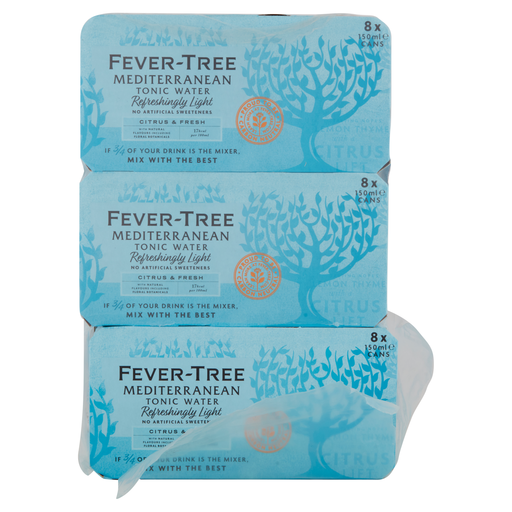 No image available
For individual mixer portions at a planned stop, this pack contains eight 150 ml servings. Check the exact packaging and nutrition label if either affects your choice.
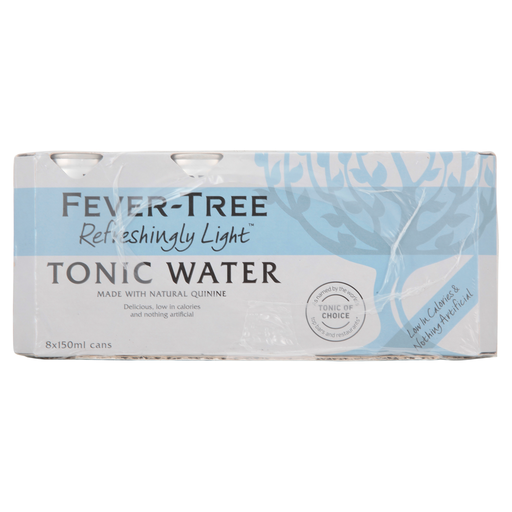 No image available
For portioned drinks after stopping, this Naturally Light pack has eight 150 ml servings. Compare its own nutrition panel with other tonic variants rather than relying on the word ‘Light’ alone.
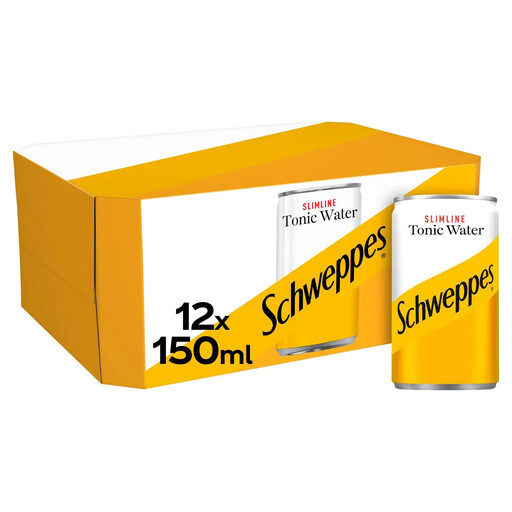 No image available
For a group wanting separate tonic servings at a stop, this pack contains twelve 150 ml portions. Check its packaging, ingredients and nutrition on the exact pack.
 No image available
For individual tonic serves after arrival, this pack has eight 150 ml portions. Confirm the packaging format if you are packing it instead of glass bottles.
They suit drinks served after a stop if you can transport them securely. As a practical application of the Health and Safety Executive’s load-security guidance, place the bottles in a stable box or crate and secure it so they cannot shift; this is not a private-car-specific legal ruling about glass bottles.
Choose an alcohol-free drink for the driver. THINK! says there is no amount of alcohol that can be assumed to keep every individual below the drink-driving limit, and notes that Scotland’s statutory limits are lower than those in England, Wales and Northern Ireland.
Read the ingredients list on the exact prepacked drink. GOV.UK says that any of the 14 regulated allergens present as ingredients must be clearly labelled there.
Follow the on-pack recycling instructions and check local collection guidance. Recycle Now recommends its postcode-based Recycling Locator if you are unsure what can be collected where you are.