Travellers watching calories per snack
If you plan to eat a whole bar at a stop, compare its full-bar calories with the other food you intend to take. A sugar figure alone cannot answer that question.


Start with calories for the whole bar you plan to eat: a lower sugar figure does not establish that a protein bar is lower in calories. Among three specific variants with published per-bar figures, Barebells Banana Dream has 205 kcal and 16g protein per 55g bar, Myprotein Layered Protein Bar Triple Chocolate Fudge has 212 kcal and 20g protein per 60g bar, and PhD Smart Bar White Choc Blondie lists 238 calories and 21g protein. Check the chosen flavour’s current label, ingredients and warnings before packing it for a journey.
If you plan to eat a whole bar at a stop, compare its full-bar calories with the other food you intend to take. A sugar figure alone cannot answer that question.
If protein is an important reason for choosing a bar, read its grams of protein alongside calories for the same complete bar. Check the selected flavour rather than relying on a figure for the range.
If you or a passenger needs to avoid particular ingredients, read the exact flavour’s ingredient and allergen statements before packing or sharing it. Also check any warning about excessive consumption.
Compare complete bars first, then decide how much protein matters for this particular snack. Before the trip, check the label on the flavour and pack you will actually take.
| Priority | What to check | Your needs |
|---|---|---|
| Whole-bar calories | Find kcal for the complete bar, not just per 100g. Check the bar’s weight and whether the stated serving is the amount you will eat. NHS label guidance distinguishes per-100g information from portion information. | I’m likely to eat the whole bar during a stop, so its full-bar calorie figure is the useful comparison. A lower sugar figure would not settle my calorie choice. |
| Protein and sugars | Compare protein in grams and sugars in grams for the same complete bar as its kcal figure. For example, Barebells UK lists 16g protein and 205 kcal for a 55g Banana Dream bar; PhD lists 21g protein, 1g sugar and 238 calories for White Choc Blondie. | If protein is why I’m choosing a bar, I want to see what I get per bar without assuming that more protein or less sugar means fewer calories. |
| Pack and journey | Check the number and size of bars you are taking, the pack’s storage instructions and whether you have a suitable place to keep it during the journey. | For a planned trip, I may need several bars; for one stop, I only need to pack one. I’ll check how the chosen pack should be stored. |
| Ingredients and warnings | Read the exact flavour’s ingredients, allergen statement and any excessive-consumption warning. Check again when switching flavour or sharing with a passenger. | Someone in the car may need to avoid an ingredient, and I don’t want to overlook a warning on a bar I haven’t tried before. |
Sugar and energy are different label measures. PhD lists 1g sugar and 238 calories for its White Choc Blondie Smart Bar, so its sugar figure does not tell you whether it fits a lower-calorie choice.
Compare kcal for the complete bar first, then read its protein and sugars figures separately.
A per-100g comparison does not show the amount you will consume if one bar weighs 55g and another weighs 60g. The NHS notes that a manufacturer’s stated portion can differ from the amount eaten.
Put each candidate’s bar weight, kcal per complete bar and protein per complete bar side by side.
Barebells UK, Myprotein and Grenade give excessive-consumption laxative-effect warnings for the cited products. That warning matters when planning how many bars to take on a long journey.
Read the chosen pack and avoid relying on several unfamiliar bars as your only planned snacks.
Ingredient and allergen statements differ between the cited Barebells, Grenade and Quest bars. A familiar brand name is not a substitute for the statement on the bar being packed.
Check the exact flavour, including any ‘may contain’ wording, before eating it or offering it to someone else.
These examples show why the precise flavour and bar size matter; they are not interchangeable figures for every product a brand sells.
Barebells UK lists its Soft Protein Bar Banana Dream at 205 kcal and 16g protein per 55g bar.
Myprotein lists 212 kcal and 20g protein per 60g Layered Protein Bar in the cited nutrition information for Triple Chocolate Fudge.
PhD lists 21g protein, 1g sugar and 238 calories for its Smart Bar White Choc Blondie example.
Grenade UK lists 21g protein and 0.4g sugar for its 60g Dark Chocolate Mint bar.
An iHerb UK listing for Quest Chocolate Peanut Butter gives 20g protein and 1g sugar per 60g bar.
Tesco is a retailer rather than a protein-bar manufacturer; its protein-bar category includes individual bars and multipacks.
These bar packs are options to consider for road-trip snacks. Use the nutrition and ingredient information for each exact flavour to decide whether it meets your calorie, protein and passenger needs.
 No image available
This pack provides 12 bars for a planned journey. Compare kcal and protein per complete 50g Golden Caramel bar, and read the pack’s ingredients, warnings and storage instructions.
 No image available
For a trip involving passengers with ingredient restrictions, check the Peanut Butter flavour’s allergen statement before sharing a bar. The pack contains 12 bars of 50g each; compare calories for one whole bar.
 No image available
If you are weighing protein against calories, compare both figures for a complete 60g Oreo Flavour bar rather than relying on the range name. Check the flavour’s ingredients and warnings before packing the four-bar pack.
 No image available
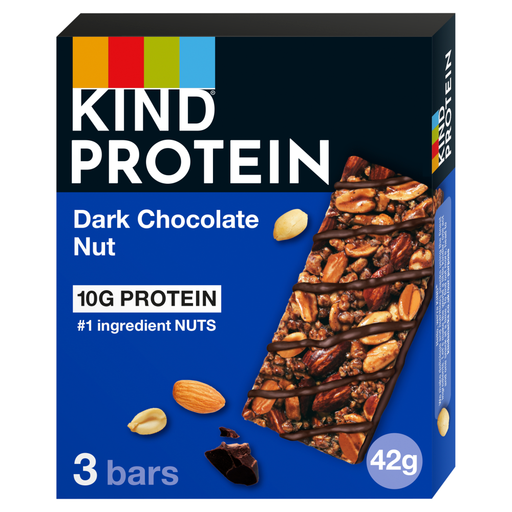
This three-bar pack offers a 42g bar size. If protein is your reason for choosing it, check protein and kcal per whole bar on the exact pack; read the nut and other allergen information before sharing.
No. Read sugar and kcal as separate figures for the complete bar. PhD lists 1g sugar and 238 calories for its White Choc Blondie Smart Bar, so the sugar figure alone cannot settle a lower-calorie choice.
For a road-trip snack you expect to eat in full, compare kcal and protein per whole bar. The NHS notes that a manufacturer’s portion size may differ from what you eat; check the weight and serving information before comparing packs of different sizes.
No. Myprotein says the nutritional content of its Layered Protein Bar may vary slightly by flavour. Read the label for the flavour you intend to pack, particularly when comparing calories per bar.
Check the exact bar’s ingredients and allergen statement before offering it to them. The cited Barebells, Grenade and Quest flavours have different allergen information, so neither the brand nor a similar flavour name is enough to make that decision.
Some do. Barebells UK, Myprotein and Grenade give excessive-consumption laxative-effect warnings for the cited products. Read the warning on your chosen pack and take it into account when deciding how many unfamiliar bars to bring.