Roast-dinner planners serving a group
If baked beans are one of several sides, check the tin’s stated servings against the number of people eating. Pack weight alone does not tell you how large a portion you intend to serve.


For a roast-dinner side, start with a tin whose stated servings cover the table; a standard 400–420g tin may be enough for two side portions, depending on the product and how much you serve. Choose a reduced-salt-and-sugar recipe if its nutrition and ingredients fit your priorities. A multipack suits several planned meals, provided you have room to store it and can follow the instructions for any opened tins.
If baked beans are one of several sides, check the tin’s stated servings against the number of people eating. Pack weight alone does not tell you how large a portion you intend to serve.
If salt, sugars or particular ingredients matter to your household, compare the figures per 100g and read the ingredient list on the exact tin. Reduced-salt-and-sugar and no-added-sugar are different descriptions.
A multipack is useful when you expect to use several tins, have cupboard space and can plan around the storage instructions for any beans left after opening.
Work out how many portions the roast needs, then compare the recipes and decide whether the remaining tins in a multipack have a place in your meal plans.
| Priority | What to check | Your needs |
|---|---|---|
| Portions | Check the tin weight and stated servings. Sainsbury’s describes its 400g standard tin as two servings; do not assume every tin uses the same serving size. | I’m serving beans alongside a roast and want enough for everyone without opening more tins than the meal needs. |
| Recipe | Compare salt and sugars per 100g, then read the ingredients. Waitrose & Partners says its 220g Essential reduced recipe has 30% less salt and sugar than its regular Essential beans; M&S lists sweetener E960a in its no-added-sugar recipe. | Salt or sugars matter to my choice, so I want the figures for the particular recipe I’ll serve, not just its front-of-pack wording. |
| Dietary fit | Read dietary claims and allergen information on the exact pack. The retailer listing for the standard 415g Heinz tin describes that product as vegan and gluten free; that does not establish the status of other tins. | Everyone eating the roast needs a suitable side, so I’ll check this tin rather than assume a whole brand range has the same ingredients. |
| Storage | Check the date marking and instructions after opening. M&S directs shoppers to transfer leftover beans to a non-metallic container and refrigerate them; its standard and no-added-sugar recipes state different use-within periods. | If I open more than the meal needs, I want to know whether I can use the leftovers within the time stated on that tin. |
Salt, sugars, pack size and ingredients differ. For example, Waitrose & Partners lists 0.30g salt per 100g for its 220g Essential reduced recipe, while M&S lists sweetener E960a in its no-added-sugar beans.
Compare the nutrition panel per 100g and read the ingredients on the recipe you intend to buy.
Extra unopened tins need storage space, and the instructions for leftovers apply separately each time you open one.
Check the date marking before stocking up. For opened beans, follow that product’s directions for transferring, refrigerating and using the remainder.
GOV.UK explains that best-before dates concern quality, while use-by dates concern safety; it lists tinned baked beans among foods that may carry a best-before date.
Read the marking and storage directions on the can. Do not apply advice about best-before dates to a food marked with a use-by date.
The range includes standard beans, no-added-sugar options and multipacks. Check the variant rather than extending one tin’s details across the range.
Tesco Groceries lists standard and no-added-sugar formats alongside several brands and Tesco-labelled options.
Its standard baked beans in tomato sauce provide a 400g own-label option for a roast-dinner side.
M&S lists standard and no-added-sugar baked beans with different pack weights, ingredients and storage directions.
The range provides standard beans and a smaller reduced-salt-and-sugar recipe.
These options include tomato-sauce baked-bean multipacks for planned repeat meals, a reduced-sugar-and-salt multipack and a smaller 220g tin. Check each pack’s stated portions and label against your roast-dinner plans.
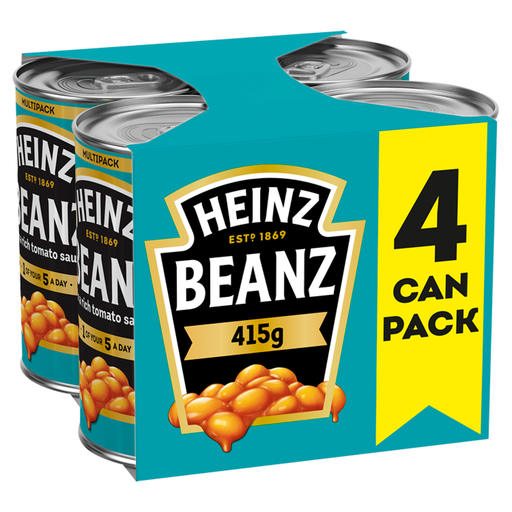 Image unavailable
Four tins provide a format for several planned meals or a larger gathering. Check the portions you intend to serve from each 415g tin and follow the label’s directions for opened beans.
 Image unavailable
The six-tin pack suits a plan that uses beans across several meals. Each tin is 410g; check the portions needed for your roast and the storage directions if you open only part of a tin.
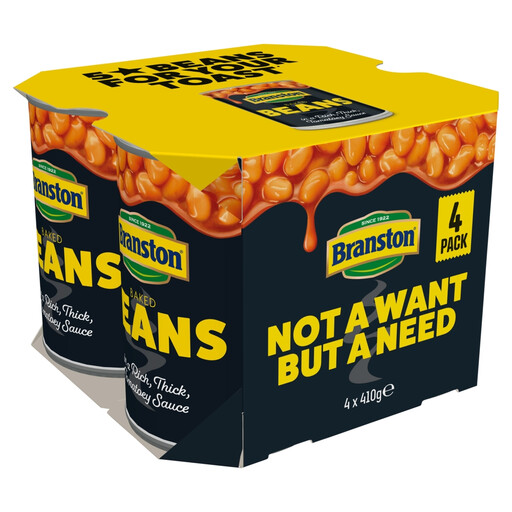 Image unavailable
Four 410g tins offer another quantity for repeat meals. Match the amount you open to the portions you need, and check the label before storing leftovers.
 Image unavailable
This four-tin pack combines a reduced-sugar-and-salt recipe with a format for repeat meals. Compare its nutrition and ingredients with the exact standard recipe you would otherwise choose; check the label if sweeteners matter to you.
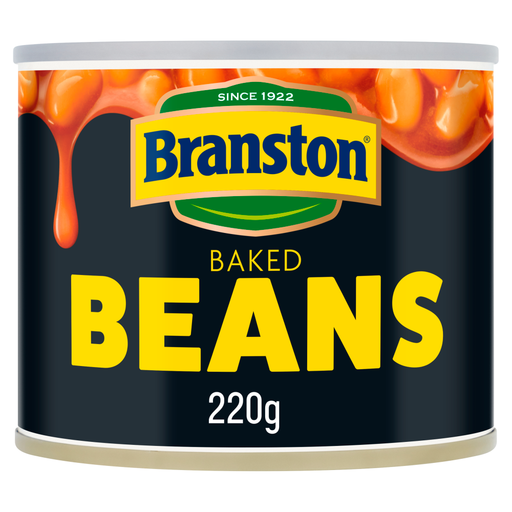 Image unavailable
The 220g tin is an option when you plan to serve a smaller amount. Check whether it covers your intended portions and follow the label’s instructions for any leftovers.
It depends on the tin’s stated servings and the portions you plan to serve. Sainsbury’s describes its standard 400g tin as two servings; check the label and the number of people at your table before deciding how many tins to open.
No. Waitrose & Partners says its Essential reduced recipe has 30% less sugar and salt than its regular Essential beans. M&S lists 1.2g sugars per 100g and sweetener E960a in its no-added-sugar recipe. Read the figures and ingredients on the exact tin.
Follow the instructions on the tin you opened. M&S directs shoppers to transfer unused beans to a non-metallic container and refrigerate them: its standard product says to eat them within three days, while its no-added-sugar product says within two days.
GOV.UK says best-before dates concern quality, whereas use-by dates concern safety, and lists tinned baked beans among foods that may carry a best-before date. Read the can’s date and storage directions; do not treat advice about best-before dates as applying to use-by dates.
Yes, if an ingredient, allergen or dietary claim affects who can eat it. The retailer listing describes the standard 415g Heinz tin as vegan and gluten free, but that does not establish the status of other recipes. M&S also advises checking labels because product information can change.