What should you check?
Choose the fat level for the dish first, then compare pack labels and storage instructions for the way you shop and cook.
| Priority |
What to check |
Your needs |
| Milk fat |
Compare fat and saturates per 100ml on the exact pack. The NHS suggests 1% or skimmed milk when cutting down on fat. |
I want to reduce fat from the milk I add to roast-dinner sides, rather than assume every type of cow’s milk meets that aim. |
| Mashed potato |
The NHS specifically suggests skimmed milk instead of whole or semi-skimmed milk for mash when reducing saturated fat. Consider other ingredients in the recipe too. |
For roast potatoes served as mash, I want the milk choice to match my fat-reduction goal. |
| Storage format |
Check where the unopened pack must be stored, its date marking and how soon it must be used after opening. Sainsbury’s says to refrigerate its semi-skimmed UHT milk and use it within three days of opening; Waitrose states seven days after opening for its filtered semi-skimmed product. |
I shop before the roast or use milk slowly, so the opened-pack instructions matter as much as how long I can keep it unopened. |
| Ingredients |
Check the milk and allergen information on every pack used in mash, sauces or prepared accompaniments. GOV.UK identifies allergen information as a requirement for UK food businesses using regulated allergens. |
Someone eating the roast has a milk allergy, so I need to check every ingredient rather than only the carton of milk. |
Brand and retailer references
These examples show why the exact product and pack instructions matter; a brand name alone does not establish the fat level or storage life of every milk it sells.
Cravendale
Sainsbury’s lists Cravendale filtered fresh semi-skimmed milk, including a 3L pack.
- Filtered fresh semi-skimmed is a format to consider if you want that type of milk for cooking.
- Check the carton’s fat figures and storage instructions; the product name’s longer-freshness wording is not a comparison with every other milk.
Tesco
Tesco’s 1L semi-skimmed milk listing states less than 2% fat and gives 1.7g fat and 1.0g saturates per 100ml.
- The per-100ml figures provide a basis for comparing this product with another pack.
- Use the figures for this specific product, not as specifications for Tesco’s entire milk range.
Sainsbury’s
Sainsbury’s lists fresh semi-skimmed milk and a 1L semi-skimmed UHT product. The UHT listing states 1.6g fat per 100ml.
- The UHT format offers unopened cupboard storage for planning ahead.
- Sainsbury’s says to refrigerate that UHT product after opening and use it within three days.
Asda
Asda lists Graham’s Light & Low Semi-Skimmed Milk.
- Check this product’s pack for its fat and saturates figures and storage instructions before comparing it with another milk.
M&S
M&S lists organic British semi-skimmed milk in a 568ml pack, with 1.8g fat and 1.1g saturates per 100g.
- The listing identifies both the organic variant and its nutrition figures.
- Its stated nutrition basis is per 100g; check the units before comparing its figures with a carton labelled per 100ml.
Waitrose
Waitrose lists filtered British free-range semi-skimmed milk in a 2L pack.
- Waitrose states storage of up to one month unopened and seven days after opening for this product.
- It remains semi-skimmed milk; choose the fat level separately from the storage format, and follow the pack instructions.
Joybuy skimmed milk options
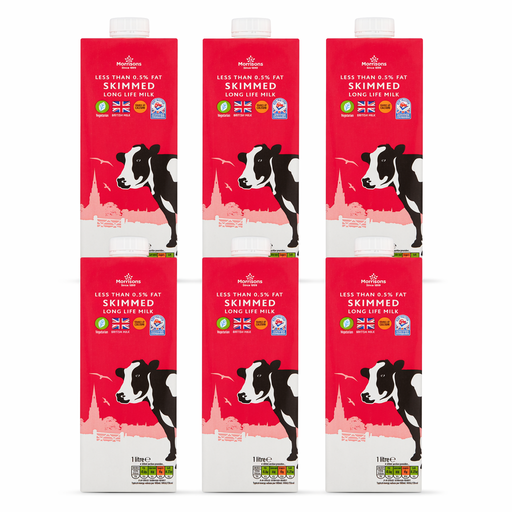
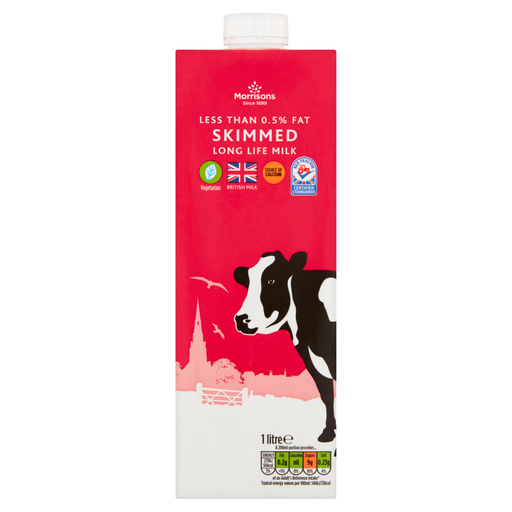
These Joybuy options are Morrisons UHT skimmed milk for a roast where reducing milk fat is the priority. One listing is for six 1-litre packs; the other is for a single 1-litre carton. Check the pack details before choosing the quantity you need.
 No image available
Morrisons British UHT Skimmed Milk, 6 × 1 litre
Skimmed milk suits a roast-side recipe where reducing milk fat is the aim; the NHS specifically suggests it for mashed potato. This listing is for six 1-litre UHT packs, so check the carton’s storage instructions and whether the quantity suits your plans. If cooking for children under five, check the pack’s suitability wording before use.
Joybuy
 No image available
Morrisons British UHT Skimmed Milk, 1 litre
This 1-litre UHT skimmed milk is another option for mash or other roast sides when cutting milk fat is the aim. Choose the single-carton listing if that quantity fits your cooking plans, and check the pack for storage instructions and suitability wording, particularly if serving children under five.
Joybuy
Questions about milk for roast dinner prep
Can I use skimmed milk instead of whole milk in mash?
Yes, if reducing fat is your aim. The NHS specifically suggests skimmed milk instead of whole or semi-skimmed milk for mashed potato. Add it gradually to reach the texture you want, bearing in mind the other ingredients in the mash.
Should I choose semi-skimmed or skimmed milk for roast sides?
Choose skimmed, or consider 1% milk, when cutting milk fat is the priority; the NHS specifically names skimmed milk for mash. Semi-skimmed is lower in fat than whole milk but is not the same fat-reduction choice. Check fat and saturates per 100ml on the product you buy.
Is filtered or UHT milk more useful when shopping ahead?
Choose according to where you can store the unopened pack and when you expect to finish it. Sainsbury’s semi-skimmed UHT milk can be kept unopened as directed on its pack, then refrigerated and used within three days of opening. Waitrose states up to one month unopened and seven days opened for its filtered semi-skimmed product; follow the instructions on the pack you choose.
Can I serve cow’s-milk roast sides to someone with a milk allergy?
Do not assume they are suitable: cow’s milk contains milk, a regulated allergen. Check every ingredient used in the meal, including spreads, sauces and prepared gravy, and establish which alternatives are suitable for the guest.
Do I need to read the pack if I usually buy the same milk?
Yes. Check the actual pack’s nutrition and allergen information, date marking and storage instructions, especially when changing product or pack size or buying milk ahead of the roast.


