One-roast holiday cooks
If you only need to track the roast’s rest in an unfamiliar kitchen, a single countdown with legible digits and an alarm keeps the task simple.


For one resting roast, choose a straightforward countdown timer with a display you can read and an alarm you can notice from wherever you will be serving the meal. Consider adjustable volume or separate timer channels if the cottage is noisy or you are timing other dishes at the same time. A timer tracks the rest; it cannot tell you whether the meat was thoroughly cooked, so follow the cooking instructions and use a clean food thermometer where needed.
If you only need to track the roast’s rest in an unfamiliar kitchen, a single countdown with legible digits and an alarm keeps the task simple.
If you will set the table or join others in another room, think about where the timer can sit and whether you will notice its alarm. Adjustable volume may help when the kitchen is noisy or other guests are sleeping.
If side dishes, gravy or dessert need their own end times while the roast rests, separate timer channels let you keep those countdowns running independently.
Start with the rest time in your recipe and whether one countdown is enough. Then consider where you will put the timer and how you will notice it while serving.
| Concern | What to check | Who this matters to |
|---|---|---|
| Noticing the alarm | Check the alert options and whether the timer can stand visibly or attach to a suitable metal surface. | If I leave the kitchen to serve drinks, I need to notice when the roast’s rest ends without staying beside the worktop. Around 40% of consumers put that alert need first. |
| Setting one countdown | Check for countdown mode, legible controls and a maximum duration that covers the recipe. | With just one roast to track, I want to set the timer quickly and read the remaining time at a glance. Roughly 30% of consumers prioritise that simple countdown. |
| Timing several dishes | Check how many countdowns run independently and whether their alarms are distinguishable. | When gravy and side dishes have separate end times, I need to keep their timings apart from the roast’s rest. About 20% of consumers make independent timers their primary concern. |
| Checking the cooking | Follow the cooking instructions; use a clean food thermometer where a check for thorough cooking is needed. | If I am unsure whether the meat was cooked thoroughly, knowing how long it rested does not answer that question. Around 10% of consumers put that distinction first. |
Elapsed resting time does not reveal the meat’s internal temperature. GOV.UK advises following cooking instructions and using a clean food thermometer to check thorough cooking where needed.
Set the timer for the rest, but use the recipe or packet instructions and a clean thermometer when checking the cooking itself.
A thermometer is another item to bring to the cottage and clean after use.
An alarm is less useful if the timer is hidden on a crowded worktop or cannot be heard from the dining area.
Choose a visible position and an alert suited to the cottage; check for adjustable volume if kitchen noise or sleeping guests make the setting important.
Independent timers help with dishes that need different end times, but their extra controls do little for one countdown.
Choose a single timer for one rest period. Look for separate channels only if other dishes need simultaneous alarms.
Salter, Lakeland and Taylor’s Eye Witness list models with a 99-minute-59-second limit, while Salter also specifies a longer-range model. The relevant limit depends on the precise timer you choose.
Compare the timer’s stated range with your recipe and any longer cooking tasks for which you intend to use it.
Salter lists both a compact digital timer and a longer-range model with adjustable alarm volume.
Lakeland’s Classic Digital Kitchen Timer is a compact option to consider for one short countdown.
Its SSD022 Professional Digital Kitchen Timer offers several ways to position a single timer in an unfamiliar kitchen.
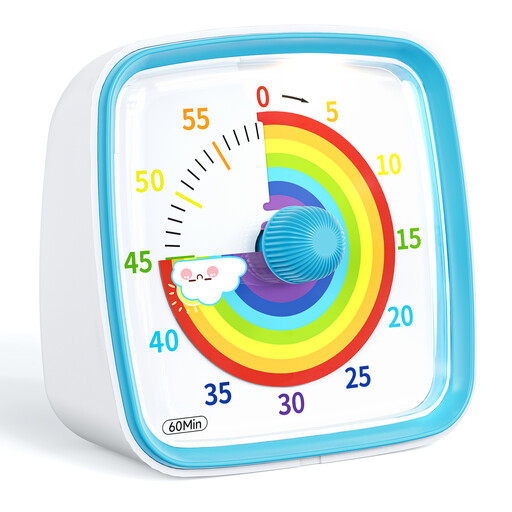
This visual timer is a choice for a single roast rest of no more than 60 minutes. If you specifically want a numeric digital display, check its display before choosing it.
 No image available
Consider this visual countdown for one roast rest that lasts no more than 60 minutes. It has a mute alarm function; check the display, placement and alert options if you need to read digits or notice the end of the rest from another room.
No. A timer measures elapsed time, not whether meat was thoroughly cooked. GOV.UK advises following cooking instructions and using a clean food thermometer to check thorough cooking where needed.
Choose a range that covers the rest specified by your recipe. Lakeland and Taylor’s Eye Witness specify models reaching 99 minutes 59 seconds, while Salter lists a model reaching 19 hours 59 minutes 59 seconds if you also need longer timings. The Yunbaoit visual timer shown here has a 60-minute countdown limit.
Choose whichever lets you keep the timer visible in that kitchen. Magnetic mounting requires a suitable metal surface; a freestanding design gives you another placement option if there is no convenient one.
No, one countdown is enough to track a single resting period. Separate channels become useful when other dishes need their own simultaneous countdowns and end alerts.