
24/7 Customer Support

Free returns

Same-day & Next-day Delivery

Quality Guaranteed

Unlock Your Welcome Offers: FREE Delivery | Up to 80% OFF | Free 30-day JoyPlus trial
Download the APP
Keeping a home clean can feel like a never-ending task, especially when balancing work, family and a social life. The constant cycle of vacuuming and mopping eats into valuable time that could be spent relaxing or with loved ones. A robot vacuum and mop offers a practical solution, automating daily floor cleaning to maintain a consistently tidy living space with minimal effort.
As the Joybuy Product Recommendation Officer, my role is to help you navigate the options. This guide is designed to provide clear, practical advice on what to look for in a modern robot vacuum cleaner and to highlight a few models that stand out for their features and performance.
With so many features available, it's helpful to focus on what will make the biggest difference in your daily life. Here are a few key considerations for UK homes.
The way a robot navigates is crucial for efficient cleaning. Basic models may use random patterns, but for medium to large homes, a laser navigation robot vacuum is often more effective. These models use LDS (Laser Distance Sensor) technology to scan and create an accurate map of your home. This allows for methodical, room-by-room cleaning, the ability to set no-go zones (like around pet bowls or delicate furniture) and targeted cleaning of specific areas via a companion app.
Suction power, measured in Pascals (Pa), indicates how effectively a vacuum can lift dirt, dust and debris. For homes with carpets or pets, higher suction power is beneficial for tackling embedded dirt and robot vacuum for pet hair. Look for models with at least 4,000 Pa.
For mopping, consider the technology used. Some models simply drag a damp cloth, while others feature vibrating or rotating mop pads that actively scrub the floor to remove more stubborn grime. The ability to control water flow through a smart vacuum with app control also helps protect delicate flooring like hardwood.
The goal of a robot cleaner is to save you time. A self-emptying robot vacuum takes this a step further by automatically transferring the contents of its small onboard dustbin into a larger bag or container in the docking station. This can provide weeks of hands-off operation before the main station needs attention. Another key feature is battery life; a long runtime vacuum cleaner is essential for cleaning larger homes in a single session without needing to stop and recharge.
Here are a few models that offer a compelling combination of features, performance and convenience.
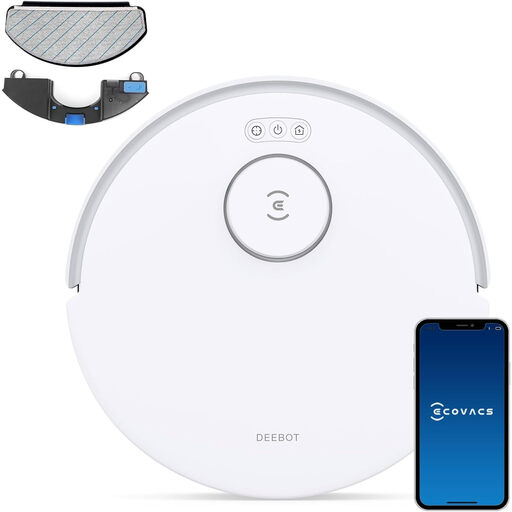
Why It Stands Out: This model delivers exceptional cleaning power and endurance. With an impressive 8,000 Pa of suction and a runtime of up to 300 minutes, it's built to handle large spaces and demanding cleaning tasks without interruption.
Pros:
Who is it for?
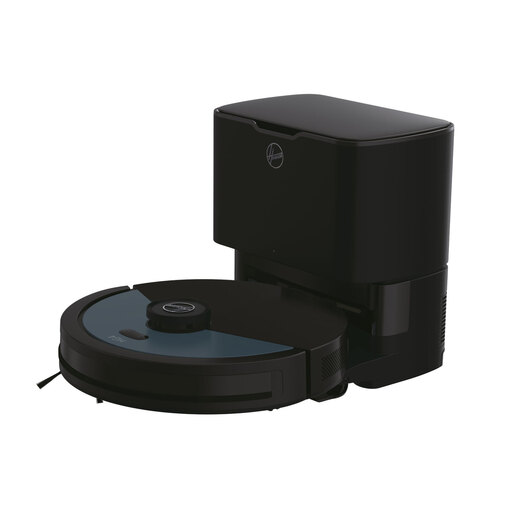
Why It Stands Out: The Hoover HG4 Hydro Pro is centred around convenience. Its main attraction is the self-emptying base, which can hold up to 60 days' worth of dust and debris, making it a truly set-and-forget solution for busy individuals.
Pros:
Who is it for?
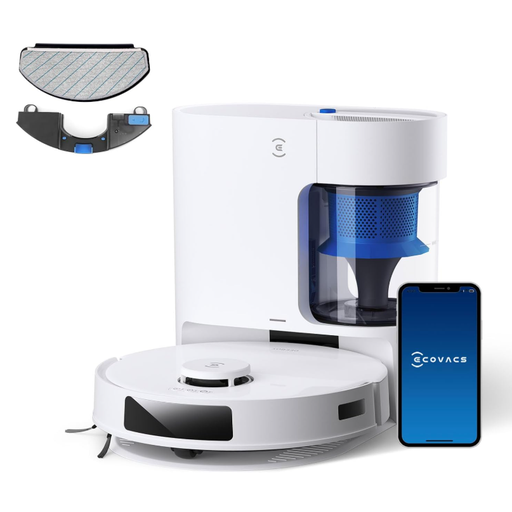
Why It Stands Out: The N20 PLUS combines the best of both worlds: the formidable 8,000 Pa suction power of the standard N20 with the hands-free convenience of a self-empty station. It's a high-performance option for those who want powerful cleaning without the follow-up maintenance.
Pros:
Who is it for?
If the models above aren't quite the right fit, or if you'd like to compare more devices with intelligent mapping capabilities, you can explore a wider selection.
? Discover more models in our Laser Navigation Vacuum category
Modern robot vacuums are generally very effective at managing pet hair. Models with high suction power (4,000 Pa or more) and specialised anti-tangle brush designs are particularly well-suited for this. The combination of strong suction and consistent, daily cleaning helps prevent hair from building up on floors and in carpets.
For daily maintenance, a high-quality robot vacuum and mop can significantly reduce the need for manual cleaning. It excels at keeping floors free of dust, crumbs and pet hair. However, you may still want to keep a traditional vacuum for occasional deep cleaning of thick-pile carpets, upholstery, stairs or hard-to-reach corners.
A laser navigation robot vacuum uses a spinning laser turret (often called LDS or LiDAR) to continuously scan its surroundings. It measures the distance to walls and objects to build a detailed, accurate map of the room's layout. This map allows the robot to plan a logical and efficient cleaning path, ensuring it covers the entire area without missing spots or repeatedly cleaning the same place. It also enables advanced features like virtual walls and room-specific cleaning commands through the app.