
24/7 Customer Support

Free returns

Same-day & Next-day Delivery

Quality Guaranteed

Unlock Your Welcome Offers: FREE Delivery | Up to 80% OFF | Free 30-day JoyPlus trial
Download the APP
As a Joybuy Product Recommendation Officer, my role is to help you navigate the crowded market of home technology. A robot vacuum and mop promises to free up your time, but choosing the right one can be confusing. Many shoppers are drawn in by impressive-sounding features that don't deliver in a real-world UK home, leading to disappointment and a device that gathers dust instead of cleaning it.
Before you invest, it's crucial to understand the common pitfalls. We'll look at the key specifications that actually matter and help you find a model that fits your home and lifestyle, not just a marketing checklist.
Many promising-looking models fail to perform due to a few common design flaws or over-hyped features. Here’s what to watch out for:
To avoid these traps, focus on the underlying technology. These three parameters are non-negotiable for a reliable and effective all-in-one robot vacuum cleaner.
The single most important feature for efficient cleaning is the navigation technology.
The base station has evolved far beyond simple charging. Understanding the different types is key to finding the right level of automation for your needs.
Not all mops are created equal. Look for systems designed for active cleaning, not just passive wiping.
Based on these practical criteria, we've matched a few models from our collection to different UK household needs.
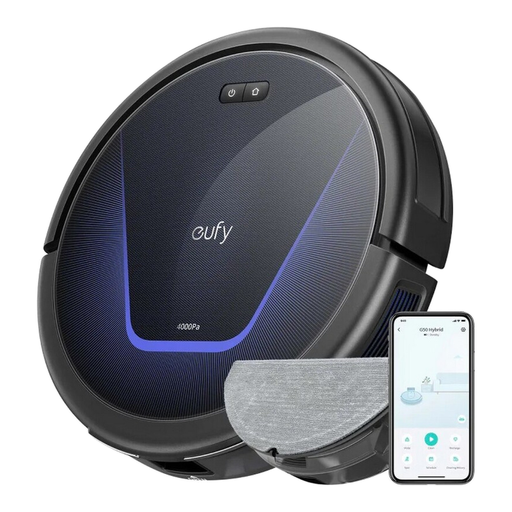
Why This Fits Their Persona: Ideal for those in smaller homes or flats who want to try a robot vacuum and mop without a large initial investment. It provides solid core functionality for daily upkeep on hard floors and low-pile carpets.
While it doesn't have LiDAR, its Dynamic Navigation Pro is a step up from random bump-and-run, offering more systematic pathing. The 4,000Pa suction is balanced with an anti-tangle brush, focusing on real-world pickup over inflated numbers.
Features a 2-in-1 vacuum and mop system for simultaneous cleaning. Its slim, low-profile design allows it to clean under sofas and beds where upright vacuums can't reach.
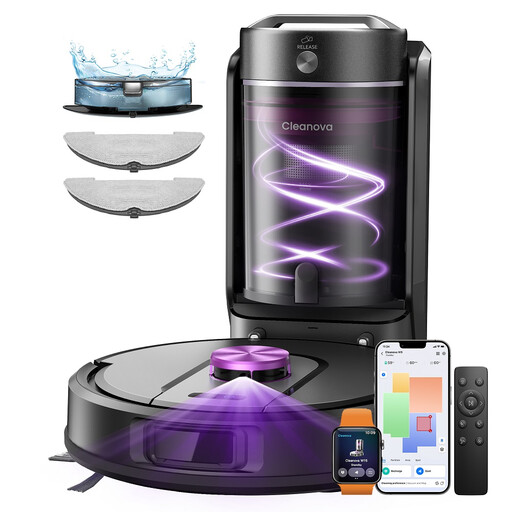
Why This Fits Their Persona: For those who value automation and low running costs. The combination of powerful suction, precise navigation, and a self-emptying station makes it perfect for tackling pet hair and daily dirt with minimal intervention.
It pairs high 10,000Pa suction with intelligent LiDAR navigation for efficient, powerful cleaning. The auto-empty station addresses the maintenance pitfall, providing up to 90 days of hands-free operation.
The innovative bagless self-emptying station uses multi-cyclone technology, saving money on disposable bags and reducing environmental waste. It also supports up to 5 maps for multi-storey homes.
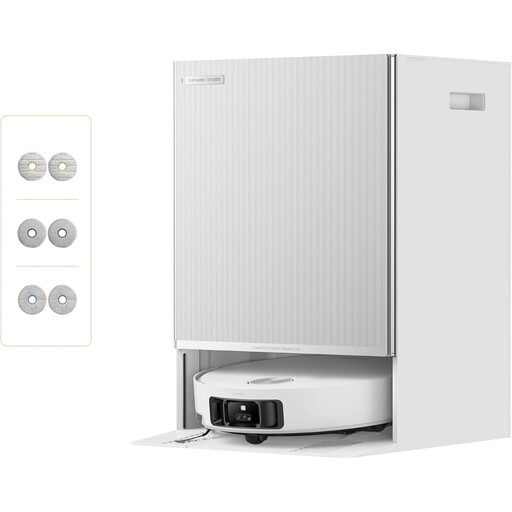
Why This Fits Their Persona: For the homeowner who wants the most advanced, fully automated cleaning system available. It's designed for complex homes with mixed flooring, pets and a need for deep, hygienic cleaning with zero daily effort.
This model completely redefines automated mopping. The dock automatically switches between three different mop types for different floors and uses a 100°C self-cleaning system to sterilise the pads, eliminating the "dirty rag" problem entirely.
Its standout feature is the ability to clear obstacles up to 8cm high, allowing it to navigate over high thresholds or door tracks. The 30,000Pa suction and 100% detangling brush provide exceptional performance on all surfaces.
We have compiled a complete, real-time list of products that fully satisfy these strict selection criteria and UK safety regulations.
Yes, but it is important to choose the right model. Modern smart robot vacuum for carpets and hard floors use ultrasonic sensors to detect carpets. When they do, they can automatically increase suction power for a deeper clean and, crucially, lift the mopping pads to prevent your carpets from getting wet. This makes them highly effective in homes with a mix of flooring types.
The lifespan of a robot vacuum typically ranges from 2 to 5 years, depending heavily on the build quality, battery and how well it is maintained. The lithium-ion battery is often the first component to degrade. You can extend the life of your device by regularly cleaning the filters, brushes and sensors as instructed in the user manual. Choosing a model from a reputable brand also ensures better access to replacement parts like batteries, brushes and filters.
Running costs vary by model. For basic units, you will only need to replace filters and brushes periodically. For a self-emptying robot vacuum, the main recurring cost is the disposable dust bags, which typically need replacing every 1-3 months. Some newer models, like the Vactidy W15, feature bagless self-emptying systems to eliminate this cost. For all-in-one stations, you may also need to purchase the brand's specific cleaning solution.