
24/7 Customer Support

Free returns

Same-day & Next-day Delivery

Quality Guaranteed

Unlock Your Welcome Offers: FREE Delivery | Up to 80% OFF | Free 30-day JoyPlus trial
Download the APP
Keeping floors clean in a busy UK household can feel like a never-ending task. Between work, family and the unpredictable British weather bringing in mud and leaves, finding time for the hoover is a challenge. A robot vacuum and mop promises to take this chore off your hands, but the market is flooded with models that often over-promise and under-deliver.
As the Joybuy Product Recommendation Officer, my role is to help you see past the marketing jargon. Many buyers find their new gadget gathering dust in a corner after just a few months. This is often due to a few common but costly pitfalls:
To avoid these traps, focus on the underlying technology rather than the headline features. Here are the non-negotiable specifications to check before you buy.
The single most important feature is how the robot sees and navigates your home. This determines its cleaning efficiency and whether it can operate without constant supervision.
A powerful motor is useful, but the brush and mopping system do the real work. For UK homes with a mix of carpets and hard floors, versatility is key.
The ultimate goal is convenience. Consider how much hands-on effort you're willing to put in after the initial setup.
Instead of a one-size-fits-all approach, we've matched some models to the specific needs of different UK households.
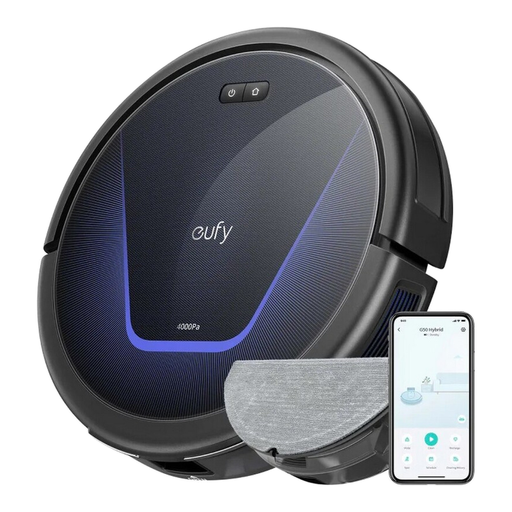
Why This Fits Their Persona: This is a practical all-rounder for a typical family home. It balances vacuuming and mopping without unnecessary complexity and its anti-tangle brush is specifically designed to handle the daily challenge of pet hair on both carpets and hard floors.
It uses Dynamic Navigation Pro, a more systematic approach than basic random-bounce models, ensuring better coverage and avoiding the "dumb robot" frustration.
Features a dedicated anti-tangle brush for pet hair and a slim profile to clean under sofas and beds. It combines vacuuming and mopping in one pass.
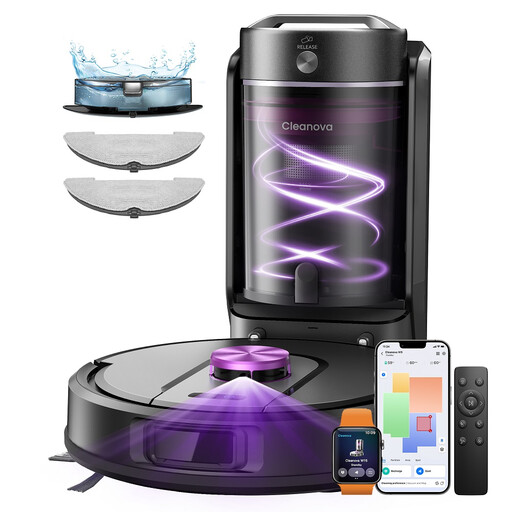
Why This Fits Their Persona: For those who want a truly "set-and-forget" solution. The combination of high-precision LiDAR navigation, multi-floor map saving and a self-emptying station that doesn't require bags makes this a top-tier choice for automated cleaning in a modern smart home.
Its innovative bagless self-emptying station directly counters the hidden cost of proprietary dust bags, making it more economical and eco-friendly over its lifespan.
Features advanced LiDAR navigation for efficient mapping and supports up to 5 maps for multi-storey homes. The 10,000Pa suction provides deep cleaning power.
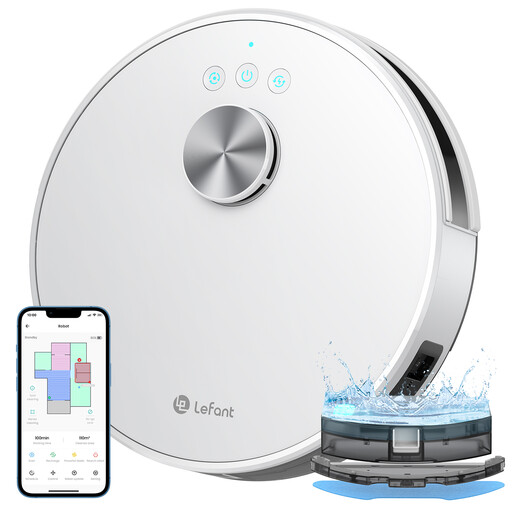
Why This Fits Their Persona: This model packs high-end features into a compact frame. Its strong suction is excellent for pet hair, while the quiet operation (55dB) is a major benefit in smaller living spaces. Precise LiDAR navigation helps it work efficiently around furniture and pet toys.
It proves that high suction power is effective when paired with great navigation. The 5500Pa is not just a number; it's backed by LiDAR to ensure that power is applied where it's needed.
A very quiet robotic vacuum for carpets and hard floors at only 55dB. It also has a long 200-minute runtime, capable of cleaning a flat several times over on one charge.
We have compiled a complete, real-time list of products that fully satisfy these strict selection criteria and UK safety regulations.
For daily maintenance, a good robot vacuum can significantly reduce the need for manual cleaning. They are excellent at keeping on top of dust, crumbs and pet hair. However, for deep cleaning tasks like stairs, upholstery or occasional heavy spills, you will likely still want to keep a traditional corded or cordless vacuum on hand.
With proper maintenance, a quality robot vacuum should last for three to five years. The most common components that may need replacing are the battery and brushes, which are typically available from the manufacturer. To maximise lifespan, regularly clean the filters, brushes and sensors as instructed in the user manual.
The energy consumption is surprisingly low. The robot itself uses a minimal amount of electricity while charging, similar to a laptop. The self-emptying station uses a burst of higher power for about 20-30 seconds when it empties the robot, but this happens infrequently. Overall, the annual running cost is typically very low, often amounting to just a few pounds per year.