
24/7 Customer Support

Free returns

Same-day & Next-day Delivery

Quality Guaranteed

Unlock Your Welcome Offers: FREE Delivery | Up to 80% OFF | Free 30-day JoyPlus trial
Download the APP
As a Joybuy Product Recommendation Officer, I see a lot of confusion surrounding the new wave of smart home cleaning devices. The promise of an automatic hoover that both vacuums and mops is tempting for any busy UK household. However, the market is flooded with models and marketing claims can be misleading. Many buyers end up with a device that creates more work than it saves.
Before you invest, it's crucial to understand the common pitfalls that lead to disappointment. By sidestepping these traps, you can find a reliable robot vacuum and mop that genuinely lightens your chore load.
Brands often advertise enormous suction figures, measured in Pascals (Pa). While a high Pa number looks impressive, it's only one part of the cleaning equation. A robot with immense suction but a poorly designed brush or inefficient navigation will still leave dirt behind, especially stubborn pet hair. Hair tangles on the brush, poor edge cleaning and random navigation patterns are common flaws that render high Pa ratings meaningless in a real-world home.
The term "smart navigation" is used loosely. Basic models use simple bump-and-run or gyroscope systems, which means they wander aimlessly until they hit something, often missing entire sections of a room or getting stuck under furniture. This is inefficient and frustrating. A truly smart vacuum cleaner uses advanced mapping technology to clean methodically, room by room.
The biggest leap in this category is the mopping function. However, early and budget models often feature a simple, static wet cloth that is dragged across the floor. This can spread dirt rather than remove it and requires you to constantly wash the pad and refill a tiny water tank. A truly automated, all-in-one robot vacuum should handle its own mop cleaning, drying and refilling to be a genuine time-saver.
To avoid these traps, focus on the technical specifications that deliver real-world performance. Here are the non-negotiable features to look for.
For efficient and thorough cleaning, a LiDAR robot vacuum is the clear choice. LiDAR (Light Detection and Ranging) uses a spinning laser sensor to create a highly accurate, 360-degree map of your home.
The docking station is what separates a helpful gadget from a truly autonomous cleaning system. A basic dock only charges the robot. An advanced, self-emptying robot vacuum station automates the entire process. Look for these functions:
Not all mops are created equal. A simple wet pad offers a light wipe, but for tackling kitchen spills or muddy paw prints, you need more. Look for systems with rotating mop pads or roller mops that actively scrub the floor.
For vacuuming, especially in homes with pets, an anti-tangle brush is essential. These are often made from rubber and designed to resist hair wrap, which means less time for you spent cutting away tangled hair from the roller. This is a critical feature for any effective robot vacuum for pet hair.
Based on these practical criteria, here are a few models that align with different household needs and budgets.
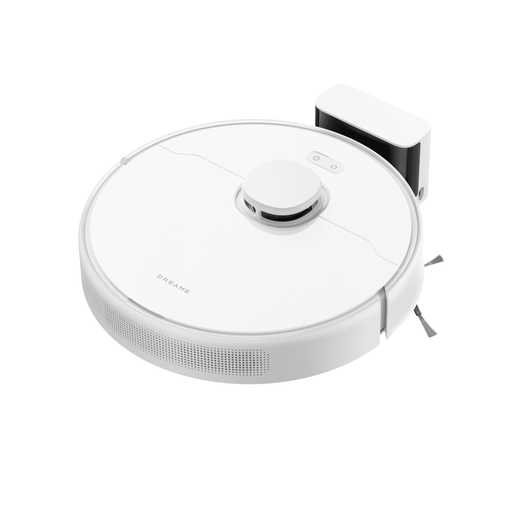
Why This Fits Their Persona: This model is an excellent entry point into smart cleaning. It offers high-end navigation and strong vacuuming power without the cost of a fully automated docking station, making it ideal for those who want to test the waters or have smaller homes.
It avoids the "dumb navigation" pitfall by incorporating a precise LDS LiDAR system for methodical cleaning. While the mop is basic, the focus is on providing core, high-quality vacuuming and navigation at an accessible price point.
Features a strong 6,000Pa suction with an all-rubber brush to reduce hair tangles. Its very long runtime (up to 285 mins) is suitable for large floor plans, and it supports multi-floor mapping.
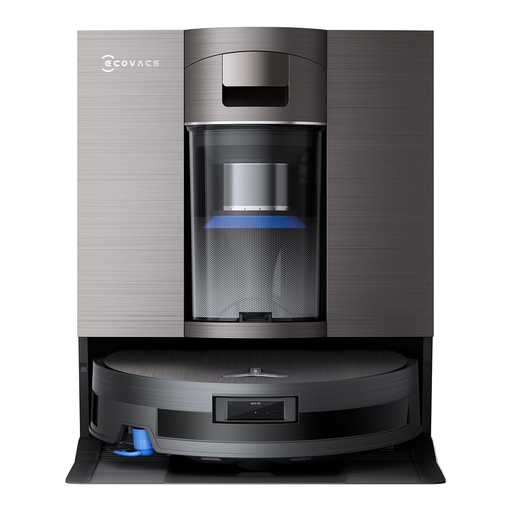
Why This Fits Their Persona: This is a true 'set-and-forget' solution for those who value time and a pristine home. Its combination of powerful suction, anti-tangle technology and a fully automated station makes it perfect for tackling pet hair and daily dirt with minimal human intervention.
It counters all three pitfalls. The 19,500Pa suction is backed by ZeroTangle 3.0 technology. Its AIVI 3D AI Navigation is genuinely smart. The OMNI station provides true automation with 75°C hot water mop washing and a bagless self-empty system.
The OZMO Roller 2.0 actively scrubs floors, and the bagless station reduces running costs and waste. It also features a triple lift system to raise mops and brushes for different surfaces.
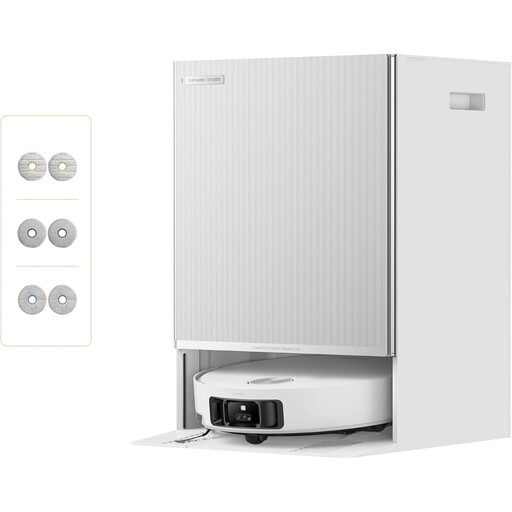
Why This Fits Their Persona: For the user who wants the absolute latest in automation and has a challenging home layout with high thresholds, mixed flooring and multiple levels. This model is engineered to overcome physical obstacles that stop other robots in their tracks.
It redefines what's possible. The 30,000Pa suction is paired with a 100% detangling brush. The station not only washes mops at 100°C but also automatically switches between three different mop types for different floors. Its navigation can clear obstacles up to 8cm high.
The Multi-Mop Switching Dock and ProLeap 8cm obstacle clearance are standout features not found elsewhere. It also has dedicated cleaning solutions for different floor types and pet odours, dispensed automatically.
We have compiled a complete, real-time list of products that fully satisfy these strict selection criteria and UK safety regulations.
You can typically expect a good quality robot vacuum to last between 3 to 5 years. The lifespan depends heavily on usage frequency and how well it is maintained. The lithium-ion battery is often the first component to show wear, usually after 2-3 years of regular use, but on many models, it can be replaced. To maximise its life, you should regularly clean the filters, empty the dustbin and clear any tangles from the brushes and wheels.
The electricity consumption of a robot hoover is quite low. A typical model uses between 30-60 watts while charging, which translates to just a few pence for a full cleaning cycle. The primary ongoing costs are for consumables. For models with docking stations, this includes replacement dust bags, filters and brushes. Opting for a model with a bagless self-emptying station can help reduce these long-term costs.
Performance on carpets, particularly thicker piles, varies significantly between models. For homes with a mix of carpets and hard floors, look for a robot with high suction power (a rating over 5,000Pa is a good starting point), a feature that automatically boosts suction on carpet and a well-designed brush that resists tangling. Most modern combination models also feature an automatic mop-lifting function, which raises the wet pads when carpet is detected to prevent it from getting damp. While they excel on low and medium-pile carpets, they may struggle with very deep, plush shag-pile rugs.