
24/7 Customer Support

Free returns

Same-day & Next-day Delivery

Quality Guaranteed

Unlock Your Welcome Offers: FREE Delivery | Up to 80% OFF | Free 30-day JoyPlus trial
Download the APP
Keeping your home consistently clean can feel like a never-ending task, especially when juggling work, family and the unpredictable British weather. A robot vacuum and mop promises to take this chore off your hands, but the market is flooded with models boasting impressive-sounding features. It's easy to invest in a device that looks good on paper but fails to perform in a real UK home.
As the Joybuy Product Recommendation Officer, my role is to help you see past the marketing clutter. Before you commit, let's look at the common pitfalls that lead to buyer's remorse and how to identify a truly effective smart vacuum cleaner.
To ensure your new robotic cleaner is an asset, not a frustration, focus on these core technical specifications.
The single most important feature is the navigation technology. It determines how efficiently and thoroughly the robot cleans your home.
A true vacuum and mop combo needs to excel at both tasks.
The goal is convenience, so the level of automation and control is key.
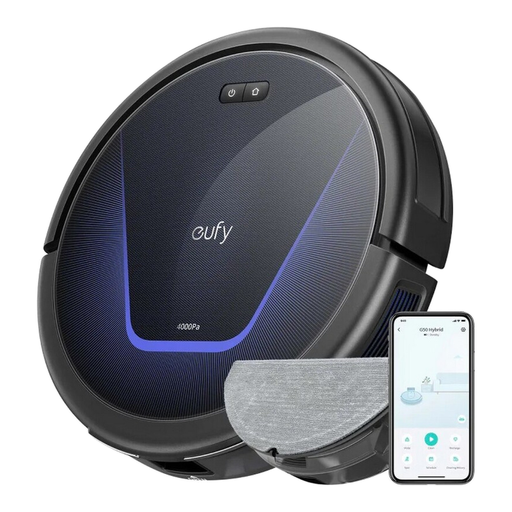
Why This Fits Their Persona: Ideal for flats or smaller houses, this model provides a balanced combination of vacuuming and mopping without overly complex features. Its slim profile gets under furniture and the dynamic navigation is a solid step up from random-path cleaners for efficient, daily upkeep.
It avoids the "overhyped suction" trap by offering a practical 4,000Pa, which is more than sufficient for hard floors and low-pile carpets, paired with an effective anti-tangle brush for reliable pickup.
Combines vacuuming and mopping in one pass. Features Dynamic Navigation Pro for more systematic cleaning than basic models.
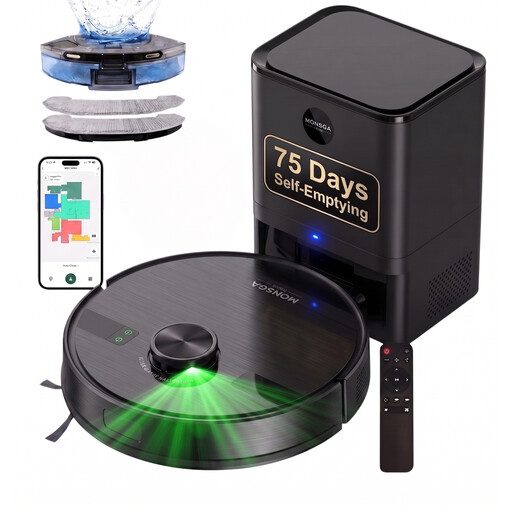
Why This Fits Their Persona: This is a powerful solution for demanding environments. The high 9000Pa suction handles pet hair on carpets, while the LiDAR navigation expertly maps multi-storey homes. The large self-emptying station provides up to 60 days of hands-free cleaning, a huge benefit for busy families.
It directly counters the "dumb navigation" trap with its advanced 360° LiDAR system, which creates accurate maps (storing up to 5) for efficient, whole-home coverage without missing areas.
Features a 4-in-1 system: vacuum, sweep, mop and auto-empty. The 180-minute runtime and auto-recharge function make it suitable for homes up to 2000 sq.ft.
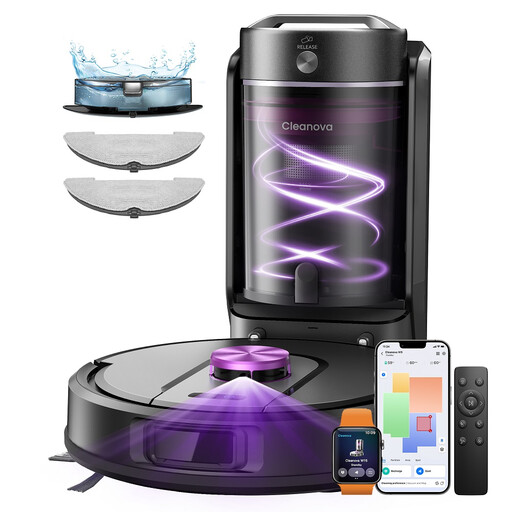
Why This Fits Their Persona: This model appeals to those who want top-tier technology without the waste. It combines very high 10000Pa suction and LiDAR navigation with an innovative bagless self-emptying station, saving money and reducing environmental impact over the long term.
It completely sidesteps the "hidden costs" trap of self-emptying stations. The 4L bagless 'GreenBin' uses multi-cyclone technology to empty the robot, meaning no recurring purchases of disposable bags.
Economical and eco-friendly bagless self-emptying station. Features very high suction power and precise LiDAR mapping for superior cleaning performance.
We have compiled a complete, real-time list of products that fully satisfy these strict selection criteria and UK safety regulations.
For daily and weekly maintenance of floors, a good quality robot vacuum and mop is often more effective than manual cleaning because it runs more frequently. It excels at keeping dust, crumbs and pet hair under control. However, you will likely still need a conventional or cordless vacuum for tasks like cleaning stairs, upholstery, car interiors and for occasional deep-cleaning in hard-to-reach corners.
With proper care, a robot vacuum cleaner can typically last between 3 to 5 years. The lifespan is heavily dependent on maintenance. The battery is usually the first component to show signs of degradation. To maximise its life, you should regularly clean the filters, empty the dustbin, remove hair from the brushes and wipe down the sensors as instructed in the user manual.
The day-to-day electricity consumption of a robot vacuum is very low and will not have a noticeable impact on your energy bills. The main running cost comes from consumables. This includes replacement filters, side brushes and main brush rolls, which typically need changing every 6-12 months. For self-emptying robot vacuum models, the most significant cost can be the proprietary dust bags. Choosing a model with washable filters or a bagless emptying station can significantly reduce these long-term costs.