
24/7 Customer Support

Free returns

Same-day & Next-day Delivery

Quality Guaranteed

Unlock Your Welcome Offers: FREE Delivery | Up to 80% OFF | Free 30-day JoyPlus trial
Download the APP
A robot vacuum and mop promises the ultimate convenience: clean floors with minimal effort. Yet, the market is flooded with models boasting impressive-sounding features that often fail to deliver in a real-world UK home. Many buyers find themselves with a device that gets stuck on rug edges, leaves pet hair behind or requires more manual intervention than it saves. As the Joybuy Product Recommendation Officer, my role is to help you navigate the marketing jargon and focus on the features that genuinely matter for a clean and automated home.
Before you invest, be aware of these common pitfalls that can lead to buyer's remorse:
To ensure your new device is a helpful addition to your home and not a high-tech headache, focus on these three non-negotiable parameters.
The single most important feature for efficient cleaning is the navigation system. For the complex layouts of many UK homes, a LiDAR robot vacuum cleaner is essential.
The docking station, or "omni-station," is what elevates a robot vacuum from a simple cleaner to a truly automated system. Look for capabilities that match your needs:
Raw power is nothing without the right tools. For homes with mixed flooring and pets, these features are critical:
Instead of a one-size-fits-all approach, we've matched specific models to the households they are most suited for.
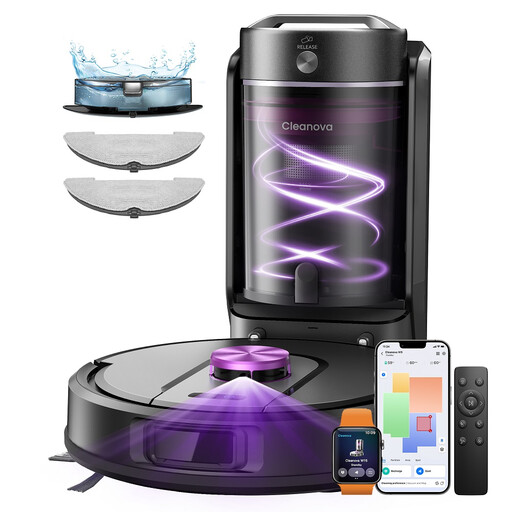
Why This Fits Their Persona: This user wants effective automation without high running costs. The Vactidy W15 offers a strong balance of essential features, including powerful suction and LiDAR navigation, making it a significant upgrade from basic models without the premium price tag.
It directly counters the "high-maintenance automation" trap with its innovative bagless self-emptying station. This eliminates the recurring cost and hassle of buying proprietary dust bags, saving money and reducing waste.
Features precise LiDAR navigation for efficient mapping and customisable cleaning. It also operates at a relatively low noise level (from 60dB), making it a less intrusive quiet robot vacuum cleaner for daily use.
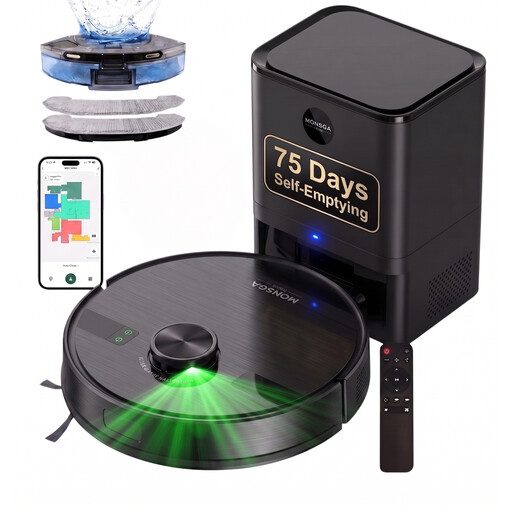
Why This Fits Their Persona: For homes with cats or dogs, the main battle is against constant shedding. This user needs raw power to lift embedded hair from carpets and a reliable system that won't get tangled or require daily emptying.
It avoids the "high suction illusion" by pairing its strong 9000Pa suction with effective LiDAR navigation and a large 4.0L self-emptying station. This combination ensures that the power is used efficiently to capture pet hair across the entire floor, not just in random patches.
Its primary advantage is its focus on being a powerful robot vacuum for pet hair. The large capacity dust bag in the station holds up to 60 days of debris, making it genuinely hands-free for busy pet owners.
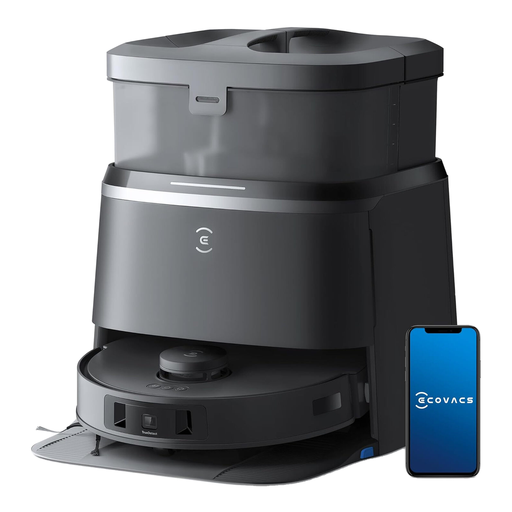
Why This Fits Their Persona: This user wants the most advanced, hands-off cleaning technology available. They value not just automation, but intelligent automation that solves common cleaning frustrations like dirty corners and unhygienic mops.
It tackles the "ineffective cleaning" pitfall head-on. While other robots struggle with edges, its TruEdge Adaptive Edge Mopping extends the mop to clean right up to the skirting boards. The 70°C hot water mop wash ensures the mop itself is hygienically cleaned between uses.
The fully automated Mini OMNI station provides self-emptying, washing, drying and refilling in a more compact form factor. Its ZeroTangle brush design and 11,000Pa suction provide a complete, high-performance cleaning solution.
We have compiled a complete, real-time list of products that fully satisfy these strict selection criteria and UK safety regulations.
For most people, yes. The convenience of not having to empty a tiny, dusty bin after every one or two cleaning cycles is significant. It transforms the device from a daily chore into a set-and-forget tool. The main consideration is whether to choose a model with disposable bags (more convenient, but an ongoing cost) or a bagless system (more economical and eco-friendly, but requires occasional cleaning of the main bin).
Modern robot vacuums are designed specifically for mixed-floor homes. Key features to look for are strong suction for lifting dirt from carpet fibres and an automatic mop-lifting function. This allows the robot to vacuum carpets and mop hard floors in a single run without you needing to intervene or worry about it dragging a wet mop across your rugs.
With proper maintenance, a good quality robot vacuum can last for several years. The lifespan is primarily determined by the battery and the motor. Regular cleaning of filters, brushes and sensors is crucial to prevent strain on the components. Most brands offer replacement parts like batteries, brushes and filters, allowing you to extend the life of your device without replacing the entire unit.