
24/7 Customer Support

Free returns

Same-day & Next-day Delivery

Quality Guaranteed

Unlock Your Welcome Offers: FREE Delivery | Up to 80% OFF | Free 30-day JoyPlus trial
Download the APP
A robot vacuum cleaner can reduce daily floor-cleaning chores, but the wrong model may create more maintenance than it removes. UK homes often combine carpets, laminate, tiles, rugs, thresholds and narrow furniture gaps, so headline suction figures alone do not tell the whole story.
Before buying, look beyond promotional language and check whether the machine suits your floor plan, household routine and willingness to maintain it.
A specification such as 8,000Pa, 10,000Pa or 18,000Pa describes the manufacturer’s stated maximum suction level. It does not, by itself, confirm how well a robot handles corners, thick carpet, fine dust or tangled hair.
Brush design, carpet detection, navigation and the ability to maintain airflow also matter. Pet owners should look for an anti-tangle brush or side brush, while homes with carpets and hard floors benefit from automatic suction adjustment and mop lift functions.
A self-emptying robot vacuum reduces the need to empty the onboard dustbin, but the dock, filter, brush, mop and sensors still need attention. Bagged stations require replacement dust bags, while bagless designs need their collection chamber and filters cleaned.
For a robot vacuum and mop, leaving a damp cloth or dirty water in place can also cause unpleasant odours. Check whether the dock offers automatic mop washing, drying and dust collection, and whether replacement parts are readily available.
A robot can only navigate effectively if its sensors can see the room and its wheels can cross thresholds. Loose cables, small toys, rug tassels and dark edges may interrupt a cleaning cycle. Laser navigation can create detailed maps, but it does not remove the need to prepare the floor.
Check the robot’s height against low furniture, its stated climbing ability and the space required around the charging station. Multi-storey households should also confirm whether the device stores several maps.
A LiDAR robot vacuum uses laser scanning to measure walls, furniture and room boundaries. This can support systematic routes, room selection, no-go zones and multi-floor mapping. It is particularly useful in larger or multi-storey homes.
When comparing models, check:
For a pet hair robot vacuum, look beyond the Pa figure. A rubber or anti-tangle roller may be easier to maintain than a conventional bristle brush. Carpet boost can increase suction when a rug or carpet is detected, while mop auto-lift helps prevent dampening carpeted areas.
A suitable robot vacuum for carpets and hard floors should offer selectable cleaning modes, adjustable suction and, where available, separate water-flow control for hard flooring.
A long-runtime robot vacuum may be useful in a larger UK home, but published runtime is normally measured in a particular mode. Turbo suction and mopping can reduce operating time. Auto-recharge and resume are therefore important for whole-home cleaning.
Also compare:
For electrical products, read the supplied instructions and confirm that the product is suitable for a UK power supply. Do not rely solely on a badge in an online listing; check the manufacturer, importer or seller information, product documentation and applicable UK safety marking details before purchase.
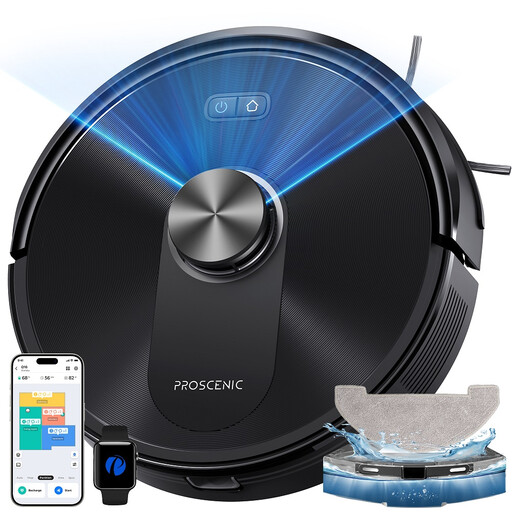
Why This Fits Their Persona: A practical starting point for UK households wanting app-based cleaning, mopping and laser mapping without moving immediately to an advanced all-in-one dock.
Its listed features include LiDAR mapping, adjustable water flow, no-go areas and auto-recharge with resume cleaning, rather than relying only on a suction figure.
8000Pa stated suction; up to 200 minutes’ runtime; app, voice, remote and Apple Watch control.
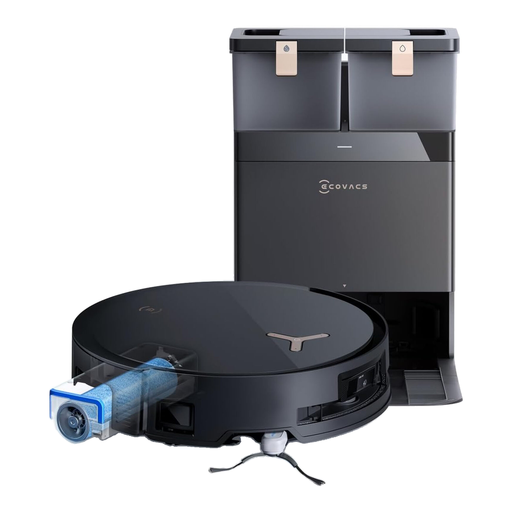
Why This Fits Their Persona: Suited to busy households seeking a more automated floor-cleaning system with integrated mop care and carpet handling.
The listed station washes and dries the mop, empties dust and adds cleaning solution, while the mop is specified to lift by up to 10mm when carpets are detected.
18,000Pa stated maximum suction; automatic mop washing and hot-air drying; obstacle recognition and carpet suction boost.
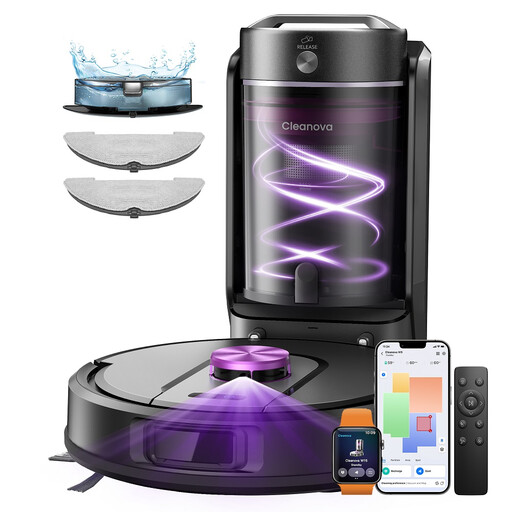
Why This Fits Their Persona: A match for pet-owning families and larger homes that want long cleaning sessions, mapping controls and fewer disposable dust bags.
Its 4-litre bagless station addresses the recurring-bag issue, while LiDAR mapping, up to 15 no-go zones and breakpoint cleaning reduce supervision.
10000Pa stated suction; up to 180 minutes’ runtime; app, remote and Alexa, Google Assistant and Siri compatibility.
It can be useful for regular removal of dust, crumbs and hair between deeper cleaning sessions. It is most suitable where floors are reasonably clear and rooms have thresholds the robot can cross. It will not replace manual cleaning of stairs, upholstery or heavily soiled areas.
Yes, models with separate vacuum and mop modes can clean carpets, but the mop attachment should be removed or lifted according to the instructions. Look for carpet detection, mop lift and carpet suction boost if your home combines rugs with hard floors.
The frequency depends on dust, hair, floor area and station design. You may empty the dock less often, but brushes, filters, sensors and mop components still need routine cleaning. Bagless stations avoid dust-bag purchases but require the collection chamber and filters to be emptied or washed as specified.