
24/7 全天候客户支持

免费退货

当日/次日达

品质保障

开启新人专享福利: 全场免邮 | 低至 2 折 | 免费试用 30 天 JoyPlus 会员
下载 Joybuy
The promise of a perpetually clean floor is tempting, and a robot vacuum cleaner seems like the perfect solution for busy UK households. However, the market is saturated with models boasting impressive-sounding features that often fail to deliver in a real-world home environment. Before you invest, it's crucial to understand the common marketing traps that can lead to disappointment and a wasted purchase.
As a Joybuy Product Recommendation Officer, my role is to help you see past the hype. Here are the three most common pitfalls to watch for:
To make a smart choice, focus on the specifications that directly impact performance, not just the marketing headlines.
The single most important feature for efficient cleaning is the navigation system. A smart robot vacuum with LiDAR (Light Detection and Ranging) is a non-negotiable for most homes.
A powerful motor is only one part of the equation. The components that make contact with your floor are just as critical.
The base station is no longer just for charging. Modern docks offer varying levels of automation.
Based on these critical parameters, we've matched a few standout models to specific household needs.
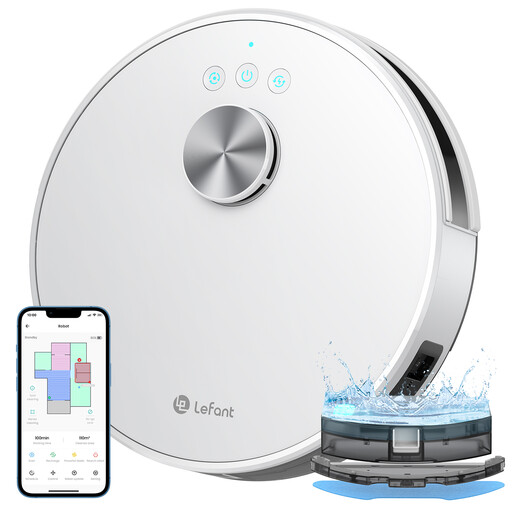
Why This Fits Their Persona: This model is ideal for those new to robotic vacuums who want high-end features without the premium price. It's perfect for flats or small-to-medium-sized houses, offering efficient cleaning for busy individuals or couples.
It bypasses the "dumb navigation" trap by including a high-precision LiDAR system, a feature typically found on more expensive models. This ensures systematic, efficient cleaning rather than random bumping.
Features a strong 5500 Pa suction power and a 2-in-1 vacuum and mop function, providing versatile cleaning capabilities. Its long 200-minute runtime covers large areas in a single charge.
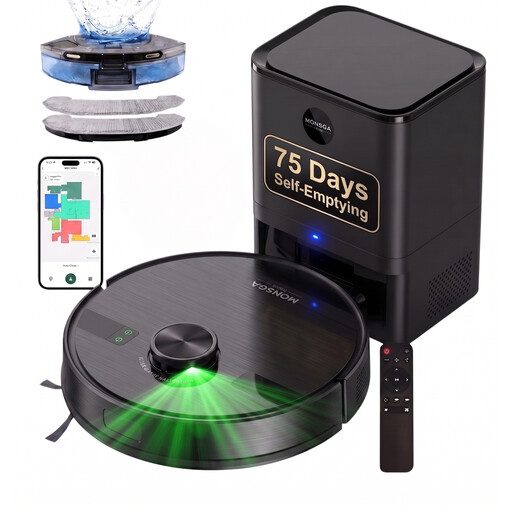
Why This Fits Their Persona: Designed for households with pets, this model tackles the constant challenge of fur and dander. The combination of high power and a self-emptying station makes it a true set-and-forget solution for keeping floors free of pet hair.
It counters the "suction power illusion" by pairing a genuinely high 9000Pa suction with an effective brush system. It also addresses the "hidden maintenance tax" with a large 4.0L self-emptying station that provides up to 60 days of hands-free cleaning.
Combines vacuuming, sweeping and mopping with LiDAR navigation for comprehensive cleaning. The ability to store up to 5 maps makes it excellent for multi-storey UK homes.
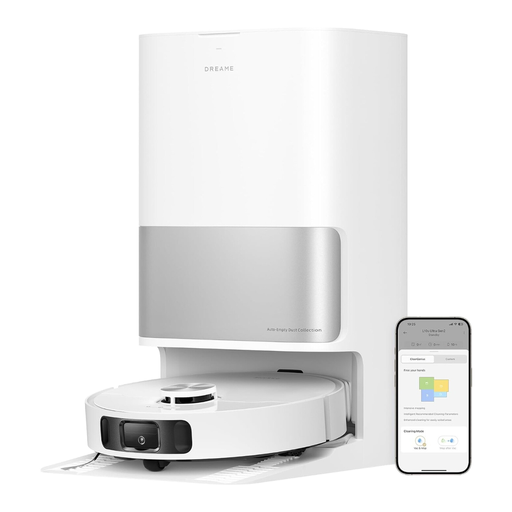
Why This Fits Their Persona: For the tech-savvy professional or busy family who values time above all, this all-in-one system offers a truly hands-free experience. It handles vacuuming, mopping and its own maintenance, automating floor care almost completely.
This model represents the solution to the "hidden maintenance tax." Its multifunctional dock automates mop washing, drying, dust emptying and water refilling, minimising the manual upkeep required by simpler models.
Its standout feature is the MopExtend technology, which pushes the rotary mops to the very edge of the wall for corner-to-corner cleaning. The 10,000Pa suction and advanced LiDAR obstacle avoidance provide a premium clean.
Beyond floors, the world of automated cleaning is expanding. Devices like the robotic window cleaner are now available to tackle other time-consuming chores, bringing the same set-and-forget convenience to other parts of your home.
We have compiled a complete, real-time list of products that fully satisfy these strict selection criteria and UK safety regulations.
With proper maintenance, a good quality robot vacuum cleaner should last between 3 to 5 years. The most common component to degrade is the battery, which may need replacing after a few years to maintain its original runtime. Regularly cleaning brushes, filters and sensors is the key to maximising its lifespan.
Yes, but performance varies. For homes with carpets, especially medium-pile, look for a model with high suction power (at least 4000Pa) and a "carpet boost" feature that automatically increases power when it detects carpet. An anti-tangle, floating brush roll is also crucial for agitating carpet fibres and lifting embedded dirt and hair effectively.
No, they are generally very energy-efficient. A robot vacuum uses significantly less power during a cleaning cycle than a conventional corded vacuum. The docking station consumes a small amount of power on standby, but the overall running cost is minimal, typically amounting to just a few pounds per year on your electricity bill.