
24/7 Customer Support

Free returns

Same-day & Next-day Delivery

Quality Guaranteed

Unlock Your Welcome Offers: FREE Delivery | Up to 80% OFF | Free 30-day JoyPlus trial
Download the APP
A robot vacuum cleaner can reduce daily floor-care work, but choosing one based on a single headline figure often leads to disappointment. UK homes vary widely: a flat with laminate flooring has different requirements from a family home with stairs, rugs and pets.
Before comparing models, watch for three common buying traps:
A LiDAR robot vacuum uses laser-based mapping to understand room layouts and plan routes. This is useful in multi-room UK homes because the robot can usually clean in a more systematic pattern than models that rely mainly on random movement.
Check whether the app supports:
Navigation does not eliminate preparation. Loose charging leads, clothing, rug tassels and small objects can still become trapped in the brush or wheels. Keep stairs and drop-offs restricted using the app’s boundary functions, as sensors may not identify every edge reliably.
For a robot vacuum for carpets and hard floors, look beyond the stated Pa rating. A carpet-friendly model should ideally offer automatic suction adjustment, a brush designed to agitate fibres and enough clearance for rugs.
Pet owners should check for an anti-tangle brush, removable roller and accessible filter. A pet hair robot vacuum may collect fur effectively but still require regular brush cleaning, particularly during shedding seasons.
On hard floors, side brushes and edge-cleaning features can be more important than maximum suction. For homes with laminate, wood or delicate surfaces, check the mop water controls and follow the flooring manufacturer’s cleaning guidance.
Advertised runtime is commonly measured in quieter or lower-power modes. Turbo cleaning, carpets, mapping and repeated docking can reduce the practical coverage per charge. Consider the home’s floor area and whether the robot can recharge and resume automatically.
A self-emptying robot vacuum transfers debris into a dock, reducing manual emptying. However, verify:
For UK buyers, also check the plug, voltage information, warranty terms, safety instructions and the required Wi-Fi band before ordering.
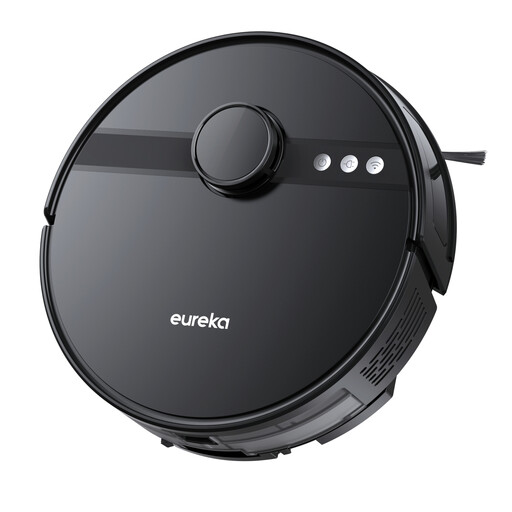
Why This Fits Their Persona: Its 9.7 cm height and 32 cm footprint suit smaller UK flats and rooms where furniture clearance is limited.
The product description clearly identifies light damp mopping for hard floors and low-pile carpet suitability, rather than presenting it as a replacement for deep wet cleaning.
Automatic docking, washable filter, removable dustbin and cliff/edge sensors.
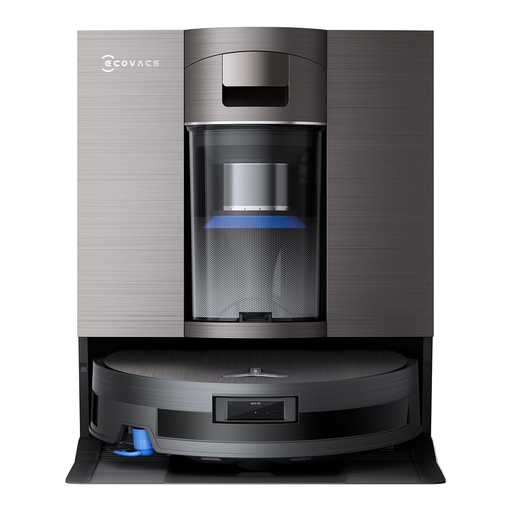
Why This Fits Their Persona: Its integrated station functions suit larger homes where reduced day-to-day intervention is a priority.
The specification lists carpet mop lifting, LiDAR navigation and automatic station functions, helping buyers match features to mixed flooring rather than relying only on suction.
19,500 Pa stated suction, bagless station with mop washing and drying, and Alexa, Google Assistant and app control.
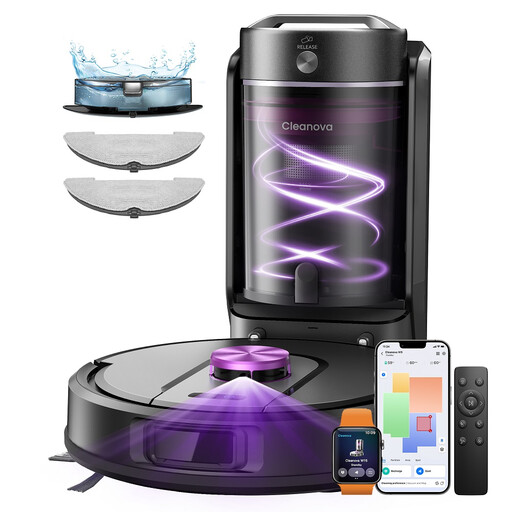
Why This Fits Their Persona: The large bagless station, five-map support and 180-minute stated runtime are practical for busy families and multi-level homes.
Its stated 4-litre bagless dock capacity addresses frequent emptying, while adjustable water flow and no-go zones make mixed-floor planning more controlled.
LiDAR mapping, 10,000 Pa stated suction, app control and compatibility with Alexa, Google Assistant and Siri.
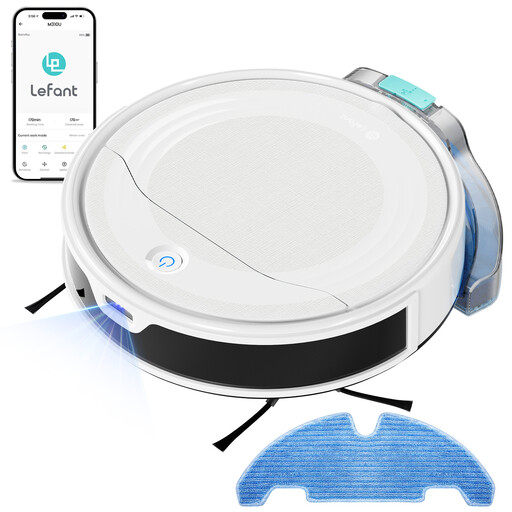
Why This Fits Their Persona: Pet owners with hard floors and low-pile carpets can use its carpet detection and anti-tangle design to reduce hands-on intervention.
Ultrasonic carpet detection is specified to adjust suction and avoid mopping carpets, addressing the risk of damp rugs.
6,000 Pa stated suction, 800 ml dustbin, up to 240 minutes’ stated runtime and voice control.
We have compiled a complete, real-time list of products that fully satisfy these strict selection criteria and UK safety regulations.
To keep an automatic floor cleaner working consistently:
Yes, many models can clean carpets, particularly low-pile carpets and rugs. Look for carpet detection, automatic suction adjustment and a brush designed to collect hair. Check the product instructions for restrictions on thick or fringed rugs.
Running costs depend on cleaning frequency, power mode, charging efficiency and dock functions. A robot used daily at a lower setting may consume less energy than a conventional vacuum used for long manual sessions, but actual costs vary. Check the appliance’s power information and your electricity tariff rather than relying on a general estimate.