
24/7 Customer Support

Free returns

Same-day & Next-day Delivery

Quality Guaranteed

Unlock Your Welcome Offers: FREE Delivery | Up to 80% OFF | Free 30-day JoyPlus trial
Download the APP
A robot vacuum cleaner and mop can reduce the amount of daily floor care in a busy UK household, but the most expensive model is not automatically the right fit. A flat with laminate flooring has different requirements from a multi-storey home with rugs, pets and raised thresholds.
Before comparing app features and suction figures, look beyond the headline claims. The following buying pitfalls can help you avoid paying for functions that do not match your home.
A high-suction robot vacuum may collect dust, crumbs and pet hair effectively, but the quoted Pa figure is only one specification. Brush design, carpet detection, airflow, filtration and route planning also influence everyday cleaning.
For example, a robot vacuum for pet hair should ideally have a brush designed to reduce tangling, alongside sufficient suction. A robot with a lower quoted figure may still be practical if it has effective brush contact and automatic carpet adjustment.
Most robot vacuum and mop models use a damp cloth, rotating pads or a roller system. These are useful for routine marks and dust on suitable hard floors, but they may not remove dried spills or heavy grime without preparation.
Check whether the robot can lift or avoid its mop on carpets. Also look at whether the dock only charges and empties dust, or whether it provides automatic mop washing, drying and water refilling. These functions make a meaningful difference to maintenance.
A self-emptying robot vacuum requires room for its dock and may use disposable dust bags. Bagless designs avoid replacement bags but can still require filter and dust-chamber cleaning.
Measure the area around the charging station, including clearance for the robot to leave and return. Also check the station height if it will sit under a worktop or shelf. A model that cannot dock reliably will not deliver hands-free cleaning.
For multi-room or multi-storey homes, a robot vacuum with LiDAR navigation can scan rooms and create structured maps. Look for multi-floor mapping, room selection, no-go zones and resume cleaning after charging.
LiDAR does not mean the robot will recognise every object. Loose cables, socks, toys and rug tassels can still cause blockages, so floor preparation remains necessary. Obstacle avoidance systems vary, and product descriptions should be checked carefully rather than inferred from the word “smart”.
A robot vacuum for carpets and hard floors should offer carpet detection, adjustable suction or mop lifting where possible. Static mop pads are generally simpler, while rotating pads or roller systems may provide a more active mopping motion.
Check the recommended surfaces and whether the mop must be removed manually before carpet cleaning. Do not use the appliance to collect standing water unless the manufacturer specifically permits it.
Runtime figures are usually maximum or laboratory-style claims and can vary with suction mode, floor type and navigation. A 180-minute model may be suitable for many homes, while larger properties may benefit from automatic recharge and resume.
Measure furniture clearance as well as thresholds. The MonsgaClean MS1 MAX, for example, is listed at 3.8 inches high, while other models may be closer to 10 cm. A low profile can help the robot reach beneath sofas, but the exact clearance of your furniture should be measured first.
For electrical safety, use the supplied UK-compatible power equipment, keep the dock away from water and unplug it before maintenance. Children and pets should be supervised around moving brushes and wheels.
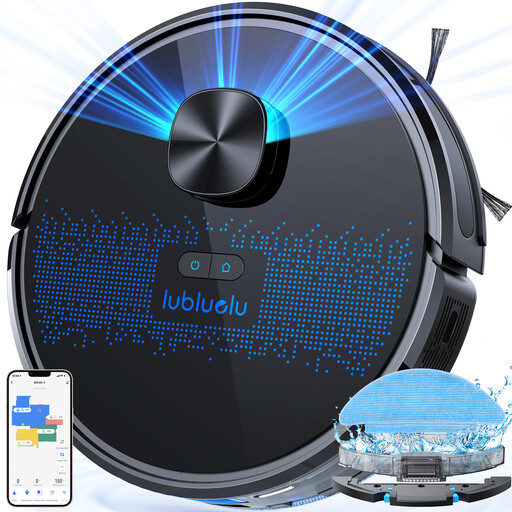
Why This Fits Their Persona: A practical entry point for flats and smaller UK homes that need automated vacuuming, light wiping and app scheduling without a multifunction station.
Its listed LDS laser navigation and multi-floor mapping provide more structure than basic random-path models. The 4000Pa figure is clearly specified rather than presented without context.
4000Pa suction, smart carpet boost, app and voice control, plus multi-floor mapping.
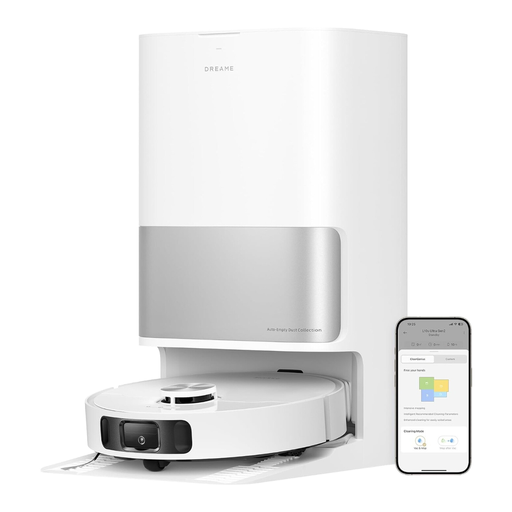
Why This Fits Their Persona: Suitable for households prioritising reduced daily intervention across hard floors and carpets, particularly where a multifunction dock can be accommodated.
The dock handles mop washing, drying, dust emptying and water refilling, so the mopping feature is not limited to attaching a cloth and leaving it unattended.
10,000Pa maximum suction, LiDAR navigation, 20mm threshold clearance and 10.5mm mop lift.
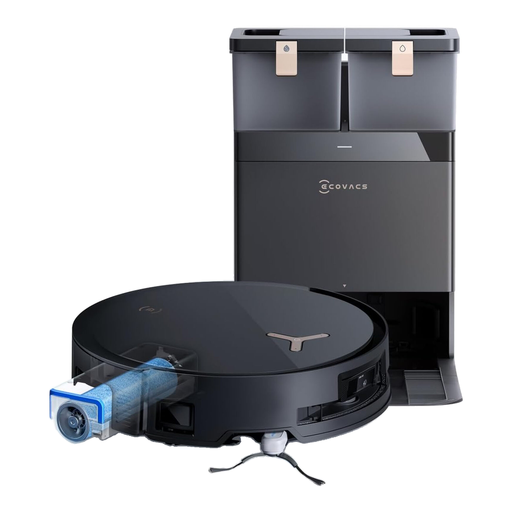
Why This Fits Their Persona: Designed around frequent whole-home cleaning, pet hair and mixed flooring where brush maintenance and automated mop care are important considerations.
The specification includes an auto-lift mop, carpet detection, anti-tangle brush technology and a dock that washes, dries and empties the robot.
18,000Pa maximum suction, OZMO ROLLER self-washing mopping, 63°C hot-air drying and ZeroTangle 2.0.
We have compiled a complete, real-time list of products that fully satisfy these strict selection criteria and UK safety regulations.
Yes, many models support carpets, but the mopping system matters. Choose carpet detection, mop lifting or a no-mop zone setting. Always confirm the manufacturer’s surface guidance and remove loose cables or tassels before cleaning.
It still needs regular brush, filter, sensor and wheel cleaning. Mop pads, dirty-water tanks and dust chambers also require attention. Self-emptying reduces dustbin emptying; it does not remove routine maintenance.
Basic start and return functions may work from the robot or remote, depending on the model. App-controlled features such as schedules, room selection, mapping and no-go zones normally require a compatible Wi-Fi connection. Check whether the model supports 2.4 GHz, 5 GHz or both before ordering.