
24/7 全天候客户支持

免费退货

当日/次日达

品质保障

开启新人专享福利: 全场免邮 | 低至 2 折 | 免费试用 30 天 JoyPlus 会员
下载 Joybuy
A robot vacuum cleaner can reduce the amount of daily sweeping and vacuuming required, but choosing the right model involves more than comparing suction figures. UK homes often combine carpets, laminate, tiles and rugs, while family life adds cables, toys, crumbs and pet hair to the cleaning challenge.
Marketing can also make similar-looking products appear interchangeable. Before buying a robot hoover, check how it navigates, what maintenance it requires and whether its mopping system suits your flooring.
A higher Pascal figure indicates the manufacturer’s stated suction level, but it does not describe every part of cleaning performance. Brush design, airflow, carpet boost, filtration and the robot’s ability to follow an efficient route also matter.
For example, a robot vacuum for pet hair should have a suitable roller design and manageable hair maintenance, not simply a large Pa number. Also check whether the advertised figure applies only to a particular power mode, as maximum suction may reduce battery runtime and increase operating noise.
Many robot vacuum and mop models use a damp cloth or static mop pad. These can help with light marks and everyday dust, but they may not scrub dried spills in the same way as manual cleaning.
Buyers should check the water tank size, water-flow adjustment, mop lifting and carpet detection. If your home has rugs next to hard flooring, automatic mop lifting or a clearly defined no-mop zone can help prevent dampening carpets.
A self-emptying robot vacuum reduces how often you empty the onboard dustbin, but it still needs filter, brush, sensor and mop care. The dock may also require a sizeable area near a socket, which can be difficult in a narrow hallway or compact flat.
Before ordering, measure the available clearance around the charging station. Check the cost and availability of replacement dust bags, filters, mop pads and brushes, particularly if you have pets.
A LiDAR robot vacuum uses laser-based distance sensing to create a map and plan routes. This is useful for multi-room homes and multi-storey properties, especially when the app supports room selection, scheduled cleaning and virtual no-go zones.
Camera or sensor-based obstacle avoidance can help identify furniture and floor objects, but no robot should be expected to manage every cable, sock or small toy. Clear loose items before cleaning and use virtual boundaries near stairs, pet bowls and delicate objects.
Advertised runtime normally depends on the selected mode and floor conditions. Higher suction settings and carpet boost can shorten the time between charges. For larger homes, look for auto-recharge and resume, allowing the robot to return to its dock and continue later.
A long runtime is useful, but it should be considered alongside map quality, route efficiency and the ability to clean room by room. Check the robot’s height too: a low-profile design may reach beneath more furniture, while taller LiDAR housings may require additional clearance.
For mixed flooring, look for adjustable suction and water settings. A robot vacuum for carpets and hard floors should allow vacuum-only cleaning on rugs and controlled mopping on sealed hard surfaces.
Do not use mopping functions on carpets unless the manufacturer specifically permits it. Avoid placing the robot on standing water, and follow the supplied instructions for suitable cleaning solutions and washable components.
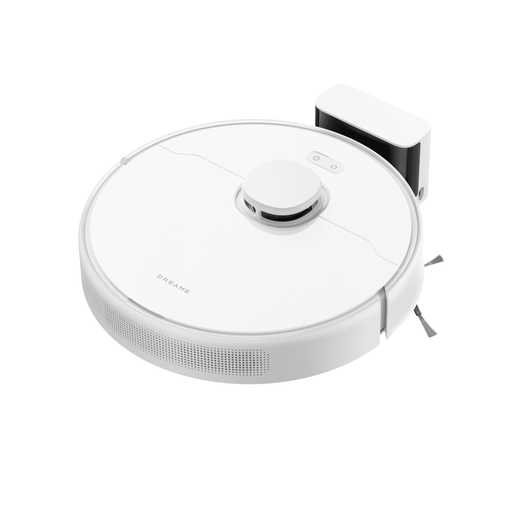
Why This Fits Their Persona: A practical option for flats and family homes needing routine vacuuming and light mopping without a self-emptying dock.
Its stated features are clearly defined: LDS navigation, adjustable water flow and automatic carpet boost, rather than suction alone.
6000Pa stated suction, up to 285 minutes’ runtime, multi-floor mapping and virtual no-go zones.
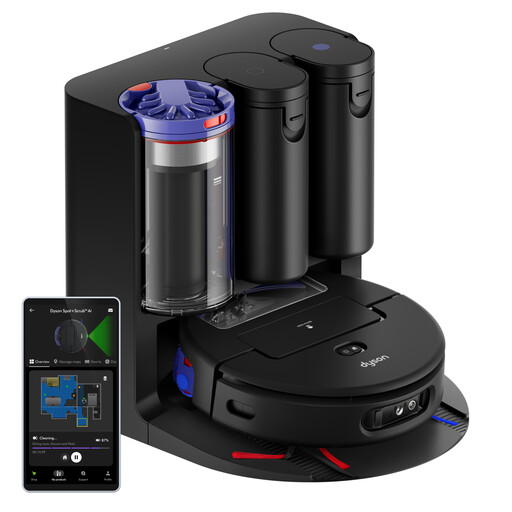
Why This Fits Their Persona: Suitable for households seeking integrated wet cleaning and automated dock maintenance across hard floors and low-pile carpets.
The dock functions are specified separately, including dust emptying, roller washing, drying, water refilling and charging.
18,000Pa stated suction, dual-laser LiDAR, AI dirt detection and a self-maintaining dock.
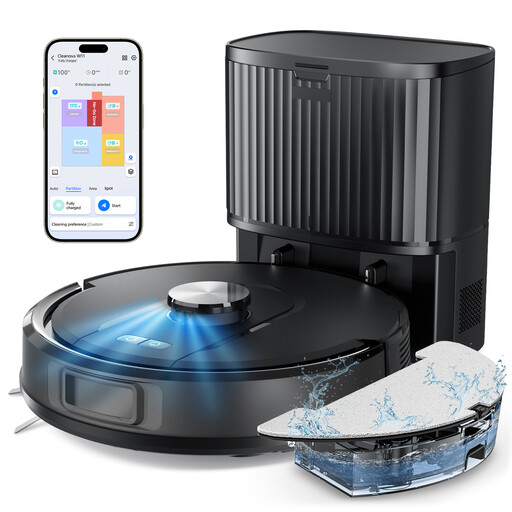
Why This Fits Their Persona: Its self-emptying station is suited to busy UK homes where pet hair and daily debris make frequent bin emptying inconvenient.
The 2L dust bag and stated up-to-60-day collection interval are clearly identified, so the hands-free claim has a defined basis.
8000Pa stated suction, LDS navigation, up to five maps and three suction levels.
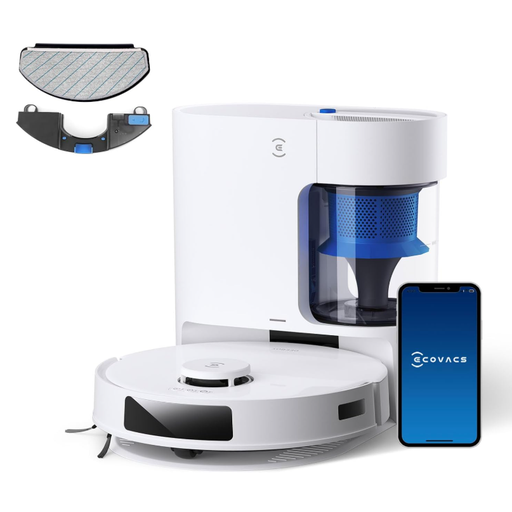
Why This Fits Their Persona: A long-runtime choice for larger homes with carpets and hard floors, where scheduled cleaning can cover multiple rooms.
Its LDS navigation, app scheduling and recharge behaviour are specified, while the mop remains a damp-cleaning accessory rather than a promise of deep scrubbing.
8000Pa stated suction, 5200mAh battery, app control and bagless PureCyclone self-empty station.
We have compiled a complete, real-time list of products that fully satisfy these strict selection criteria and UK safety regulations.
It can be useful for maintaining floors between deeper cleans, particularly for busy households, pet owners and people with mixed flooring. It does not remove the need for occasional manual cleaning, stair vacuuming or detailed edge work.
Running cost depends on electricity use, cleaning frequency, suction mode and replacement parts. Self-emptying models may also require dust bags, while mopping models may need replacement pads and approved cleaning products. Check the consumables before purchase rather than considering only the initial price.
Lifespan varies with usage, battery care, maintenance and replacement-part availability. Keeping sensors, filters, brushes and charging contacts clean can support reliable operation. Review the warranty, battery information and spare-part support for the specific model before ordering.