
24/7 Customer Support

Free returns

Same-day & Next-day Delivery

Quality Guaranteed

Unlock Your Welcome Offers: FREE Delivery | Up to 80% OFF | Free 30-day JoyPlus trial
Download the APP
A robot vacuum cleaner UK shoppers can rely on should do more than display a high suction figure. It needs to navigate your rooms, manage carpets and hard floors, return to charge and cope with the practical details of British homes, from narrow furniture gaps to pet hair and multi-storey layouts.
The wrong purchase can become an expensive dust collector. Before comparing a robotic vacuum cleaner or robot hoover, watch for these common traps.
A product advertised with 8000Pa or 10000Pa suction may look impressive, but the number alone does not explain how well it handles hair, crumbs or fine dust. Brush design, carpet boost, navigation and filter maintenance also affect everyday cleaning.
A robot vacuum for carpets and hard floors should ideally offer adjustable suction, a suitable roller brush and automatic carpet detection or boost. These features help it adapt between laminate, tile, wood and rugs rather than using one setting everywhere.
Most robot vacuum and mop models use a damp cloth or wiping pad. This can help with light marks and everyday surface dust, but it does not replace manual cleaning of dried spills or heavily soiled areas. Check whether the water flow is adjustable and whether the mop lifts when the robot reaches carpet.
Do not use a mopping function on unsuitable flooring. Follow the product manual, particularly for untreated wood, delicate surfaces and cleaning solutions.
A self-emptying robot vacuum reduces the frequency of emptying the onboard dustbin, but it still needs maintenance. Filters, brushes, side brushes, sensors, mop pads and charging contacts require regular cleaning. Some docking stations also need clearance around the base and a nearby UK power socket.
Before ordering, measure the robot’s height and the proposed route under beds, sofas and cabinets. A robot that cannot reach key areas will not deliver the convenience its feature list suggests.
A LiDAR robot vacuum uses laser scanning to map rooms and plan routes. This is useful in larger or more complex homes because you can usually create room zones, no-go areas and, on selected models, multiple floor maps. It also supports more systematic cleaning than random movement.
Basic sensor-led models can still suit smaller, open-plan rooms, particularly where the budget is limited. However, check how the robot handles stairs, cables, thresholds and dark furniture. Cliff sensors are important for homes with open staircases.
Runtime figures are normally quoted in a low-power mode. Carpet boost, maximum suction and mopping can reduce operating time. Look for an automatic charging robot vacuum that returns to its base when its battery is low and resumes cleaning afterwards.
For a multi-storey home, confirm whether the robot stores several maps. A stated climbing height of around 2cm may help with some thresholds, but it does not guarantee that every rug edge or doorway will be crossed successfully.
A larger onboard dustbin can be useful for homes with pets, while a self-emptying base can reduce hands-on emptying. Compare the type of collection system: bagged docks need replacement bags, whereas bagless stations may require more direct filter and container cleaning.
An app-controlled robot vacuum should support scheduling, room selection, suction adjustment and no-go zones. Voice control is convenient, but check Wi-Fi requirements. Several models listed here specify 2.4GHz Wi-Fi, which may require a separate network during setup. Alexa-compatible robot vacuum and Google Assistant support should also be confirmed for your preferred smart-home system.
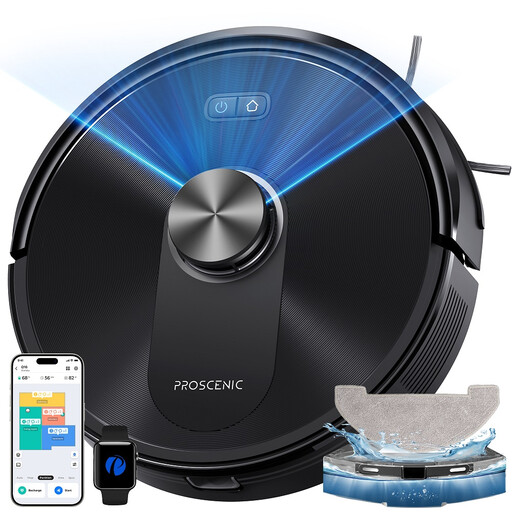
Why This Fits Their Persona: A practical starting point for flats and family homes needing vacuuming, mopping and smart controls without moving immediately to an all-in-one station.
Its LiDAR mapping, carpet boost and adjustable water flow provide more useful information than suction power alone. The 350ml dustbin and 250ml water tank should still be checked against household size.
Up to 200 minutes in ECO mode; stores up to five maps and supports app, remote, Alexa, Google Assistant and Apple Watch controls.
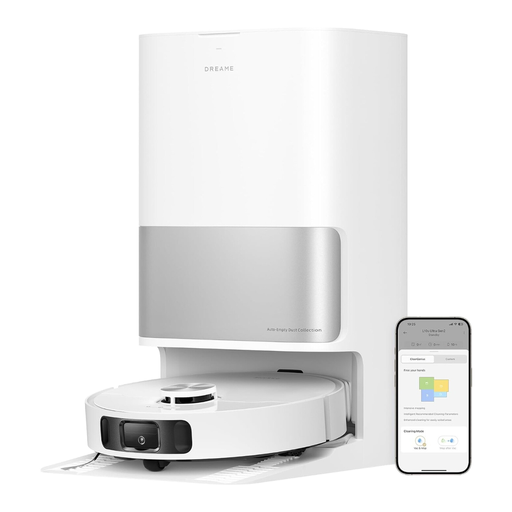
Why This Fits Their Persona: Suitable for shoppers prioritising reduced daily intervention across mixed flooring and wanting automated dock functions.
The dock handles dust emptying, mop washing, mop drying and water refilling, addressing the maintenance trap more directly than a standard charging base.
10,000Pa stated suction; LiDAR navigation, 20mm threshold clearance and 10.5mm mop lift for carpet transitions.
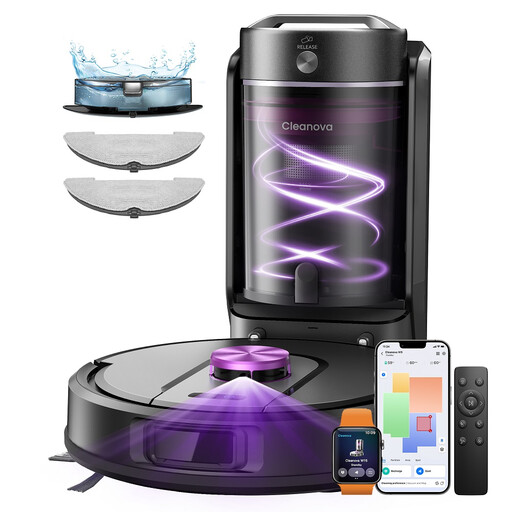
Why This Fits Their Persona: A strong match for pet-owning households and larger homes that want a high-capacity, low-contact dust collection system.
Its 4-litre bagless station tackles frequent emptying, while LiDAR mapping and anti-obstacle features address navigation limitations. The filters and brush still need routine care.
10000Pa stated suction; up to five maps, 15 no-go zones and up to 180 minutes of stated runtime.
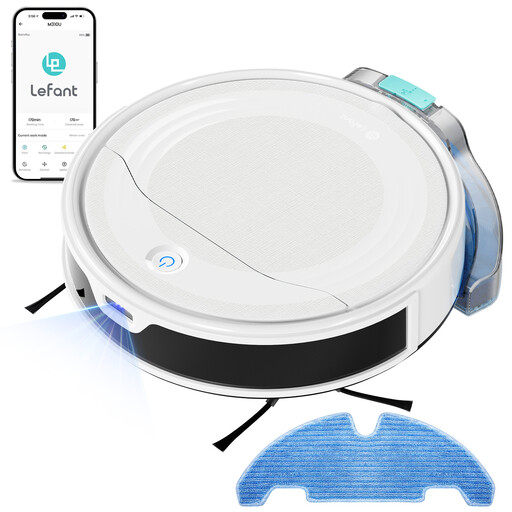
Why This Fits Their Persona: Its compact body suits smaller UK rooms and homes where pet hair, low-pile carpets and furniture clearance are everyday concerns.
The anti-tangle design and ultrasonic carpet detection are more relevant to pet owners than a headline suction figure alone. Its mopping function should not be used on carpets.
6000Pa stated suction; 800ml dustbin, up to 240 minutes of stated runtime and a 7.9cm body height.
We have compiled a complete, real-time list of products that fully satisfy these strict selection criteria and UK safety regulations.
Before the first cleaning cycle, remove protective film, charge the unit, connect the correct Wi-Fi band and create a map. Move cables, small toys, clothing and loose rug tassels from the floor. Keep the base on a level surface with enough clearance for docking.
Running costs include electricity, replacement filters, brushes, mop pads and, for some stations, dust bags or cleaning solution. A bagless self-emptying base may reduce consumable purchases, while a bagged design can offer cleaner disposal. Check replacement-part availability and the warranty or after-sales arrangements before buying.
Many models support carpets and hard floors, but performance depends on pile height, thresholds, brush design and suction mode. Check for carpet boost, carpet detection and a mop-lift function if the robot will move between wet-cleaned hard floors and rugs.
Runtime varies by mode and surface. Product listings commonly quote ECO-mode figures, while maximum suction and mopping may shorten a cycle. Automatic recharge and resume are particularly useful in larger homes because the robot can continue after charging.
No. The station reduces manual dustbin emptying, but filters, brushes, sensors, mop pads and charging contacts still need cleaning. Follow the supplied instructions and keep the robot away from liquids, loose cables and objects that could damage the brush or navigation sensor.