
24/7 Customer Support

Free returns

Same-day & Next-day Delivery

Quality Guaranteed

Unlock Your Welcome Offers: FREE Delivery | Up to 80% OFF | Free 30-day JoyPlus trial
Download the APP
A robot vacuum cleaner can reduce daily sweeping and help manage dust, crumbs and pet hair across carpets and hard floors. However, product listings often emphasise headline figures while leaving out the practical details that affect ownership.
The main buying mistakes are usually not about choosing too little suction. They involve selecting a robot that cannot navigate your layout, maintain its cleaning performance or fit comfortably beneath furniture.
An 8000Pa robot vacuum or 10,000Pa model may appear attractive, but suction figures do not explain brush design, airflow, carpet adjustment or how well the robot collects hair. A model with strong suction can still struggle if its roller becomes wrapped with long hair or if the dustbin fills quickly.
Look for a combination of suction, anti-tangle features, carpet detection and accessible filters. Pet owners should also check whether replacement brushes, filters and mop pads are available before purchasing.
Basic random-navigation models may repeatedly cross the same area or miss awkward corners. A LiDAR robot vacuum creates a map using laser scanning, which generally makes room-by-room cleaning, virtual barriers and scheduled routes more practical.
Even with LiDAR, the robot needs a clear route. Loose charging cables, rug tassels, toys and low furniture can interrupt cleaning. “AI obstacle avoidance” may help identify objects, but it should not be treated as a reason to leave clutter on the floor.
A self-emptying robot vacuum reduces how often you empty the onboard dustbin, but it does not remove all maintenance. Filters, brushes, sensors, mop pads and charging contacts still need regular attention. If you choose a robot vacuum and mop, dirty water tanks and damp mop pads also require care.
Check whether the dock uses disposable bags or a bagless system, how much space it needs and whether automatic mop washing and drying is included or only available on a more advanced station.
For a multi-room or multi-storey UK home, prioritise:
Some models store up to five maps, while others are designed mainly for one level. Measure the gap beneath sofas, beds and cabinets rather than relying on appearance in product photographs.
A robot vacuum for carpets and hard floors should offer adjustable suction or carpet boost, as hard floors and rugs require different cleaning approaches. Higher Pa figures can be useful for embedded debris, but the everyday result also depends on the main brush and side brush.
For homes with cats or dogs, look for anti-tangle systems, a reasonably sized dustbin and easy brush removal. A pet hair robot vacuum still benefits from frequent brush cleaning, particularly during seasonal shedding.
Mopping is useful for light marks and everyday dust on sealed hard floors, but it should not replace manual treatment of heavy spills. Check for adjustable water flow and a mop-lift function when the robot detects carpet.
Runtime is normally quoted in a particular mode. Turbo cleaning, carpet boost and mopping can reduce the usable time compared with an eco setting. Auto recharge and resume is helpful for larger homes because the robot can return to its dock and continue later.
If reducing routine work is your priority, compare automatic dust emptying with stations that also wash, dry and refill. These systems save handling, but they occupy more floor space and may involve additional consumables or cleaning tasks.
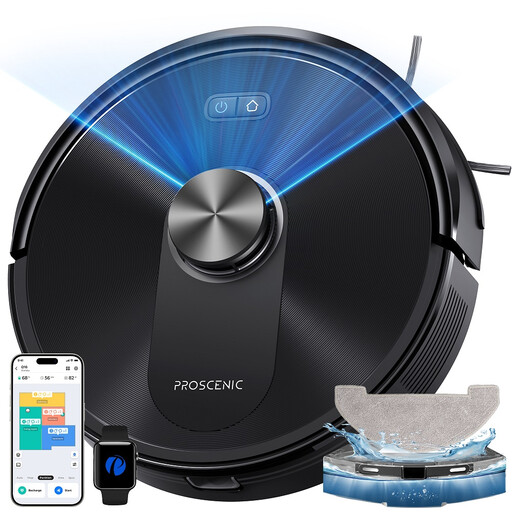
Why This Fits Their Persona: A practical option for households wanting app-based cleaning, mopping and LiDAR mapping without immediately moving to a more complex all-in-one dock.
Its LiDAR navigation, carpet boost and adjustable water flow address the limitation of relying on suction numbers alone.
8000Pa suction, up to 200 minutes’ stated eco runtime, five-map storage and app, voice and remote control.
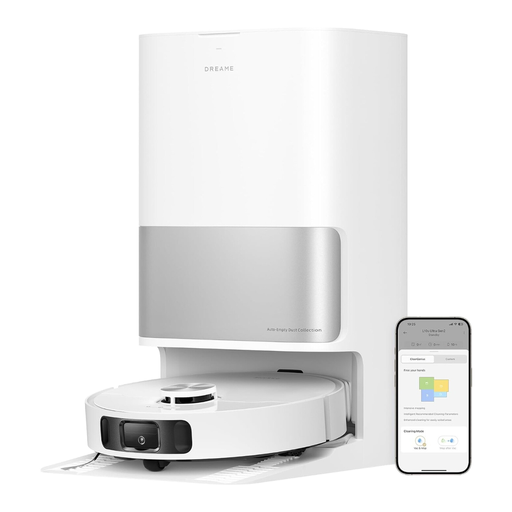
Why This Fits Their Persona: Suitable for busy families seeking a broader automated cleaning system across sealed hard floors and carpets.
The dock specification clearly separates dust emptying, mop washing, drying and water refilling rather than implying that all docks provide the same automation.
10,000Pa stated suction, LiDAR obstacle avoidance, mop lift, MopExtend and automatic mop washing and drying.
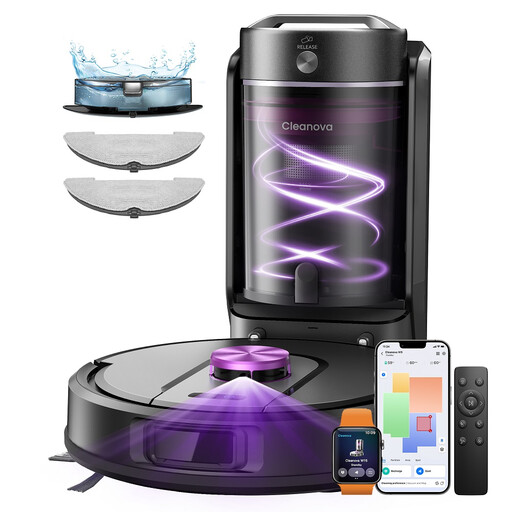
Why This Fits Their Persona: Designed for frequent cleaning in homes dealing with pet hair, mixed flooring and regular dust collection.
Its bagless auto-empty dock has a 4-litre capacity, making the maintenance arrangement explicit rather than hiding ongoing bag requirements.
10,000Pa stated suction, LiDAR navigation, 180-minute runtime, five maps and up to 15 no-go zones.
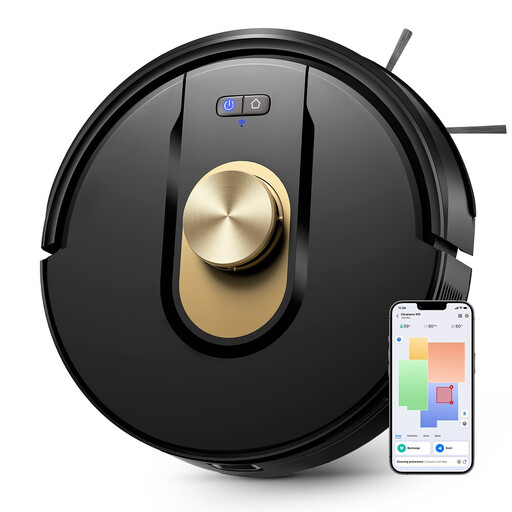
Why This Fits Their Persona: A compact choice for app-focused households wanting mapped cleaning across several floors and mixed surfaces.
Its listed 9.8cm height helps with low furniture, while map storage and no-go zones make route control more practical.
8000Pa stated suction, up to 150 minutes’ listed runtime, five maps and app, Alexa, Google Assistant and Siri support.
We have compiled a complete, real-time list of products that fully satisfy these strict selection criteria and UK safety regulations.
Before the first cleaning cycle, place the dock on a firm surface with clear space around it. Connect the robot to the required Wi-Fi band stated in the manual; some app-controlled robot vacuum models support 2.4GHz Wi-Fi only.
Lift cables, small toys and long curtain edges from the floor. Keep water away from electrical connections and do not use indoor robots outdoors or on standing water. Check the product documentation for the correct UK power adapter, warranty details, safety instructions and responsible-person information where applicable.
Yes, provided the model supports both surfaces and offers suitable suction settings or carpet detection. Mopping should normally be restricted to compatible sealed hard floors, with carpet mop-lift settings used where available.
Expect to empty or inspect the dust system, clean filters and remove hair from the brush regularly. Self-emptying reduces dustbin handling, while mop stations still need their tanks, trays and pads cleaned.
Consumption varies by model, cleaning frequency, suction mode and dock functions. Auto-emptying, mop washing and drying use additional power. Scheduling shorter room-based cleans and using an eco mode where appropriate can help limit running costs.