
24/7 Customer Support

Free returns

Same-day & Next-day Delivery

Quality Guaranteed

Unlock Your Welcome Offers: FREE Delivery | Up to 80% OFF | Free 30-day JoyPlus trial
Download the APP
As a Joybuy Product Recommendation Officer, my role is to help you navigate the crowded market of home technology. A robot vacuum and mop promises to give you back your time, but choosing the wrong one can lead to frustration and wasted money. Many devices are packed with features that sound impressive but fail to deliver in a real-world UK home.
Before you invest, let's look at the common pitfalls that catch many buyers out and what to look for instead.
To ensure your new robotic cleaner is a helpful addition to your home and not a high-tech headache, focus on these three non-negotiable features.
For a device to clean efficiently, it needs to know where it is, where it has been and where it needs to go. This is where its navigation system comes in.
LiDAR (Light Detection and Ranging) navigation is the most crucial feature for consistent, reliable cleaning. A robot with LiDAR uses a spinning laser sensor to create a highly accurate, 360° map of your home.
Why it's essential:
The docking station is no longer just for charging. Modern stations offer different levels of automation that dramatically reduce your manual input.
A robot's physical cleaning tools are what make contact with your floors. For the mix of carpets and hard floors common in UK homes, look for:
We've filtered the market based on these critical features. Here are our recommendations, matched to different household needs.
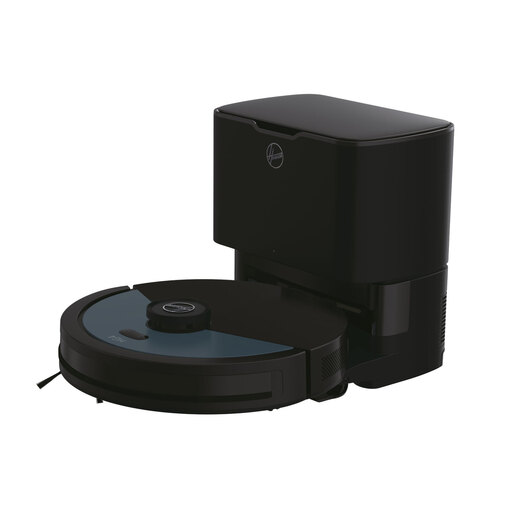
Why This Fits Their Persona: This model is an excellent entry point into serious robotic cleaning. It offers the two most important upgrades—LiDAR navigation and a self-emptying station—at a more accessible price. It's ideal for a busy professional or small family wanting to reclaim time from daily chores.
It bypasses the "dumb navigation" pitfall with its advanced laser system for quick, accurate mapping. The self-emptying base provides up to 60 days of hands-free dust collection, solving the constant bin-emptying chore of basic models.
Its combination of LiDAR navigation and a self-emptying dock offers a level of automation and efficiency typically found in more expensive units. It is also an Alexa compatible robot vacuum for easy voice control.
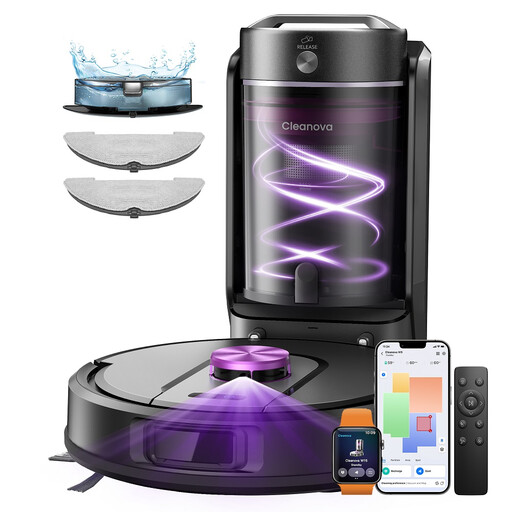
Why This Fits Their Persona: This unit is built for the challenges of a pet-filled home. It pairs very high suction power (10,000Pa) for lifting embedded hair with an innovative bagless emptying station, which saves on the long-term cost of disposable bags and is more eco-friendly.
It proves that high suction power is effective when combined with great technology. Its LiDAR navigation ensures the power is applied systematically across all floors. The bagless station also avoids the hidden ongoing cost of proprietary dust bags.
The 4L bagless, multi-cyclone station provides up to 90 days of hands-free cleaning while preventing secondary dust pollution during emptying. Its 180-minute runtime is suitable for larger properties.
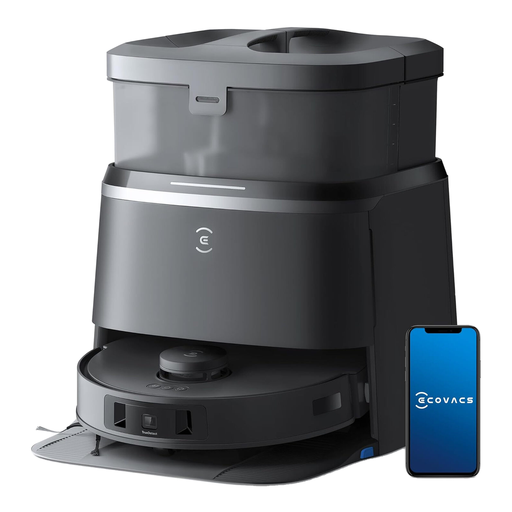
Why This Fits Their Persona: For the tech-savvy homeowner who wants a truly "set-and-forget" solution. This advanced all-in-one station automates every step, from cleaning right up to the edges to washing its own mops with hot water and then drying them. It's the closest you can get to zero-effort floor cleaning.
It completely solves the "high-maintenance mop" problem. The station uses 70°C hot water to hygienically clean the mop pads, and its TruEdge Adaptive Edge Mopping extends to clean right up to skirting boards—an area most round robots miss.
The combination of hot water mop washing and adaptive edge mopping provides a more thorough and hygienic clean than most competitors. The Mini OMNI Station is also more compact, making it easier to place in a home.
We have compiled a complete, real-time list of products that fully satisfy these strict selection criteria and UK safety regulations.
1. How often do I need to replace parts on a robot vacuum and mop? This depends on the model and your usage. Generally, you can expect to replace filters and side brushes every 3-6 months. For models with self-emptying stations that use bags, a bag might last 60-90 days. Mop pads and main brushes are more durable, often lasting 6-12 months. Always check the manufacturer's recommendations for your specific device.
2. Can a robot vacuum and mop handle thick, high-pile carpets? While robot vacuums have improved significantly, they perform best on hard floors and low-to-medium pile carpets. Most models can struggle with very thick or shag-pile rugs, as the long fibres can tangle in the brush. Many advanced robots now feature a "carpet boost" function, where they automatically increase suction power and a mop-lifting feature to keep carpets dry.
3. Are these devices difficult to set up with smart home systems? Not at all. Most modern robot vacuums are designed for easy integration. Setup typically involves downloading the manufacturer's app, connecting the robot to your 2.4GHz Wi-Fi network and then following in-app prompts to link it with Amazon Alexa, Google Assistant or Siri. Once connected, you can use simple voice commands to start, stop and pause cleaning.