
24/7 Customer Support

Free returns

Same-day & Next-day Delivery

Quality Guaranteed

Unlock Your Welcome Offers: FREE Delivery | Up to 80% OFF | Free 30-day JoyPlus trial
Download the APP
Keeping floors clean can feel like a never-ending task, especially in a busy household. Between work, family and pets, finding the time and energy to vacuum and mop regularly is a challenge. A robot vacuum and mop is designed to take this chore off your hands, offering an automated way to maintain clean floors day after day.
However, the market is filled with models boasting a wide array of features and technical specifications. This guide is designed to help you understand the key features that matter for UK homes, so you can find a device that fits your space, lifestyle and cleaning needs.
Navigating the technical jargon can be confusing. Here are a few key considerations to focus on when comparing models.
How a robot vacuum finds its way around your home directly impacts its cleaning efficiency. Basic models may use random bump-and-turn patterns, which can be inefficient and miss spots. For a more systematic and thorough clean, look for a LiDAR navigation robot vacuum. LiDAR (Light Detection and Ranging) uses a spinning laser to create a precise, 360-degree map of your home. This allows the robot to plan the most efficient cleaning route, avoid obstacles intelligently and remember the layout of different floors. It also enables advanced features through a smart vacuum cleaner with app, such as setting no-go zones to keep the robot away from pet bowls or children's play areas.
Suction power, measured in Pascals (Pa), indicates how effectively a vacuum can lift dirt, dust and debris. While a standard model might offer around 2000-3000 Pa, a high suction robot vacuum with 6000 Pa or more is significantly better for homes with carpets or pets. This level of power is essential for pulling embedded dirt and stubborn pet hair from carpet fibres. If you have a furry companion, also consider models specifically marketed as a robot vacuum for pet hair, as they often feature anti-tangle brush designs and HEPA filters to trap allergens.
The goal of a robot vacuum is to save you time and effort. A self emptying robot vacuum takes this a step further. These models come with a docking station that not only charges the robot but also automatically empties its internal dustbin into a larger, sealed container or bag. This means you might only need to empty the main dock once every 60-90 days, drastically reducing your interaction with the machine and your exposure to dust.
Here are a few models that offer a compelling combination of features for different needs and home environments.
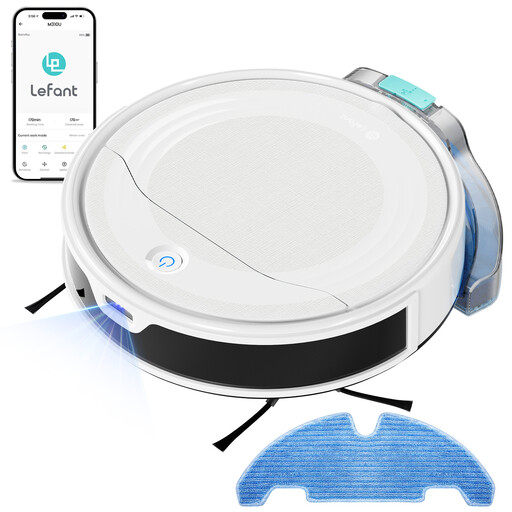
Why It Stands Out: The Lefant M310 stands out for its compact and slim design. At just 28 cm wide and 7.9 cm tall, it navigates easily around furniture legs and under low-clearance sofas where larger robots might struggle. Despite its size, it delivers a powerful 6000Pa suction and uses ToF (Time-of-Flight) laser navigation for accurate mapping and obstacle avoidance.
Pros:
Who is it for? This model is a great fit for those living in flats or homes with complex furniture layouts. Its long runtime and large dustbin make it suitable for users who don't require a self-emptying station but still want powerful, intelligent cleaning.
View Details for Lefant M310 Ultra
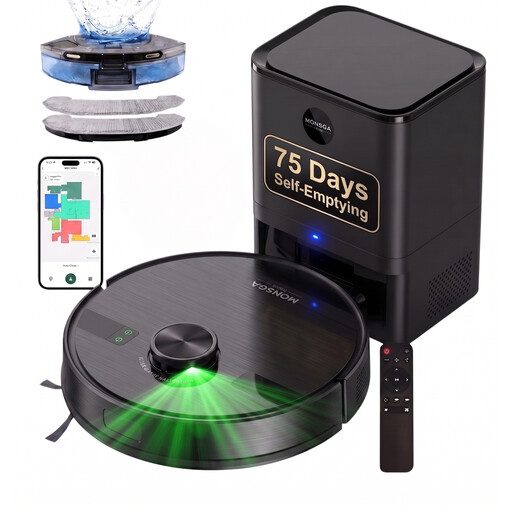
Why It Stands Out: The MonsgaClean MS1 Max is built for maximum automation. It combines very high suction power (9000 Pa) with a 4.0L self-emptying station that can hold up to 60 days of debris. Its advanced 360° LiDAR navigation system creates precise maps and supports storage for up to five different floors, making it ideal for multi-storey homes.
Pros:
Who is it for? Perfect for busy families, pet owners and those in multi-level homes who want a "set it and forget it" cleaning solution. The combination of powerful suction and a large self-emptying base offers a truly hands-off experience.
View Details for MonsgaClean MS1 Max
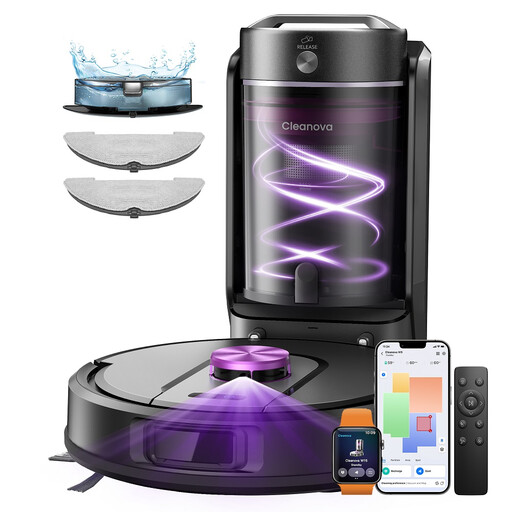
Why It Stands Out: The Vexilar W15 offers a unique and economical approach to self-emptying technology. Its docking station uses a bagless, multi-cyclone system to empty the robot's dustbin, eliminating the recurring cost of disposable bags. This is paired with an impressive 10000 Pa suction power, making it one of the more powerful options available for deep cleaning.
Pros:
Who is it for? This is an excellent choice for the cost-conscious and environmentally-aware user who still wants the convenience of a self-emptying system and top-tier cleaning performance. Its powerful suction makes it particularly well-suited for homes with extensive carpeting and pets.
If the models above aren't the perfect match, or if you'd like to compare them against other vacuums, there is a wider selection to explore. Browse our full range to find a cleaning solution that fits your home and budget.
Explore All Floor and Carpet Vacuum Cleaners
For daily and weekly maintenance, a good robot vacuum and mop can significantly reduce the need for manual cleaning. They excel at keeping floors free of dust, crumbs and pet hair. However, you may still want to keep a traditional vacuum for tasks the robot can't do, such as cleaning stairs, upholstery, car interiors or tackling large, sudden spills.
Modern robot vacuums are generally very effective at managing pet hair. Models with high suction power (5000 Pa or more) and specially designed anti-tangle brushes are particularly adept at lifting hair from both hard floors and carpets. A robot vacuum for pet hair with a HEPA filter is also beneficial, as it helps capture pet dander and other allergens from the air.
For most homes, yes. A LiDAR navigation robot vacuum cleans more methodically and efficiently than models that rely on random patterns. It is less likely to get stuck, miss areas or repeatedly clean the same spot. The precise mapping also unlocks powerful features in the companion app, like creating virtual walls and scheduling cleanings for specific rooms, giving you far more control over how and where your robot cleans.