
24/7 Customer Support

Free returns

Same-day & Next-day Delivery

Quality Guaranteed

Unlock Your Welcome Offers: FREE Delivery | Up to 80% OFF | Free 30-day JoyPlus trial
Download the APP
A robot vacuum cleaner with mop can reduce the amount of daily floor care in a busy household, but choosing the wrong model may create more work rather than less. Marketing often focuses on impressive suction figures or “hands-free” claims while leaving out practical details such as carpet compatibility, dock maintenance and obstacle clearance.
Before comparing models, watch for these common buying pitfalls:
For homes with pets or carpets, look beyond the headline suction number. A robot vacuum for pet hair should ideally have an anti-tangle main brush or side brush, carpet suction boost and a dustbin that is practical for the amount of hair collected.
A model designed for use as a robot vacuum for carpets and hard floors should also detect floor changes and adjust its behaviour. Mop lifting is important if you have rugs or fitted carpet. If the product only has a static wiping pad, you may need to create no-mop zones in the app or remove the mop attachment before cleaning.
A robot vacuum with LiDAR navigation can map rooms and plan routes using laser distance sensing. This is useful in open-plan UK homes, homes with several rooms and properties with more than one floor. Some models also add cameras or structured-light sensors to recognise objects.
Check the manufacturer’s stated obstacle clearance rather than assuming the robot will cross every threshold. A low-profile unit may fit under furniture but struggle with raised door bars. Conversely, a model with a taller sensor or larger dock may need more clearance around cupboards and skirting boards.
A self-emptying robot vacuum can reduce the frequency of emptying the onboard dustbin. More advanced stations also provide automatic mop washing and drying, water refilling and cleaning-solution dispensing.
These features are convenient, but they do not remove maintenance altogether. You will still need to empty dirty-water tanks, replace dust bags where applicable, clean sensors and wash or replace filters. Bagless stations can reduce disposable-bag use, whereas sealed bags may be more convenient for households that prefer less contact with dust.
For UK buyers, also check the warranty, replacement-part availability, app requirements and whether the device only supports 2.4 GHz Wi-Fi. Always follow the supplied instructions: do not use a robot on standing water, pick up hot or sharp objects, or allow cables and small items to remain in its path.
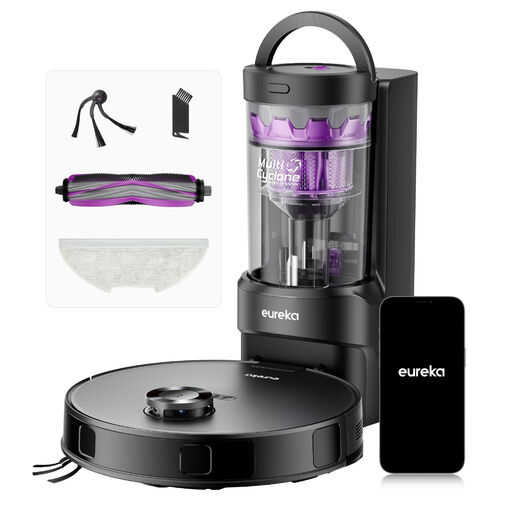
Why This Fits Their Persona: A practical starting point for smaller UK households wanting app scheduling, automatic charging and cleaning across hard floors and low-pile carpets without requiring a highly complex dock.
Its listed features focus on smart mapping and everyday floor cleaning rather than relying only on a large suction headline. The mop and dustbin still require user maintenance.
App control, multiple cleaning modes, automatic charging and a slim profile for reaching beneath furniture.
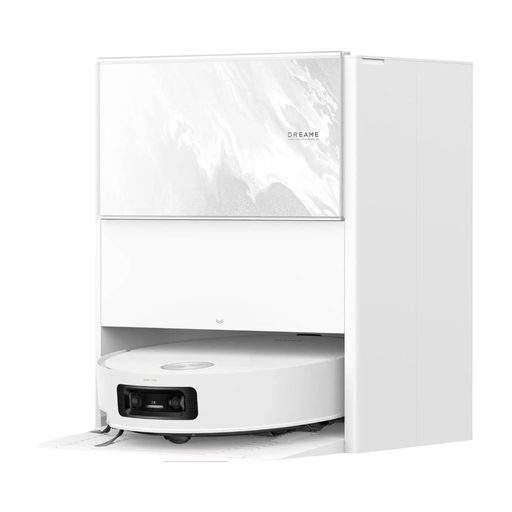
Why This Fits Their Persona: Suitable for households prioritising automated wet cleaning, detailed mapping and reduced daily dock intervention across mixed flooring.
The specifications identify separate mop-wash and drying temperatures, carpet detection and a mop-lift system, helping buyers assess the complete cleaning process rather than just the 25,000 Pa figure.
LiDAR with camera-based object detection, 6 cm obstacle clearance, 3.2 L dust bag and automatic water refill, mop washing and drying.
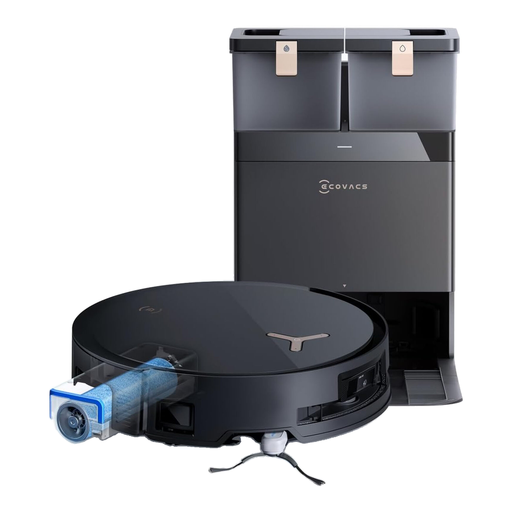
Why This Fits Their Persona: A strong match for pet-owning families and larger homes needing frequent vacuuming, roller mopping and automated station care.
It specifies ZeroTangle 2.0, carpet mop lifting up to 10 mm and separate hot-water washing and hot-air drying, making the pet-hair and mixed-floor use case clearer.
18,000 Pa listed suction, continuously self-washing roller mop, LiDAR-based AIVI 3D navigation and a station that empties dust and refills water.
We have compiled a complete, real-time list of products that fully satisfy these strict selection criteria and UK safety regulations.
Place the charging station on a level surface with clear access in front and at the sides. During the first mapping run, remove cables, toys and small objects from the floor. Set virtual boundaries around stairs, pet bowls and areas where moisture is unsuitable.
Running cost includes electricity, replacement brushes, filters, mop pads, cleaning solution and, for some stations, disposable dust bags. A model with a large dust bag may reduce emptying frequency, while a bagless station may require more frequent chamber cleaning. Check replacement parts before buying, not only the robot’s initial price.
Yes, if the model provides carpet detection with mop lifting or allows no-mop zones in its app. Static mop pads can leave carpets damp, so confirm the manufacturer’s instructions before using the mopping mode.
Lifespan depends on cleaning frequency, floor debris, pet hair and maintenance. Regularly clean brushes, sensors, wheels, filters and charging contacts, and replace consumable parts according to the manual. Avoid operating the robot on standing water or with blocked airflow.
No. It reduces routine dustbin emptying, but the station may still need its dirty-water tank emptied, its wash tray cleaned and its filters or bags replaced. Automatic mop washing and drying also work most effectively when the dock is kept clean.