
24/7 Customer Support

Free returns

Same-day & Next-day Delivery

Quality Guaranteed

Unlock Your Welcome Offers: FREE Delivery | Up to 80% OFF | Free 30-day JoyPlus trial
Download the APP
A robot vacuum and mop can reduce the amount of routine floor cleaning, but choosing the wrong model may create extra work rather than remove it. Marketing often focuses on suction figures, app features or hot-water functions without explaining what those specifications mean in a real UK home.
Before buying, consider three common traps:
The right choice depends on your flooring, available storage, pet hair, household size and how much maintenance you are willing to accept.
Suction is usually measured in Pa, or pascals. A higher stated figure indicates stronger air pressure at the manufacturer’s specified setting, but it does not alone determine cleaning results. Brush design, airflow, navigation and the ability to maintain contact with the floor also matter.
For homes with carpets, rugs or pets, look for:
For mostly hard flooring, a hard floor vacuum mop or cordless wet and dry vacuum cleaner may be more practical if you regularly deal with spills, food, muddy footprints or other wet messes.
Check whether the appliance uses a reusable mop pad, rotating mop pads or a roller brush. A robot vacuum and mop with an automatic mop washing station can reduce handling, but the station needs enough room near a power socket and a suitable place to fill and empty water tanks.
Useful features include:
Do not assume that every model is suitable for standing liquid. Follow the product manual, particularly around spills, electrical components and prohibited substances.
A robot’s map quality affects whether it can clean consistently across several rooms. Look for obstacle avoidance, room mapping, scheduled cleaning and app controls. Edge-to-edge cleaning can also matter in kitchens and along skirting boards, where ordinary circular robot designs may leave a narrow uncleaned strip.
Measure:
An app-controlled vacuum can be convenient for schedules and room selection, but it should still offer usable physical controls in case Wi-Fi or phone access is unavailable.
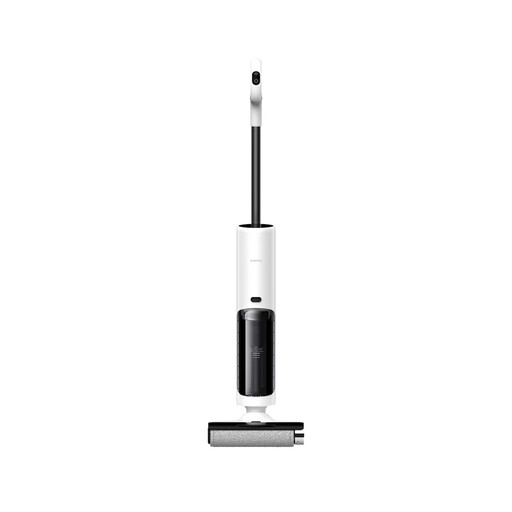
Why This Fits Their Persona: A practical option for smaller UK homes or anyone wanting one handheld appliance for everyday hard-floor debris and spills.
It is not marketed as a fully autonomous robot. The manual format makes its hard-floor and wet-mess purpose clear, avoiding unrealistic expectations about unattended cleaning.
3-in-1 vacuuming, mopping and self-cleaning; up to 15 kPa suction; dual clean- and dirty-water tanks.
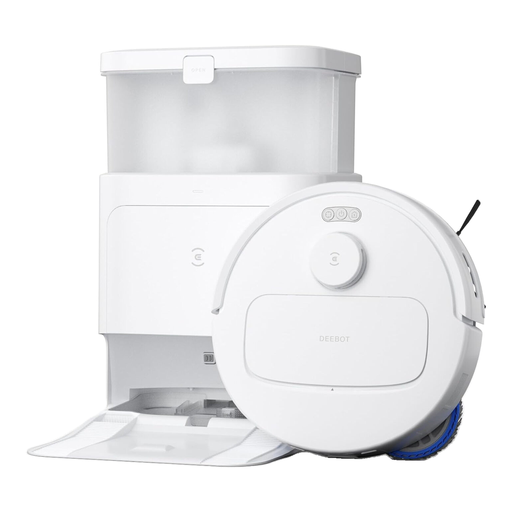
Why This Fits Their Persona: Suitable for larger homes where scheduled cleaning, carpet detection and reduced daily intervention are priorities.
Its specifications identify the station functions, mop lifting and mapping system separately, making it easier to judge the actual maintenance workload.
10,000Pa suction; 60°C hot water mop washing and hot-air drying; 2.6L dust bag; stated runtime of up to 320 minutes.
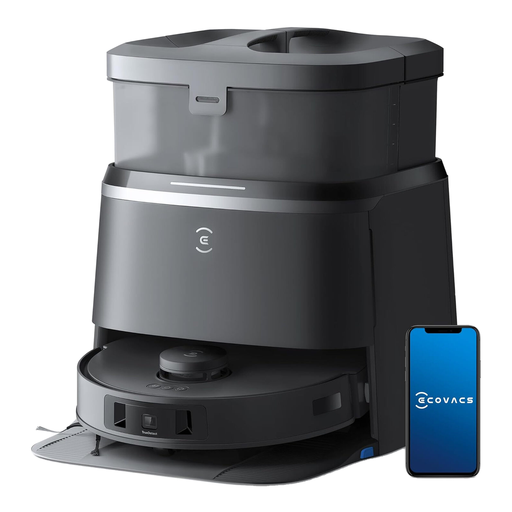
Why This Fits Their Persona: A considered match for households with frequent foot traffic, mixed flooring, pets or limited room around the charging station.
The compact Mini OMNI Station addresses placement concerns, while automatic mop lifting helps separate carpet cleaning from wet-floor cleaning.
11,000Pa suction; 70°C hot water mop washing; self-emptying, self-washing and self-drying station functions; ZeroTangle brush design.
We have compiled a complete, real-time list of products that fully satisfy these strict selection criteria and UK safety regulations.
Before the first run, remove loose cables, socks, small toys and other items from the floor. Create a clear route to the station and check that the robot can pass over thresholds. For models with a hot-water station, keep the unit on a stable, dry surface and avoid touching internal components immediately after a washing cycle.
For ongoing performance:
It can be, provided the model supports carpets and has automatic mop lifting or carpet-avoidance settings. Check the stated mop-lift height and create no-mop zones in the app where necessary. A cordless wet and dry vacuum cleaner is generally more focused on hard floors and should not automatically be treated as a carpet appliance.
Lifespan depends on usage, maintenance, battery condition and the availability of replacement parts. Regularly cleaning filters, brushes, wheels, sensors and mop components can help maintain operation. Before purchasing, check the manual and product support information for consumables such as dust bags, filters, mop pads and batteries.
It may involve recurring costs for dust bags, filters, mop pads, electricity and cleaning solution where applicable. Automatic emptying can reduce daily handling, but it does not remove the need for maintenance. Compare consumable prices and replacement intervals alongside the purchase price to estimate the practical cost of ownership.