
24/7 Customer Support

Free returns

Same-day & Next-day Delivery

Quality Guaranteed

Unlock Your Welcome Offers: FREE Delivery | Up to 80% OFF | Free 30-day JoyPlus trial
Download the APP
A robot vacuum cleaner with mop can reduce the amount of daily floor care in a busy UK home, but not every “hands-free” model offers the same level of convenience. Some require frequent bin emptying, others leave carpets damp, and headline suction figures do not always explain how the robot handles hair, thresholds or furniture.
Before choosing a robot vacuum and mop, look beyond the feature list. The right model should suit your flooring, household size, cleaning habits and willingness to maintain the machine.
A high Pascal figure can indicate strong motor suction, but it does not describe brush design, airflow, edge cleaning or how effectively the robot lifts pet hair from carpet. A powerful suction robot vacuum may still struggle if its brush tangles easily or its navigation repeatedly misses areas.
Check for supporting features such as carpet suction boost, anti-tangle brush construction and a route-planning system that covers rooms methodically.
“Mopping” can mean anything from dragging a damp cloth behind the robot to washing, drying and refilling the mop at the dock. Basic static mops are useful for light surface wiping, but they generally need to be removed and cleaned manually after use.
If you want minimal contact with dirty water, look for automatic mop washing and drying, automatic water refilling and a separate dirty-water tank. These features add convenience, but they also require more space and regular dock maintenance.
A robot that works well on hard floors may not be suitable for a home with rugs, thick carpets or raised door thresholds. Mop-lift height matters because the robot needs to keep wet fabric away from carpeted areas. Obstacle avoidance also has limits: loose cables, small toys and long rug tassels should be cleared before cleaning.
Measure the available clearance beneath furniture and check the robot’s stated threshold-climbing capability before ordering.
A LiDAR robot vacuum uses laser-based distance sensing to map rooms and plan routes. This is useful in larger or multi-room homes because the robot can usually create room divisions, set no-go zones and return to unfinished areas more systematically.
Some models combine LiDAR or LDS with cameras, ToF sensors or AI-supported obstacle recognition. These systems may help the robot identify furniture and household objects, but no navigation system removes the need to prepare the floor.
For multi-storey UK homes, check whether the app supports multi-floor mapping and how many maps can be saved.
Compare the stated suction level alongside:
For a robot vacuum for pet hair, an anti-tangle brush can reduce cleaning interruptions, while a larger dustbin may be useful between maintenance sessions. Remember that suction figures from different manufacturers are not always directly comparable, so consider the complete cleaning system rather than one number.
A self-emptying robot vacuum can transfer debris into a larger bag or bagless container. Some multifunction docks also wash and dry the mop, refill clean water and dispense cleaning solution.
Measure the dock footprint and leave the clearance recommended in the manual. A dock with hot-air drying may help reduce residual moisture, but the water tanks, filters, brushes and mop components still need routine cleaning. Consumables also differ: some stations use disposable dust bags, while bagless designs reduce recurring bag purchases but may require more direct emptying.
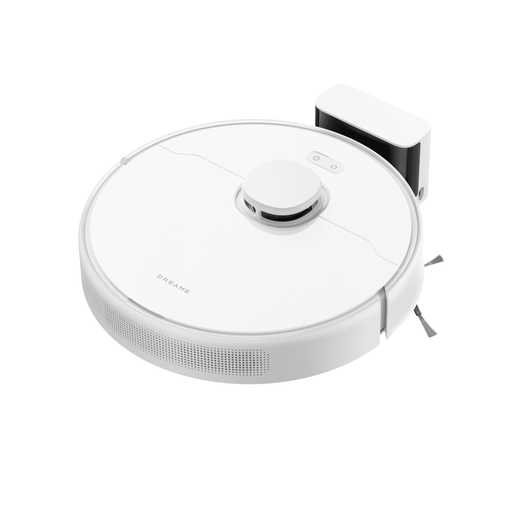
Why This Fits Their Persona: A practical entry point for households wanting scheduled vacuuming and light mopping without paying for a multifunction dock.
Its specifications clearly identify static mops and no self-emptying dock, so buyers can plan for manual maintenance rather than expecting full automation.
6000Pa stated suction, LDS laser navigation, multi-floor mapping, up to 285 minutes’ runtime and 20mm obstacle clearance.
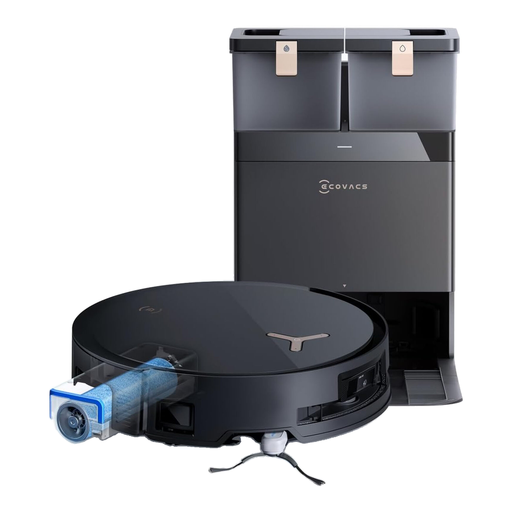
Why This Fits Their Persona: Designed for shoppers prioritising automated mop care, carpet handling and detailed obstacle recognition in a busy home.
The specification lists mop washing, hot-air drying, dust emptying and carpet mop lift, rather than presenting mopping as only a damp cloth attachment.
18,000Pa stated suction, OZMO ROLLER self-washing mop, 10mm auto-lift and a 12-in-1 OMNI Station with 63°C hot-air drying.
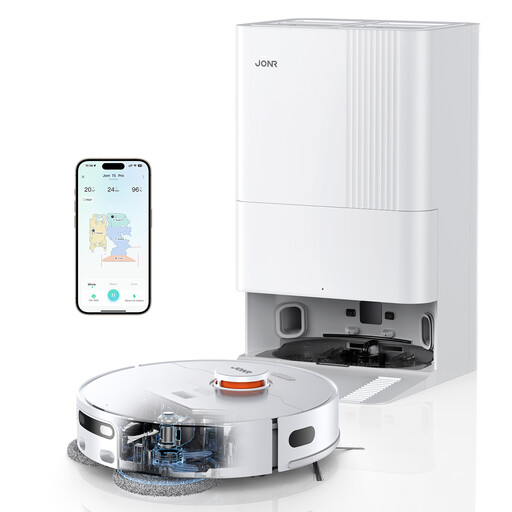
Why This Fits Their Persona: A suitable match for homes needing strong stated suction, LiDAR mapping and automated dock functions across mixed flooring.
It combines carpet detection and mop lift with an anti-tangle side brush, helping address two common causes of interruptions.
8150Pa stated maximum suction, 360° LiDAR navigation, AI-supported obstacle avoidance, automatic dust emptying, mop cleaning and hot-air drying.
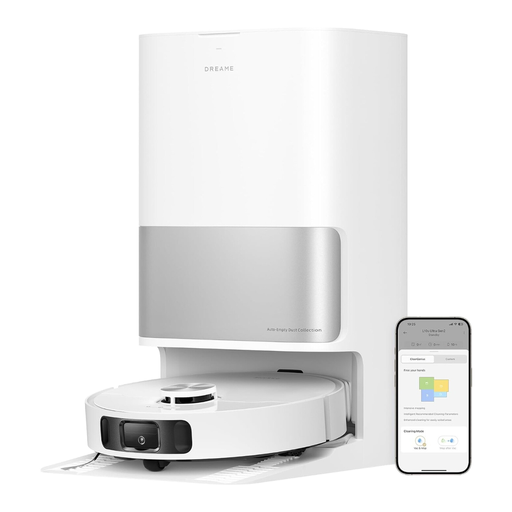
Why This Fits Their Persona: Well suited to users who want app scheduling, voice commands and reduced daily intervention.
Its dock functions are stated separately: dust emptying, mop washing and drying, plus automatic water refilling. Buyers can compare the maintenance workload clearly.
10,000Pa stated suction, LiDAR navigation, MopExtend edge cleaning, 10.5mm mop lift and 20mm threshold clearance.
We have compiled a complete, real-time list of products that fully satisfy these strict selection criteria and UK safety regulations.
Yes, many models are designed for both, but check for carpet detection, mop lift and automatic suction boost. A static mop should generally be removed before carpet cleaning, while an automatic model may raise its mop when it detects carpet.
Lifespan depends on usage, maintenance, battery condition and access to replacement brushes, filters, mop pads and dust bags. Regularly clearing hair and debris from moving parts can reduce avoidable wear. Review the warranty and after-sales information before purchase.
It can. Disposable dust bags and cleaning solution may create recurring costs, while bagless stations avoid replacement bags but still need emptying and filter care. Automatic mop washing and drying also uses water and electricity. Compare the dock design and consumable prices, not only the initial purchase price.