
24/7 Customer Support

Free returns

Same-day & Next-day Delivery

Quality Guaranteed

Unlock Your Welcome Offers: FREE Delivery | Up to 80% OFF | Free 30-day JoyPlus trial
Download the APP
A robot vacuum cleaner with mop can reduce daily floor-care chores, but choosing one based only on suction figures or a long feature list can lead to disappointment. UK homes often combine carpets, laminate, tiles and rugs, while pets, children, narrow furniture gaps and stair edges create additional demands.
Before buying a robot hoover UK households can rely on, look beyond marketing claims. Three common pitfalls deserve particular attention.
A high Pascal figure indicates the manufacturer’s stated suction pressure, but it does not describe brush design, airflow, carpet adjustment or how well the robot handles hair. A robot vacuum with mopping function also needs suitable water control and a mop design that does not leave carpets damp.
Check whether the model has:
A self-emptying robot vacuum reduces how often you empty the onboard dustbin, but filters, brushes, mop cloths, sensors and charging contacts still require regular care. Bagged stations also create an ongoing consumable cost, while bagless systems require their collection chamber and filters to be cleaned.
Confirm the station type, dust capacity and replacement-part availability before purchase.
LiDAR robot vacuum models generally create maps using laser scanning, but useful navigation also depends on obstacle detection, map editing and the ability to set no-go zones. Look for multi-floor map storage if your home has more than one level, and check the robot’s height against the clearance beneath sofas and cupboards.
LiDAR or LDS navigation can support structured route planning and room mapping. Useful controls include room selection, virtual walls, scheduled cleaning and no-go zones. Some models store up to five maps, which may help in multi-storey homes, although the robot will still need to be moved between floors manually.
Obstacle avoidance is equally important. Loose charging cables, toys, socks and long rug tassels can interrupt a cleaning cycle or become caught in a brush. Clear these items before use, particularly in homes with young children or pets.
A robot vacuum for carpets and hard floors should offer separate settings for each surface. Carpet detection, increased suction and mop lifting can help reduce the risk of wetting rugs. However, users should still follow the manufacturer’s instructions and avoid using a mopping function on carpets where the model does not support it.
For sealed wood, laminate, vinyl and tile, adjustable water flow is preferable to a fixed wetness level. Never leave a damp mop cloth attached for long periods after cleaning, as it may create odours or mark some flooring.
Advertised runtime is usually measured in a lower-power mode. Compare the stated runtime with your floor area, carpet density and preferred suction setting. Auto-recharge and resume functions are useful for larger homes because the robot can return to its dock and continue later.
Measure the robot and station before ordering. For example, the Q1O is listed at 9.7 cm high, while the W11 is listed at 9.8 cm. The base also needs open space in front and to the sides so the robot can dock reliably.
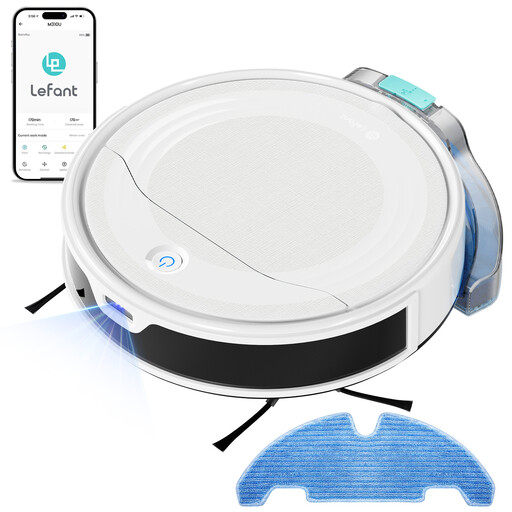
Why This Fits Their Persona: A practical 3-in-1 option for smaller UK homes with hard floors and low-pile carpets, offering app and Alexa control without requiring a large station.
It lists ultrasonic carpet detection and the ability to avoid mopping carpets, helping address the risk of applying moisture to rugs.
Listed features include 6000Pa suction, an 800ml dustbin, up to 240 minutes of runtime and 2.4GHz app connectivity.
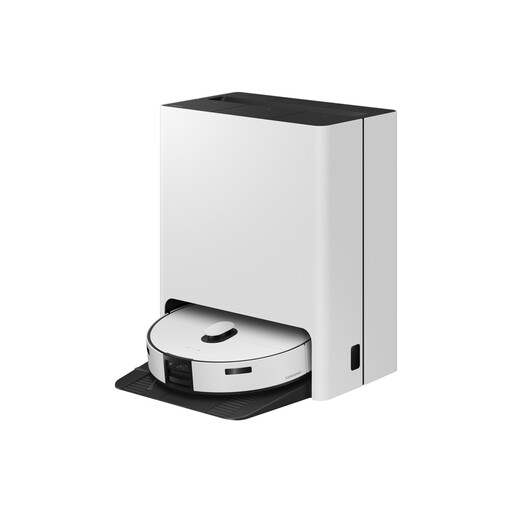
Why This Fits Their Persona: Suits smart-home users seeking an integrated dock and app-based control for vacuuming, mopping and routine station management.
The listed All-in-One Clean Station is designed to empty dust, wash mop pads and refill water, rather than relying solely on a small onboard bin.
Features include AI-assisted obstacle recognition, dual rotating mop pads, SmartThings control and customisable cleaning zones.
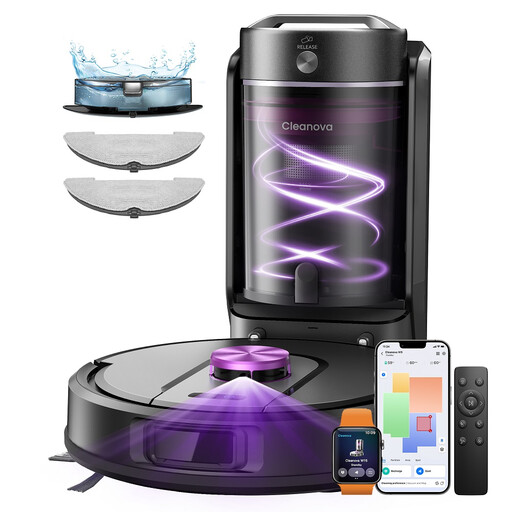
Why This Fits Their Persona: Its large collection system, long stated runtime and pet-hair positioning make it suitable for busy households with frequent debris.
The bagless 4-litre GreenBin station avoids disposable dust bags, while LiDAR mapping and no-go zones help manage complex rooms.
The specification lists 10000Pa suction, up to 180 minutes of runtime, five maps and three water-flow settings.
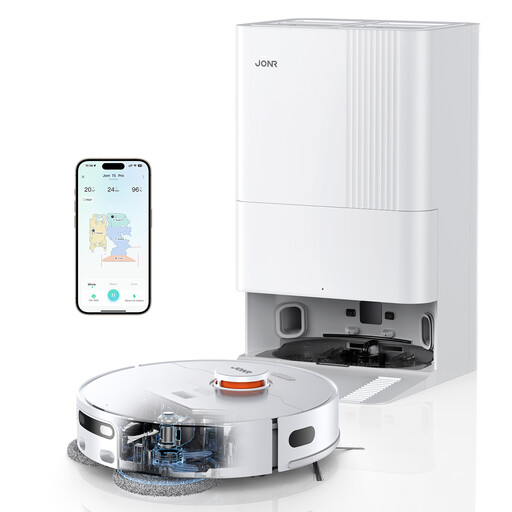
Why This Fits Their Persona: A suitable profile match for households wanting an all-in-one dock with automatic dust emptying, mop cleaning and drying.
LiDAR navigation, AI-supported obstacle avoidance and carpet detection address common route-planning and floor-transition concerns.
Listed features include 8150Pa suction, an anti-tangle side brush, mop-arm lifting on carpets and hot-air mop drying.
We have compiled a complete, real-time list of products that fully satisfy these strict selection criteria and UK safety regulations.
An app-controlled robot vacuum is convenient, but 2.4GHz Wi-Fi compatibility is common. Check your router settings before setup. Alexa-compatible robot vacuum models may also require the correct manufacturer skill and account connection.
It depends on the model. Choose one with carpet detection and mop lifting, or use vacuum-only mode with the mop attachment removed. Do not assume every 3-in-1 robot vacuum can safely mop and vacuum across all floor types.
Lifespan depends on usage, battery care, brush wear and filter maintenance. Regularly removing hair and debris from moving parts can help maintain operation. Before buying, check whether replacement filters, brushes, mop cloths and dust bags are available.
It may involve recurring costs for dust bags, filters, mop cloths or cleaning solution. Bagless stations reduce dust-bag purchases but still need chamber and filter maintenance. Compare consumables and cleaning requirements alongside the initial price.