
24/7 Customer Support

Free returns

Same-day & Next-day Delivery

Quality Guaranteed

Unlock Your Welcome Offers: FREE Delivery | Up to 80% OFF | Free 30-day JoyPlus trial
Download the APP
A robot vacuum cleaner with mop can reduce the amount of daily floor cleaning in a busy UK household, but the feature list alone does not tell you whether a model will suit your home. Suction figures, smart mapping and “hands-free” stations can sound impressive while hiding limitations around carpet use, maintenance, furniture clearance and replacement costs.
The right choice depends on your floor plan, flooring, pets, available storage and how much manual upkeep you are willing to accept.
A high Pascal figure may indicate stronger motor suction, but it does not guarantee better everyday cleaning. Brush design, airflow, filter condition and navigation also affect how well a robot vacuum and mop collects dust, crumbs and pet hair.
Look for a suitable combination of suction power, brush design and floor compatibility. A robot vacuum for pet hair should also have an anti-tangle brush or side-brush design, particularly if your home has long hair or shedding animals.
Most robot vacuum cleaners with mopping use a damp cloth, water tank or rotating roller. These systems are designed for routine maintenance and light marks, not necessarily dried-on spills or heavily soiled floors. Check whether the mop lifts on carpets and whether water flow can be adjusted.
If a product includes automatic mop cleaning and drying, confirm what the station actually does. Some stations wash and dry the mop, while others only charge the robot or empty its dustbin.
A robot vacuum cleaner with a self-emptying station needs more floor and vertical space than the robot itself. The dock may also require access to a power socket and enough clearance for reliable docking.
Self-emptying does not mean maintenance-free. Filters, brushes, sensors, mop pads, water tanks and charging contacts still need regular attention. Bagless systems reduce the need for replacement bags, while sealed dust bags can make emptying less exposed to dust.
For homes with carpets and hard floors, compare the stated suction level alongside the brush system and carpet settings. A powerful robot vacuum can help collect loose debris and pet hair, but thick rugs may still need occasional manual vacuuming.
Useful features include:
Do not use the mop function on carpets unless the product instructions explicitly permit it. Remove loose cables, small toys and long rug tassels before starting a cleaning cycle.
A LiDAR robot vacuum uses laser-based mapping to identify walls and room layouts. This can be useful in multi-room UK homes, flats with narrow passages and properties where scheduled room cleaning is important. LDS, or laser distance sensor, navigation is another term used for similar mapping hardware.
Obstacle avoidance varies considerably. LiDAR can map the room, but it may not identify every cable, sock or small object. AI-supported obstacle detection can assist, yet floor preparation remains important. Use app-based no-go zones around stairs, pet bowls, delicate furniture and areas with loose wires.
A robot vacuum cleaner with self-emptying station may reduce how often you empty the onboard dustbin. Check the station’s dust capacity and whether it uses bags or a bagless collection system. For larger homes, runtime and automatic recharge-and-resume functions can be more useful than a single headline battery figure.
An app-controlled robot vacuum should offer practical controls such as:
Check Wi-Fi requirements before buying. Some models operate through a 2.4 GHz network, and voice control may require a compatible smart-home service.
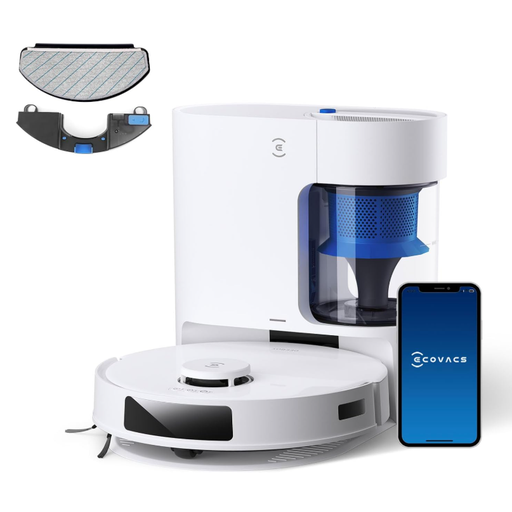
Why This Fits Their Persona: A practical option for households wanting vacuuming, damp mopping, app scheduling and laser mapping without requiring a full wash-and-dry station.
Its product information specifies both hard-floor and carpet use, LDS navigation and app controls. The mop attachment is removable for vacuum-only cleaning.
8,000Pa stated suction, up to 300 minutes stated runtime, LDS mapping and virtual boundaries through the app.
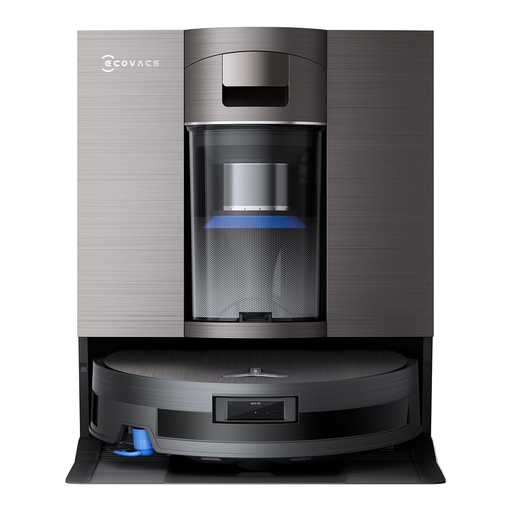
Why This Fits Their Persona: Suits shoppers prioritising automated mop care, advanced navigation and reduced day-to-day intervention across larger homes.
The station is specified to empty dust, wash and dry the mop, refill water and dispense cleaning solution. The mop lift system is designed for carpet transitions.
19,500Pa stated suction, 75°C hot-water mop washing, 63°C hot-air drying and LiDAR-supported AIVI 3D navigation.
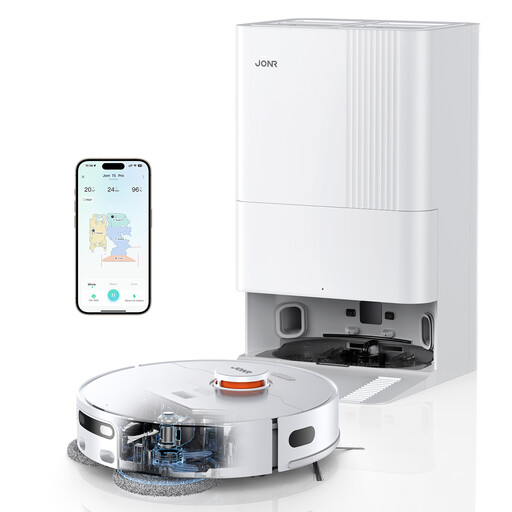
Why This Fits Their Persona: A match for homes needing strong daily debris collection, carpet transitions and a station that combines several routine tasks.
Its listed features include LiDAR navigation, carpet detection, an extendable mop arm with auto-lift and an anti-tangle side brush.
8,150Pa stated maximum suction, automatic dust emptying, mop cleaning, hot-air drying and scheduled app control.
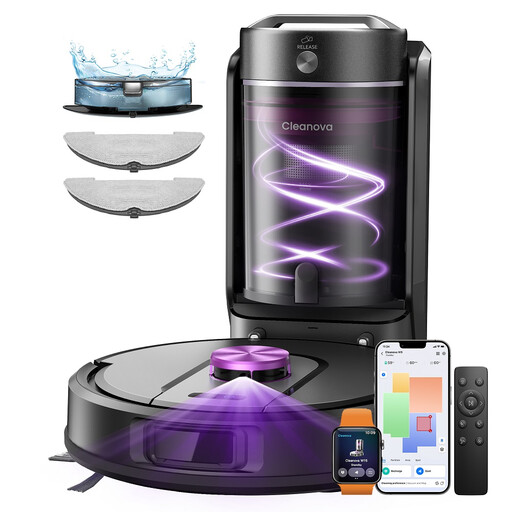
Why This Fits Their Persona: Suitable for shoppers wanting multiple maps, self-emptying collection and several control methods for a mixed-floor household.
The bagless 4-litre station is specified for automatic dust collection, while LiDAR mapping supports up to five maps and configurable no-go zones.
10,000Pa stated suction, 180-minute stated runtime, app, remote and voice control, plus three water-flow settings.
Place the station on a level surface with clear access in front and at the sides. During the first mapping run, open internal doors and remove objects that could interrupt navigation. Mark stairs and drop-offs with virtual boundaries, as dark edges may not always be detected.
For safety and performance:
A robot vacuum cleaner with mop is intended to support routine cleaning rather than remove every manual task. Proper preparation and maintenance help protect the motor, battery and navigation system over time.
We have compiled a complete, real-time list of products that fully satisfy these strict selection criteria and UK safety regulations.
Yes, many models are designed for both, but check for carpet detection and a mop-lift function. Use vacuum-only mode on carpets unless the instructions state otherwise. Thick rugs, tassels and high thresholds may still require manual adjustment.
You will still need to clean filters, brushes, sensors, wheels, mop pads and water tanks. A self-emptying station reduces dustbin emptying, but it does not remove routine care. Bagless stations avoid dust-bag purchases, while bagged stations may offer a contained way to dispose of collected dirt.
Running cost depends on cleaning frequency, suction mode, charging requirements and station functions such as hot-air drying. Compare the product’s rated power and your intended schedule. Using standard or quiet modes for everyday dust, then reserving higher suction for carpets and pet-hair areas, may help manage usage.