
24/7 Customer Support

Free returns

Same-day & Next-day Delivery

Quality Guaranteed

Unlock Your Welcome Offers: FREE Delivery | Up to 80% OFF | Free 30-day JoyPlus trial
Download the APP
As a Joybuy Product Recommendation Officer, my role is to help you navigate the crowded market of home technology. The promise of a robot vacuum and mop with self-emptying station is compelling: a device that cleans your floors and then cleans itself, leaving you with more time for the things you enjoy. However, not all models live up to this promise. Many are plagued by design flaws that can lead to frustration and a purchase you regret.
Before you invest, it's crucial to understand the common pitfalls. Many UK consumers find themselves disappointed by overhyped features that fail in practice. Here are the key issues to watch out for.
To ensure your new cleaning assistant is a help, not a hindrance, focus on these core technical specifications.
For any home larger than a small flat, LiDAR navigation vacuum technology is essential. LiDAR (Light Detection and Ranging) uses a spinning laser to create a highly accurate, 360-degree map of your home.
Suction is measured in Pascals (Pa). This number directly relates to the vacuum's ability to lift debris.
A truly smart robot should adapt to your lifestyle. Look for a robust app that allows you to schedule cleanings, select specific rooms or zones, adjust suction power and control the water flow for mopping. For ultimate convenience, check for compatibility with a voice control vacuum cleaner system like Amazon Alexa or Google Assistant, allowing you to start a clean-up with a simple command.
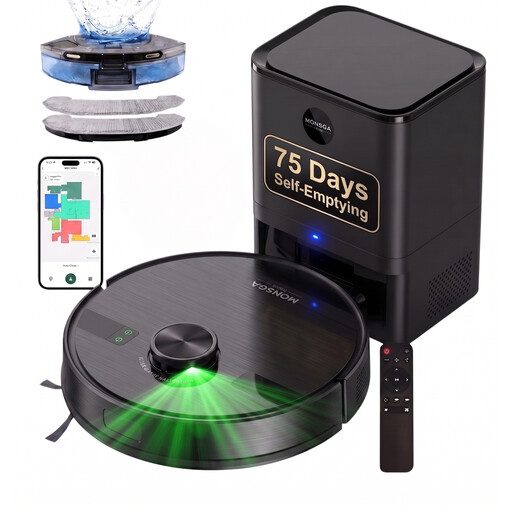
Why This Fits Their Persona: Ideal for busy, tech-savvy homeowners, especially those with pets and larger homes with mixed flooring. This device is built to provide a comprehensive, automated cleaning routine with minimal human intervention.
It directly counters the common pitfalls with its advanced 360° LiDAR navigation for efficient mapping, a powerful 9000Pa suction motor for deep cleaning pet hair and a large 4.0L self-emptying station with sealed bags to contain dust for up to 60 days.
Combines vacuuming, mopping and automatic dust collection in one unit. The long 180-minute runtime and auto-recharge feature ensure it can clean large areas without interruption.
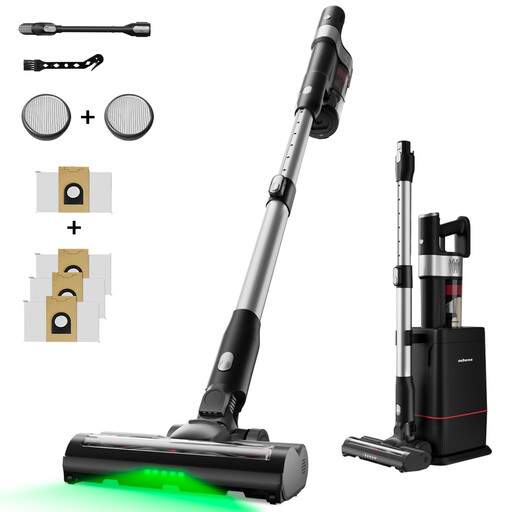
Why This Fits Their Persona: For those who prefer the control of a manual clean or need a powerful tool for quick jobs like cleaning stairs, cars or upholstery. It's a great primary cleaner for smaller homes or a secondary tool to complement a robot vacuum.
This cordless stick vacuum directly addresses the "weak suction" pitfall with a powerful 28kPa motor, easily lifting pet hair and embedded dirt. Its self-cleaning dock also provides a degree of hands-free maintenance, a key desire for those seeking convenience.
Its 180° lie-flat design allows it to reach deep under low furniture, an area some robots struggle with. The green LED headlight is a practical feature that illuminates fine dust you might otherwise miss.
We have compiled a complete, real-time list of products that fully satisfy these strict selection criteria and UK safety regulations.
This depends on the station's dust bag capacity, the size of your home and factors like shedding pets. A typical self-emptying robot vacuum with a 4-litre bag, like the one featured, can often go for up to 60 days in an average household before the bag needs replacing. This reduces your hands-on maintenance to about six times per year.
For daily maintenance cleaning, removing light dust, footprints and minor spills, a combination unit is highly effective at keeping floors consistently fresh. However, for stubborn, sticky or dried-on messes, you may still find an occasional manual mop is needed for a deep clean. Models with adjustable water-flow control offer better performance across different surfaces like sealed hardwood, tile and laminate.
Yes, it is. The technology used in a LiDAR navigation vacuum is typically a Class 1 laser. According to safety standards, Class 1 lasers are considered safe under all conditions of normal use. The light emitted is very low-power and poses no risk to the eyes of people or pets, giving you peace of mind while it operates in your home.