
24/7 Customer Support

Free returns

Same-day & Next-day Delivery

Quality Guaranteed

Unlock Your Welcome Offers: FREE Delivery | Up to 80% OFF | Free 30-day JoyPlus trial
Download the APP
A robot vacuum cleaner can reduce the amount of time spent sweeping, vacuuming and mopping, but the wrong model may create more work than it removes. UK homes often combine carpets, rugs, hard flooring, thresholds, narrow furniture gaps and pet hair, so a product that looks impressive on paper may not suit your layout.
Before buying, look beyond headline suction figures and consider navigation, maintenance, floor compatibility and the practical cost of ownership.
Pa ratings indicate the manufacturer’s stated maximum suction power, but they do not describe every aspect of cleaning. Brush design, airflow, carpet detection and the robot’s ability to maintain contact with the floor also matter.
For example, a pet hair robot vacuum should ideally include an anti-tangle brush or side brush design, rather than relying only on a high Pa figure. Hair can wrap around brushes and axles, increasing maintenance and reducing cleaning consistency.
Many affordable models use a damp cloth dragged behind the robot. This can help with light surface marks, but it is different from a robot vacuum cleaner with mop that actively scrubs, washes and dries its mop.
Check whether the mop lifts automatically when carpets are detected. Without this feature, you may need to remove the mop attachment before every carpet-cleaning cycle.
A self-emptying robot vacuum reduces dustbin emptying, but it does not eliminate all upkeep. Filters, brushes, sensors, mop pads, water tanks and charging contacts still need attention.
An all-in-one dock may also require considerable floor space and access to a power socket. Check replacement dust bags, cleaning solution and mop components before purchasing. A bagless station can reduce reliance on disposable bags, while a sealed dust bag may be more convenient for households that prefer less direct contact with collected debris.
A LiDAR robot vacuum or laser navigation robot vacuum can scan rooms and create maps for systematic cleaning. This is particularly useful in larger homes, multi-room flats and properties with several floor plans.
Look for:
No navigation system should be treated as a reason to leave cables, small toys, liquids or loose clothing on the floor. Preparing the room remains important.
For homes with both carpets and hard floors, check whether the robot offers automatic carpet suction boost and mop auto-lift. These features help it change behaviour between surfaces.
Also check the manufacturer’s stated clearance height. A robot may navigate well but still struggle with thick rugs, high thresholds or uneven transitions. Slim models can reach under furniture more easily, although a smaller body may have less room for dust and water.
A self-emptying robot vacuum may be worthwhile for busy professionals, families and pet owners. More advanced stations can automatically empty dust, wash mop pads, dry them with warm air, refill water and dispense cleaning solution.
The phrase automatic mop washing and drying should be checked carefully. Some stations wash and dry pads, while others only recharge the robot or collect dust.
Battery figures are usually maximum or stated runtimes and can vary according to suction mode, flooring, mapping and mopping. A model that automatically returns to charge and resumes cleaning can be more useful than one with a longer quoted runtime but no continuation function.
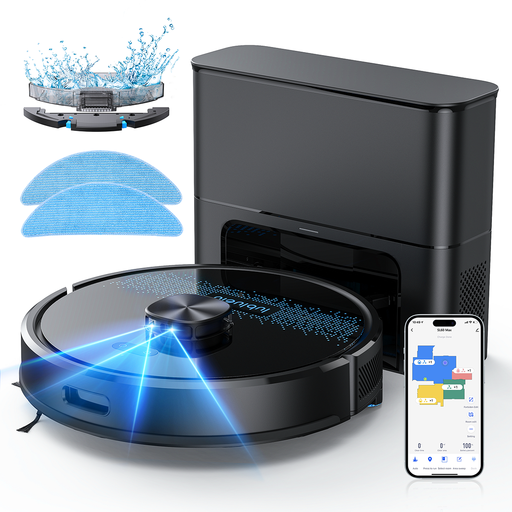
Why This Fits Their Persona: A practical starting point for smaller UK homes or shoppers seeking app-controlled vacuuming and wiping without a more complex premium station.
Its listed 4,000Pa suction is paired with laser navigation and app control, so the purchase is not based on suction power alone.
3-in-1 vacuum, sweeping and wiping functions; suction station and app control.
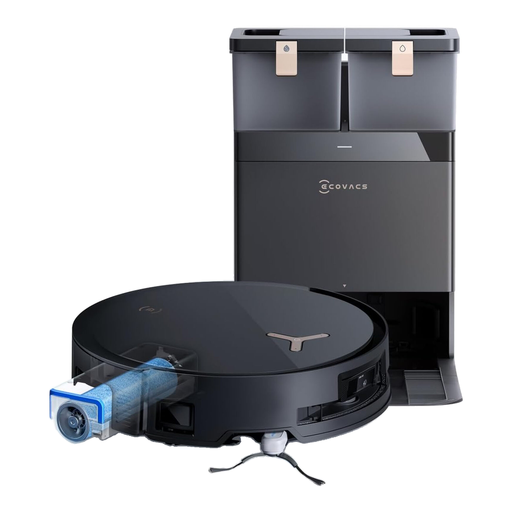
Why This Fits Their Persona: Suited to households seeking extensive automation across hard floors, carpets and pet-hair-prone areas.
The station functions are clearly specified, including mop washing, dust emptying, cleaning solution dispensing and 63°C hot-air drying.
18,000Pa stated suction; OZMO ROLLER with continuous washing and 10mm mop lift on carpets.
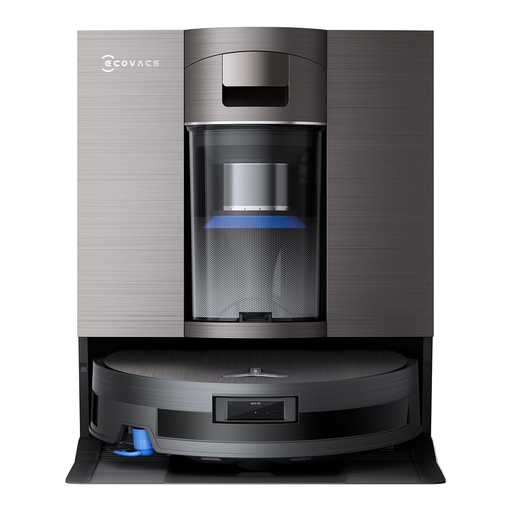
Why This Fits Their Persona: A feature-rich option for large homes, busy families and pet owners needing long cleaning cycles and automated station care.
Its specification combines anti-tangle technology, LiDAR-supported navigation and a triple lift system, rather than presenting suction as the sole feature.
19,500Pa stated suction; bagless station with mop washing, drying, dust emptying and water refilling.
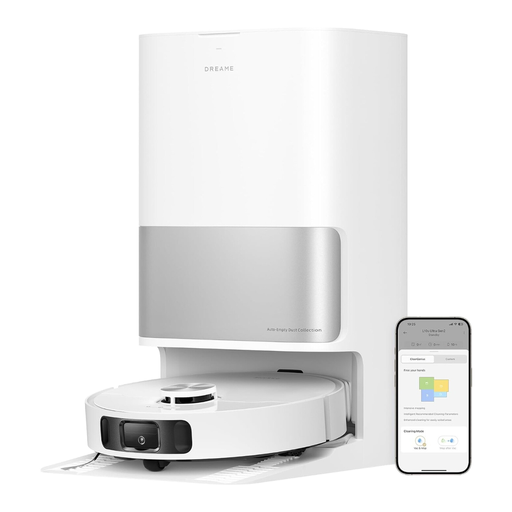
Why This Fits Their Persona: Appropriate for homes requiring vacuuming and mopping across carpets and hard floors, with reduced daily station maintenance.
The product information distinguishes automated mop washing and drying from simple damp wiping, while stating that hot-water mop washing is not supported.
10,000Pa stated suction; LiDAR navigation, 10.5mm mop lift, self-emptying and automatic water refilling.
Before the first cleaning cycle:
Do not use a robot vacuum to collect burning materials, flammable liquids, sharp fragments or standing water. Keep moving parts away from fingers, loose clothing, children and pets, and disconnect the power supply before maintenance.
We have compiled a complete, real-time list of products that fully satisfy these strict selection criteria and UK safety regulations.
Many models are designed for both, but check for carpet detection, suction boost and mop lifting. Thick rugs and high thresholds may still limit movement, so compare the stated clearance height with your flooring.
Even a self-emptying model requires regular brush, filter, sensor and wheel cleaning. Mop pads and water tanks should be emptied or cleaned as instructed, while consumables should be checked for availability and price before purchase.
Electricity use is generally linked to cleaning frequency, suction mode and charging requirements. Dock-based models may also require dust bags, cleaning solution, filters or replacement mop parts. A bagless station can reduce disposable-bag purchases, but its filters and dust chamber still need routine cleaning.