Pet owners seeking daily hair control
Reduce the frequency of manual floor vacuuming between deeper cleans where hair quickly returns on accessible hard floors, low-pile rugs or carpeted rooms.


Choose a robot vacuum for frequent maintenance cleaning on accessible floors when you can clear cables, pet waste and loose items before it runs. For homes with hard floors and rugs, a robot-and-mop model needs confirmed carpet protection; keep a conventional vacuum for deep cleans, stairs, upholstery, corners and larger messes.
Reduce the frequency of manual floor vacuuming between deeper cleans where hair quickly returns on accessible hard floors, low-pile rugs or carpeted rooms.
Look for a robot that can navigate changing floor clutter with less intervention, while still clearing hazards before runs and checking the exact model’s object-detection conditions.
Check carpet detection, mop lift or no-go controls before using wet cleaning where hard floors sit alongside rugs or carpet.
Choose it when: You want scheduled pickup of pet hair and everyday debris on accessible floors.
Consider: Obstacle handling differs by model, and deep cleaning, corners and large messes still need a conventional vacuum.
Choose it when: Sealed hard floors need routine vacuuming and occasional wet cleaning alongside pet-hair maintenance.
Consider: Confirm carpet detection or mop lifting, and allow room for dock care, water handling and consumables.
Choose or retain it when: Your home has stairs, upholstery, awkward corners, deep-pile rugs or concentrated shedding.
Consider: It takes manual effort, but attachments can reach places a round robot may miss.
| Priority | What to check | Your needs |
|---|---|---|
| Navigation | Compare exact-model obstacle recognition, no-go zones, robot height, furniture clearance and stair-edge protection. | I want fewer interrupted runs around toys, bowls, cables and loose items, while still being prepared to clear hazards first. |
| Pet-hair care | Check the brush or roller design, independent cleaning evidence where available, bin capacity and any self-emptying dock requirements. | I need routine shed-hair pickup without spending excessive time cutting or pulling hair from rollers. |
| Rugs and mopping | Confirm carpet detection, mop lift or mop avoidance, plus suitability for your pile height, edges and thresholds. | I want hard floors cleaned without risking wet mops travelling onto rugs or carpet. |
| Maintenance | Read the cleaning instructions for brushes, filters, sensors and wheels; compare dock, bag, pad, water and cleaning-solution requirements. | I understand that automation can reduce routine work, but the robot and its dock still need cleaning, inspection and replacement parts. |
| App and privacy | Check which functions need Wi-Fi, an app or an account, whether cameras or maps are used, and the stated security-update support period. | I want to know what connected features are optional before placing an app-managed device in my home. |
Deep cleans, large messes, stairs, upholstery and corners can still need a conventional vacuum and attachments.
Use a robot as a scheduled floor-maintenance tool and retain a conventional vacuum for detailed or awkward cleaning jobs.
Recognition systems, lighting conditions, supported object types and setup modes vary by model. iRobot notes that its PrecisionVision detection is inactive during a training or mapping run.
Check the exact model’s obstacle documentation, use no-go zones where available, and clear cables, pet waste, toys and loose fabric before scheduled runs.
A cluttered route can mean time spent rescuing a stuck robot or cleaning it after contact with avoidable hazards.
Mop lift and carpet detection are model-specific, while carpet edges and pile can affect movement.
Confirm the exact model’s carpet detection or mop lift, measure difficult transitions where relevant, and use no-go zones for rugs when needed.
Some connected functions require Wi-Fi, a mobile app or an account, and support can affect how long a smart device remains suitable to use.
Check which functions work without the app, review camera and mapping settings, use a secure account password, apply updates and check the manufacturer’s stated security-update support period.
UK Roomba robot-vacuum and vacuum-and-mop models include selected camera-based navigation and self-emptying options.
The UK range includes pet-focused vacuum-only and vacuum-and-mop models with anti-tangle, mopping and automated-dock features.
UK DEEBOT lines are marketed around obstacle avoidance, mapping, carpet cleaning and anti-tangle technology.
Joybuy robot vacuum-and-mop options for pet homes with routine hair pickup, mixed floors, rugs or everyday navigation obstacles.
 No image available
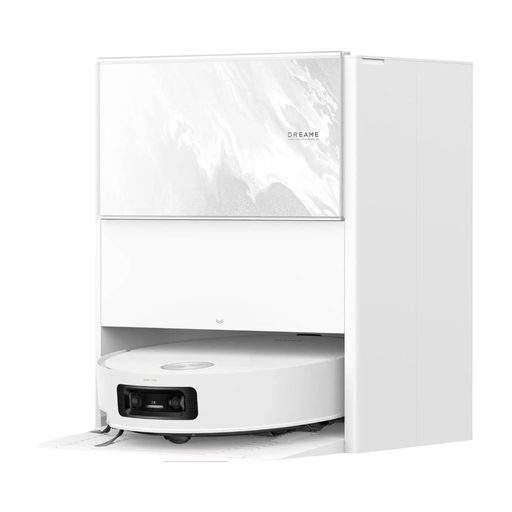
Consider this dock-based option for furnished mixed-floor homes that need routine vacuuming and mopping.
The listing states 25,000 Pa suction, recognition of 240+ objects, up to 6 cm obstacle clearance, carpet detection, a liftable mop and a detangling dual brush. Its stated PowerDock measures 42 × 44 × 50 cm and uses fresh- and dirty-water tanks.
 No image available
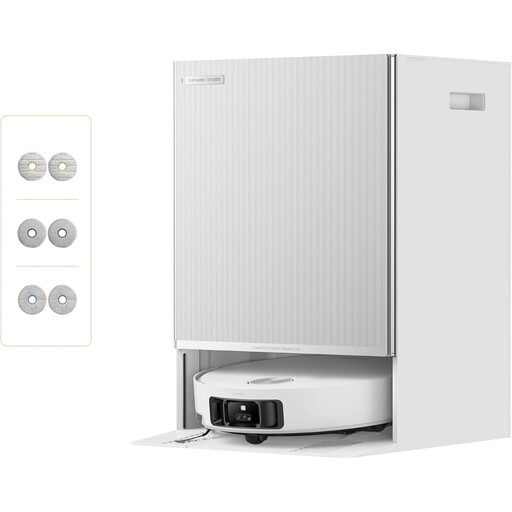
This model suits larger mixed-floor homes that want a dock-based routine for pet hair, carpets and hard floors.
The listing states 30,000 Pa suction, recognition of 240+ object types, an 8 cm obstacle clearance, dual-roller detangling, carpet detection and a 10.5 mm mop lift. Check space for its stated 590 × 457 × 340 mm dock, water tanks and cleaning-solution compartments.
 No image available
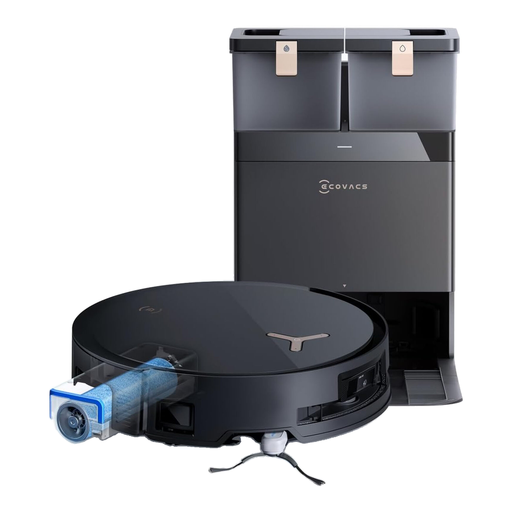
A relevant choice for regular pet-hair maintenance where rugs and hard floors share the same cleaning route.
The listing states 18,000 Pa suction, AIVI 3D obstacle recognition, ZeroTangle 2.0, carpet detection, a 10 mm mop lift and carpet suction boost. The station is stated to empty dust, wash and dry the roller, and add cleaning solution.
 No image available
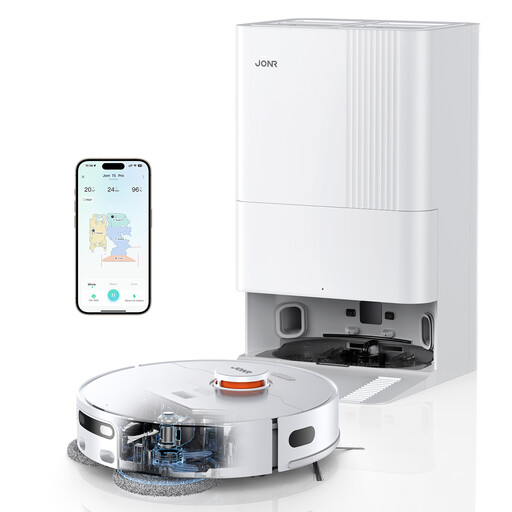
Consider this option if app scheduling, mapped exclusions and dock automation matter in a pet home with carpets and hard floors.
The listing states 8,150 Pa suction, LiDAR navigation, AI-supported obstacle avoidance, an anti-tangle side brush, carpet detection, an auto-lifting mop, no-go zones and hot-air drying. Confirm installation space and ongoing dock consumables before buying.
 No image available
This compact option is aimed at routine pet-hair pickup on accessible hard floors and low-pile carpets.
The listing states 6,000 Pa suction, ToF laser navigation, anti-tangle design, an 800 ml dustbin and ultrasonic carpet detection that avoids wet mopping on carpet. It has no stated self-emptying or mop-washing dock, so dustbin, filter and mop-pad cleaning remain manual.
Usually no. Use it for frequent maintenance cleaning of everyday floor hair and debris, but retain a conventional vacuum for deeper cleans, large messes, corners, stairs and upholstery. Which? describes robot vacuums as tools for maintaining cleanliness rather than replacing a normal vacuum.
Yes. Treat obstacle avoidance as a risk-reduction feature rather than permission to leave hazards on the floor. iRobot says its PrecisionVision detection is inactive during a training or mapping run, and recognised object types vary by model.
Confirm that the exact model can detect carpet, lift or avoid the mop, and cope with your pile height and edges. ECOVACS advises checking carpet suitability in the specification; eufy claims a 12 mm mop lift on carpet detection for its X10 Pro Omni, but that does not establish the same behaviour for other models.
You still need to empty or replace dock bags where fitted, clean hair from brushes and rollers, and keep filters, sensors, wheels and the dustbin clear. ECOVACS says hair and debris buildup in these parts can reduce navigation and suction performance, so follow the exact model manual for replacement intervals.
Check whether an app, internet connection or account is needed for the functions you want, whether the model uses cameras or creates home maps, and the stated security-update support period. The National Cyber Security Centre advises avoiding smart devices that are no longer supported or near the end of their support period.