What matters when choosing?
Check clearance along the entire under-furniture route first. Then consider what could interrupt the journey there and how much routine dock maintenance you want to take on.
| Concern | What to check | Who this matters to |
|---|
| Furniture clearance |
Measure the lowest opening, including rails and supports; compare it with the exact model’s body height. |
If my sofa has a low centre rail, the robot must pass beneath that rail, not just the front edge. Around 46% of consumers would put physical fit first. |
| Post-move obstacles |
Check model-specific mapping and obstacle handling; plan to remove cables and packing straps. |
While I am still unpacking, I want cleaning runs that are less likely to be interrupted by items left on the floor. Roughly 27% of consumers would prioritise handling that changing layout. |
| Room transitions |
Compare stated threshold and carpet behaviour with your door bars and rugs; check required app settings. |
If the robot cannot cross a raised doorway or manage my mix of rugs and hard floors, reaching under the furniture is only part of the job. Around 18% of consumers would make room-to-room coverage their main concern. |
| Routine upkeep |
Check the dock’s footprint, its actual emptying or mop-care functions, and the tasks that remain. |
With the move still taking my time, I would prefer to empty the bin or tend the mop less often. Approximately 9% of consumers would put reduced routine intervention first. |
Our top recommendations
These Joybuy choices include robots to assess for low furniture openings and models with features relevant to mixed floors or post-move obstacles. Measure your route before treating any of them as a physical fit.
 No image available
Lefant M310 Ultra Robot Vacuum
Consider this model if a narrow furniture opening is your main concern, but confirm the robot’s height before deciding it will fit.
The product title lists 6000 Pa suction, ToF laser navigation and app/Alexa control. Check whether the exact variant is M310 Ultra or M310, and clear cables and small loose objects rather than relying on obstacle avoidance alone.
View on Joybuy
 No image available
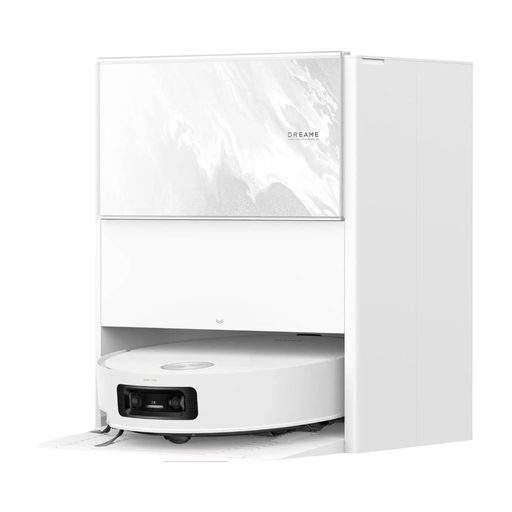
Dreame Aqua10 Ultra Track Complete Robot Vacuum
Consider this model if mopping and movement between rooms matter alongside under-furniture cleaning.
Its product title specifies a roller mop. Check the robot’s height in the sensor position used on your route, and compare any stated obstacle-clearance claim with the shape of your thresholds.
View on Joybuy
 No image available
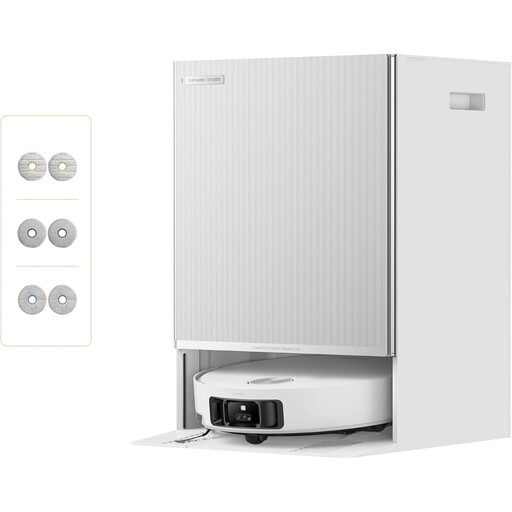
Dreame Matrix10 Ultra Robot Vacuum
Consider this model if mixed-floor mopping is important and you have room for its dock.
The product title lists multi-mop switching and self-emptying and refilling functions. Measure the complete under-furniture route and check the dock’s footprint and maintenance requirements before buying.
View on Joybuy
 No image available
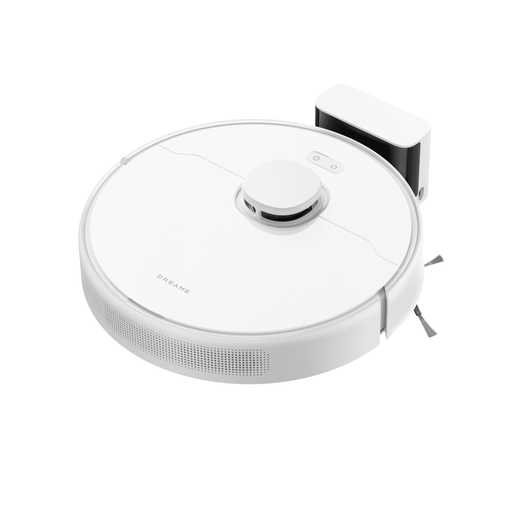
Dreame D9 Max Gen 2 Robot Vacuum
Consider this model for a route where mapping and room transitions matter, provided its height suits every furniture opening.
The product title lists LDS navigation, 6000 Pa suction and a 570 ml dust box. Mapping alone should not be taken as evidence that the robot will recognise unpacking clutter.
View on Joybuy
 No image available
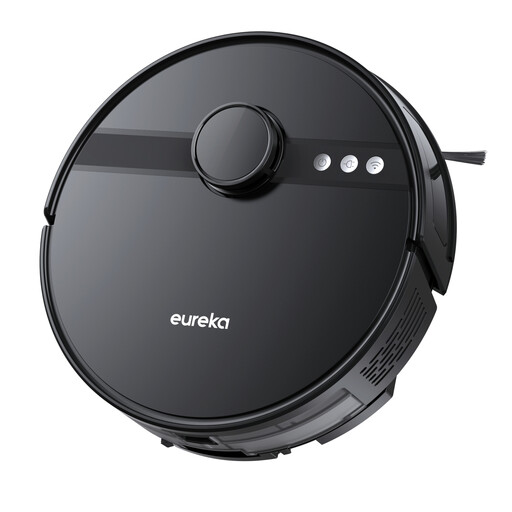
Eureka Floorcare NERN6BK Robot Vacuum and Mop
Consider this vacuum-and-mop model if you can establish that it fits beneath your furniture and travels between the areas you want cleaned.
The product title identifies a 2-in-1 vacuum and mop with automatic docking. Check the exact body height, threshold requirements and intended route before buying.
View on Joybuy
Frequently asked questions
How much space does a robot vacuum need beneath furniture?
It needs a usable opening along its entire intended route, not just at the front edge. Measure the lowest point and compare it with the exact model’s documented height; Roborock says the Saros 20 is 7.98 cm high, while its claimed access to a 7.95 cm gap can involve compression and possible scraping.
Should I choose the thinnest robot after moving house?
Choose a robot that fits the measured route, then assess the other demands of your home. If unpacking clutter, thresholds or mixed flooring affect where it can clean, check navigation and floor handling separately; Which? also tests obstacles and floor coverage as distinct aspects of performance.
Can obstacle avoidance handle cables and packing materials?
Do not rely on it to handle every cable or small loose item. Clear cables and packing straps before a run, even when the model describes obstacle-recognition features.
Do I need a self-emptying dock to clean under furniture?
No: a dock may reduce some routine emptying or mop care, but it cannot make a robot fit through a low opening. Check its functions, footprint and remaining maintenance tasks if convenience matters to you.


