Owners of low raised furniture
If you want routine cleaning beneath a bed, sofa, cabinet or desk, measure its lowest usable gap before comparing robots. Fabric that sags or an uneven floor can reduce the space available.


Measure the lowest gap beneath the furniture before choosing a robot vacuum: its stated body height needs to leave practical clearance, regardless of its other features. In a small flat, the next decision is whether a compact charging setup or automated emptying and mop care is worth the space it occupies; check rugs and doorway thresholds separately.
If you want routine cleaning beneath a bed, sofa, cabinet or desk, measure its lowest usable gap before comparing robots. Fabric that sags or an uneven floor can reduce the space available.
In a small flat, the robot may fit beneath the furniture while its dock has nowhere practical to stay. Consider the station, access around it and the supplies you will need to store.
If cleaning involves rugs, carpet edges or doorway thresholds, under-furniture access is only part of the decision. Check the exact model’s stated conditions for moving between those surfaces.
For consumers choosing a robot to clean beneath raised furniture in a small flat, clearance comes first. Once a model can enter the space, consider where its dock will go and whether it can handle the rest of the floor.
| Concern | What to check | Who this matters to |
|---|---|---|
| Furniture clearance | Measure the lowest gap at several points and compare it with the stated full robot height, allowing room for uneven flooring or sagging fabric. | If the robot cannot get beneath my bed or sofa, its other features will not solve the main cleaning problem. Around 42% of consumers put clearance first. |
| Dock space | Measure the proposed location and check the exact station’s dimensions and placement instructions. | I need somewhere practical to keep the robot charged without the station taking over my floor space. For roughly 25% of consumers, a compact setup is the primary concern. |
| Rugs and thresholds | Check threshold height and shape, carpet conditions and the exact model’s stated capabilities. | My robot needs to reach rooms across door bars or rugs without frequent help. Approximately 17% of consumers prioritise those floor transitions. |
| Routine upkeep | Compare brush care, bin or bag emptying, mop supplies and the floor preparation needed before a run. | I want scheduled cleaning without repeatedly dealing with tangled hair or a full bin. Around 16% of consumers make reduced upkeep their main priority. |
A low-profile robot can still be too tall for a particular gap. At a near-limit clearance, entry may be inconsistent or cause scraping.
Measure the tightest point in millimetres and compare it with the full stated body height, leaving room for uneven floors, raised edges and sagging furniture.
An automated emptying or washing station may ease routine care but needs a permanent location that works in the flat.
Plan the dock position before buying, then decide whether its functions justify the space compared with a simpler charging stand.
Depending on the setup, dust bags, disposable mop pads or cleaning solution may also need regular replacement.
iRobot Support advises that clothes, shoelaces and cords can catch in rollers or leave a robot stuck during a run.
Pick up loose items before scheduled cleaning and use keep-out zones where the chosen model supports them.
Models from the same brand can have different body heights and docks, which can change whether they suit a low gap or a small flat.
Check the complete model name, stated height and included dock on the product listing before applying advice about another model.
The Saros 20 is worth comparing if tight furniture clearance must be considered alongside carpets and thresholds.
The DEEBOT T50 PRO OMNI combines an 81 mm stated robot height with an automated vacuum-and-mop station.
The Auto-Empty C10 is a vacuum-focused option to compare when a low body height is the priority.
The Roomba Mini is relevant where storing the charging setup is a prominent concern.
These robot vacuums offer different combinations of stated features for under-furniture cleaning. Compare each robot’s height with your measured gap where a height is available, and consider its dock separately; these are not substitutes for the differently named models discussed above.
 No image available
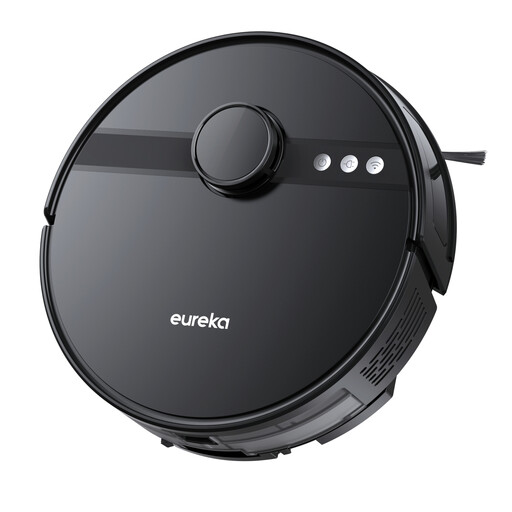
Consider this vacuum for a measured furniture gap only after confirming its full body height on the product details. Its name specifies 6,000 Pa stated suction, ToF laser navigation, obstacle avoidance and an anti-tangle feature; check dock placement and doorway transitions separately.
 No image available
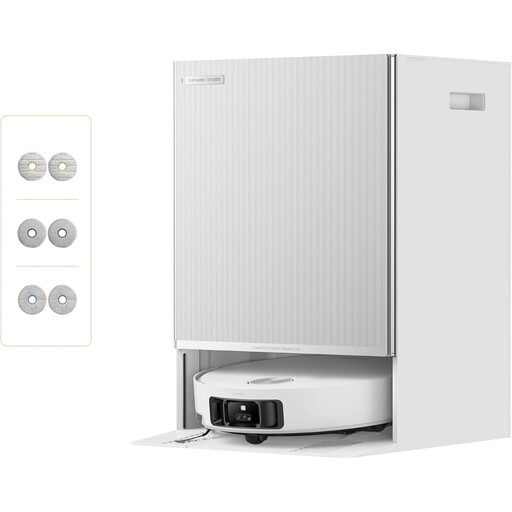
This vacuum-and-mop model is an option if both functions matter, provided its full body height leaves room beneath your furniture. The product name specifies automatic docking; check the dock’s placement requirements and any doorway thresholds before choosing it.
 No image available
Consider this model if automated emptying, refilling and mop care matter as well as under-furniture access. Its product name lists multi-mop switching and 30,000 Pa stated suction; confirm the body height in the operating configuration you will use, the station’s dimensions and the conditions attached to its obstacle-clearing claim.
 No image available
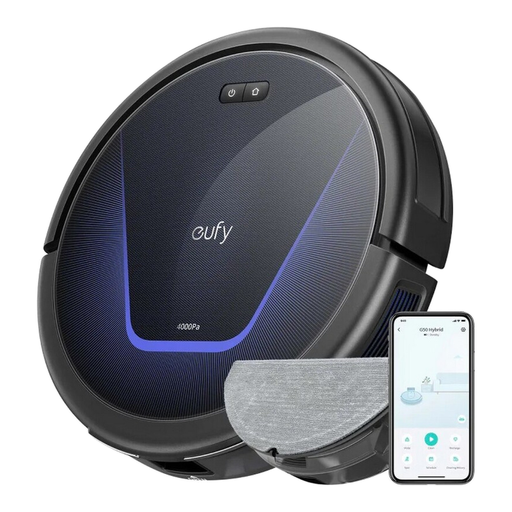
This vacuum-and-mop model may suit consumers who also want app-controlled cleaning, but confirm its full body height before choosing it for a low gap. Its product name specifies 4,000 Pa stated suction, dynamic navigation and a Pro-Detangle comb; check dock space and thresholds for your flat.
 No image available
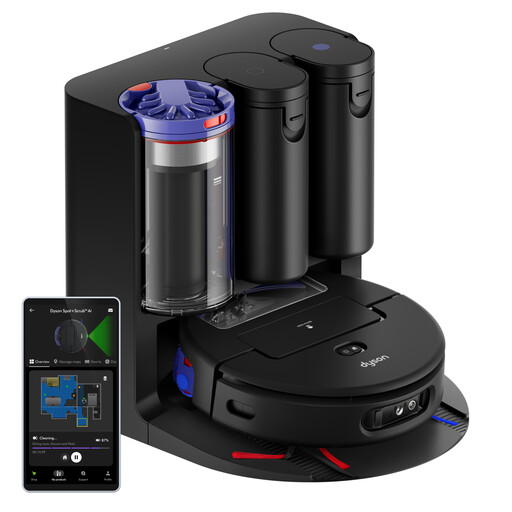
Consider this wet-and-dry robot only if its full body height leaves practical room beneath the furniture you want it to clean. Check where its dock can remain and whether the model’s stated threshold capability suits your doorways.
Measure the lowest usable gap at several points and choose a robot whose stated full height leaves practical room. Roborock says the 7.98 cm Saros 20 may access a 7.95 cm space through limited compression, but warns that scraping may occur; that near-limit claim should not be treated as a general clearance allowance.
Not necessarily: body height and room-to-room movement are separate checks. Roborock states that the Saros 20 can handle double-layer thresholds up to 4.5 + 4.3 cm under its specified conditions, while its carpet feature applies to pile up to 3 cm when enabled in the app. Compare the exact model’s conditions with your own floors.
Yes, clear loose clothes, shoelaces and cords from the intended route. iRobot Support warns that these can catch in rollers or cause a robot to get stuck, even when cleaning is scheduled.
Use an appropriate electrical-recycling route rather than treating the robot as ordinary household rubbish. GOV.UK guidance on waste electrical and electronic equipment explains the UK framework for reducing electrical waste through recovery, reuse and recycling; check local collection options or the retailer’s take-back information.