Hard-floor routine cleaners
You want everyday dust and crumbs collected across a continuous living space. A mop function is relevant if you will also use and maintain it.


For mostly hard, open-plan floors, start with a robot whose navigation suits your furniture layout. Choose a mop function if you will maintain it, or a self-emptying dock if less dustbin handling is worth the space and upkeep. Measure the intended dock location and expect to clear loose cables whichever setup you choose.
You want everyday dust and crumbs collected across a continuous living space. A mop function is relevant if you will also use and maintain it.
You want to schedule cleaning without emptying the robot’s bin as often, and can accommodate a dock and its upkeep.
Furniture legs, cables or tight routes make navigation and a workable place for the charging dock central to your choice.
Check the floor finish and the robot’s route through the flat before deciding whether mopping or a larger automated dock is worth the additional upkeep.
| Concern | What to check | Who this matters to |
|---|---|---|
| Everyday floor care | Check suitability for your floor finish and, if you want mopping, how the exact model handles rugs and mop maintenance. | I want crumbs cleared from my open-plan hard floor, with light mopping only if I will maintain the pads. Around 40% of consumers would put everyday floor care first. |
| Dust handling | Measure the dock space and check which bags, filters or mop parts the exact model uses. | If I schedule frequent cleans, I want to empty the dustbin less often, even if the dock takes up more room. Roughly 40% of consumers would prioritise lower-touch upkeep. |
| Navigation and space | Check navigation and boundary controls on the exact model, then measure furniture clearances and the proposed dock position. | When furniture and cables interrupt the route, I need a robot and dock that fit without constant rearranging. Around 20% of consumers would put route and space management first. |
A stated Pascal figure does not tell you how a robot will cover your floor or handle furniture. Which? assesses robot vacuums on factors including debris pickup, obstacles, corners, noise and ease of use.
Compare independent results for the exact model alongside its navigation features and maintenance requirements.
Automated emptying or mop care can reduce handling, but the station needs a permanent position. Roborock lists replacement bags, filters and mop cloths for its QV 35S; parts should be checked for the model you choose.
Measure the station location, allow access to remove its containers, and check compatible consumables before buying.
Navigation features do not mean loose cables or small objects can be left in the cleaning path. iRobot also gives routine sensor-cleaning instructions for its robots.
Clear floor-level clutter, set boundaries where the model permits them, and follow its sensor-maintenance instructions.
GOV.UK advises that electrical products should not be put in household rubbish when they no longer work or are no longer wanted.
Check your local electrical-waste collection options when disposing of the robot or its battery.
Its UK range includes Q-series auto-empty models and Qrevo multifunction-dock vacuum-and-mop models.
The DEEBOT range includes vacuum-and-mop models with mapping and auto-empty options.
The Roomba range includes robot vacuums with differing navigation and self-emptying arrangements.
These models cover vacuuming with optional mopping or automated dust handling for open-plan floors. Compare the space and upkeep each setup requires; their order is not a performance ranking.
 No image available
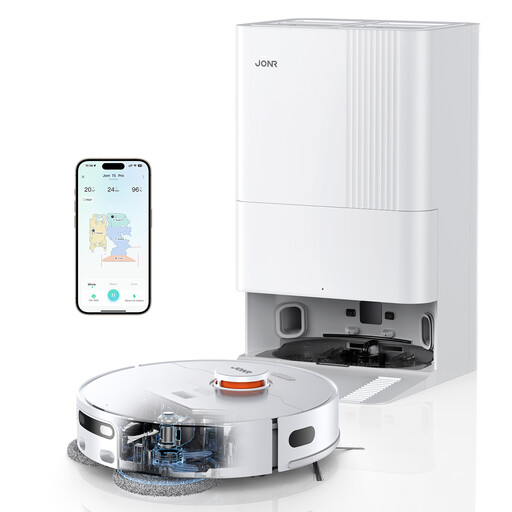
Consider this setup if you want scheduled vacuuming and mopping with dock-based upkeep. The product title specifies LiDAR navigation, an 8150 Pa suction rating, a wiping function and hot-air drying. Measure the dock location and check how its obstacle features handle your floor-level clutter.
 No image available
Consider this model for routine hard-floor cleaning where routes around furniture matter. Its title specifies ToF laser navigation, a 6000 Pa suction rating and anti-tangle features. If mopping or room-by-room controls are important to you, check the exact functions supplied; also measure the charging-station location.
 No image available
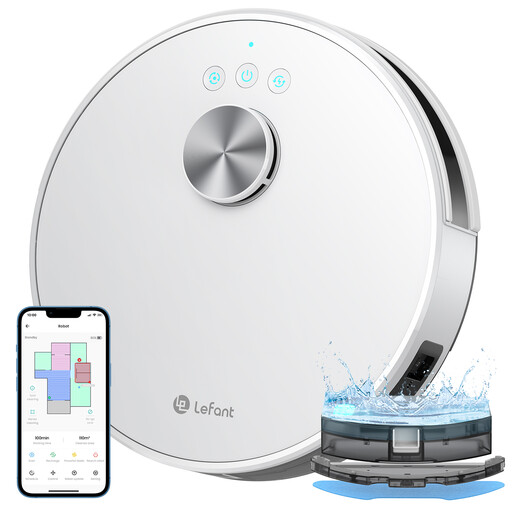
Consider this model if mapped cleaning is a priority in your open-plan room. Its title specifies LiDAR navigation, multi-stage mapping, app and Wi-Fi control, and a 5500 Pa suction rating. Check the charging-base footprint and your floor finish’s care advice before relying on it for a particular surface.
 No image available
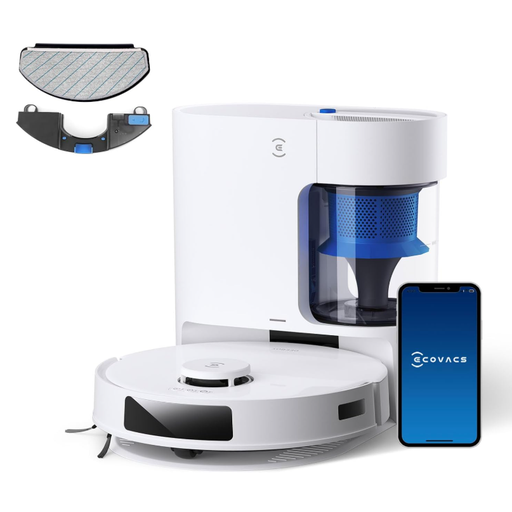
Consider this setup if less manual dust handling matters alongside vacuuming and mopping. The product title specifies an 8000 Pa suction rating, LDS navigation and a bagless PureCyclone self-empty station. Measure the station’s position, keep loose cables clear and confirm the runtime for the exact model before making it part of your cleaning schedule.
 No image available
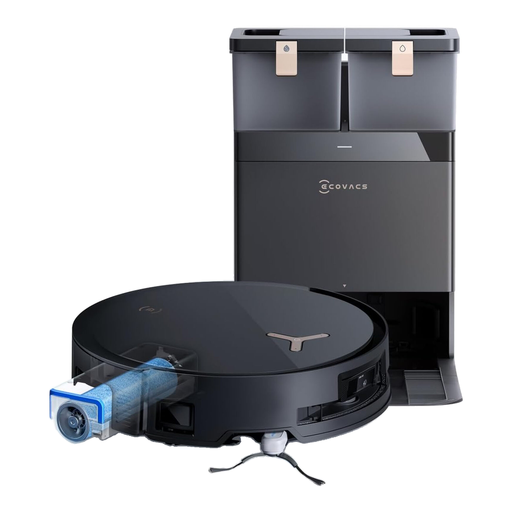
Consider this model if vacuuming and regular mopping justify a multifunction station in your flat. Its title specifies an 18,000 Pa suction rating, OZMO ROLLER self-washing and ZeroTangle 2.0. Measure the station space and check compatible replacement parts, mapping and room controls if those functions matter to your routine.
No: a self-emptying dock is worth considering when handling dust less often matters more to you than keeping the appliance footprint small. Measure a permanent position for it and check the exact model’s replacement parts.
A mop function is most relevant if you have suitable hard flooring and will use it regularly. Check your floor manufacturer’s care advice, how the robot avoids rugs and what cleaning its pads and water system require.
Move loose cables and small objects out of the robot’s route, then check that it can pass your furniture. Which? includes wires, rugs, lamp bases and table legs in its robot-vacuum obstacle testing; navigation features are not a reason to leave those obstacles in place.
Use an appropriate electrical-waste collection route rather than household rubbish. GOV.UK advises against putting electrical products in household rubbish when they stop working or are no longer wanted; check local arrangements for the robot and its battery.