What to check before choosing
Start with the hazard and the inspection reading you need, then test whether the fitted robot can reach the required viewpoint and be operated safely on that route.
| Concern |
What to check when buying |
Who this matters to |
| Hazard fit and exposure |
Name the hazard; assess the complete configuration and applicable site controls. |
If I need inspection data from a risky area, I want to assess the actual equipment against that hazard and avoid human entry where possible. Around 36% of consumers put hazard suitability and reducing human exposure first. |
| Route access and recovery |
Trial clearance, turns, stairs, surfaces and communications with the payload fitted. |
When several viewpoints lie beyond obstacles, I need to know whether the robot can reach them and be recovered if traversal fails. Around 29% of consumers prioritise difficult-route access. |
| Useful inspection data |
Specify the measurement, viewpoint, record format and platform interface. |
If the inspection depends on a particular reading, I want the sensor and data workflow matched to that task rather than assuming a camera is enough. Around 21% of consumers prioritise useful readings and data integration. |
| Repeat operation and support |
Check oversight, training, maintenance, supplier support and integration needs. |
For recurring rounds, I need a workable routine for operators, interruptions and continued maintenance, not just a route that can be repeated. Around 14% of consumers put repeat-round operations and support first. |
Joybuy product options
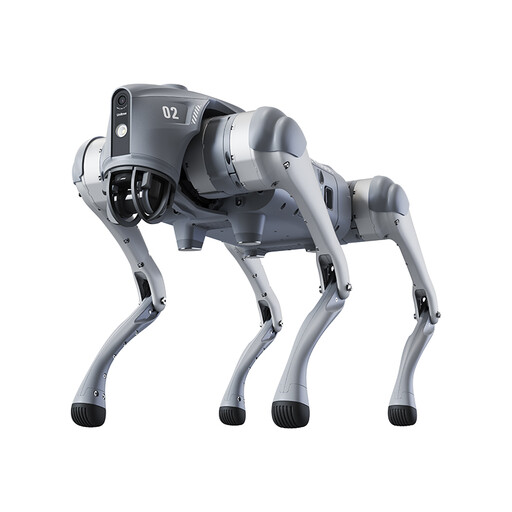
This product option is a quadruped presented for industrial inspection, with camera-based visual capture and operator-directed navigation.
 No image available
Unitree Go2 Pro Quadruped Bionic Robot Dog
May suit visual inspection where onboard camera footage and operator-directed movement are useful.
The product description identifies a front-facing camera, LiDAR obstacle perception, SLAM navigation and app-based remote control.
Secondary development is stated as unsupported, which may limit workflows requiring it. Before workplace use in Great Britain, establish suitability for the intended task, safe maintenance, required inspections and adequate user information, instruction and training under PUWER.
Joybuy
Frequently asked questions
Does using a robot remove the need for a confined-space procedure?
No. HSE guidance says to avoid entry where possible, but where entry is unavoidable a safe system of work and adequate emergency arrangements are still needed. A robot may be assessed as a remote inspection method; it does not settle arrangements for people who still need to enter.
Can a standard industrial quadruped enter a potentially explosive atmosphere?
Do not infer that it can from an industrial or IP rating. Assess the site's conditions and the complete proposed equipment against the applicable Great Britain requirements. ANYbotics states a specific certification scope for ANYmal X, up to Zone 1 IIB; that is not blanket approval for every atmosphere or accessory.
How should a team commission a repeatable inspection route?
Define each required reading and viewpoint, trial the payload-fitted robot on the intended route, and establish oversight, interruption and recovery arrangements. Boston Dynamics calls for reassessing Spot's physical characteristics when attachments are fitted. HSE's PUWER guidance also covers suitability, maintenance and user information, instruction and training.
Which costs and after-sales terms should a team compare?
Ask for a configuration-specific proposal covering payload integration, operator training, maintenance, software and local support rather than comparing platform quotations alone. UK Power Networks' 2023 trial reported potential savings for its own network; that does not establish the return for another site.
What should a team consider if inspection footage captures workers or visitors?
Consider data protection if a camera records or live-streams identifiable people. The Information Commissioner's Office advises organisations to consider privacy when using CCTV; the appropriate steps depend on how the footage is collected and used.


