Start with the person’s response to animals, touch, sound and lifelike movement: a responsive cat or dog may suit someone who welcomes interaction, while a quieter breathing companion or tactile comforter may fit someone who mainly wants something to hold. Check the exact model’s controls, power needs and cleaning instructions, and consider the person’s reaction before making it part of a routine.
Who may find a companion pet useful?
Carers replacing familiar pet interaction
For someone who misses a cat or dog, a familiar-looking companion may invite interest, but their response to realistic movement and sound matters. The Alzheimer’s Society Shop offers companions in different animal styles, while Wrexham University’s research account describes participants who did not welcome a robot cat.
Carers seeking quiet tactile comfort
If the person enjoys holding a soft object but may prefer gentle simulated breathing or a heartbeat to barking or meowing, compare the feel and sounds of each type. The Alzheimer’s Society Shop lists both quiet breathing companions and a heartbeat comforter.
Carers managing everyday upkeep
Battery changes, charging, cleaning and the person’s ability to handle the companion can all affect whether it fits the household routine. Check the instructions for the exact model before choosing.
What should you check before buying?
For a family choosing a companion for one person at home, start with the person’s preferred level of interaction, then consider the day-to-day care it will need.
Responsive cats, dogs or birds
Consider when: The person enjoys stroking an animal and welcomes a response to touch, sound or movement.
Trade-off: Triggers differ between models, and sounds or unexpected movement may not be welcome.
Tactile comfort companions
Consider when: A cuddle, simulated heartbeat, optional music or gentle breathing is more appealing than animal-like responses.
Trade-off: Some models need charging, and features such as weight or warmth should suit the person’s comfort.
Quieter, lower-interaction plush
Consider when: The person likes an animal shape but does not need it to respond to stroking or make pet sounds.
Trade-off: A simulated-breathing mechanism may still need batteries and may not have a simple on/off control.
| Concern |
What to check when buying |
Who this matters to |
| Familiarity and acceptance |
Consider the animal’s appearance and feel; where possible, let the person see or handle it before choosing. |
If I’m choosing for someone who misses a particular cat or dog, I’d look for a companion they may welcome rather than assume the resemblance will suit them; around 33% of consumers put familiarity and acceptance first. |
| Predictable interaction |
Check whether touch, voice, sound or movement triggers a response, and whether sound can be muted or the unit switched off. |
If a response could be startling, I’d check exactly what prompts it and how it can be controlled; around 27% of consumers put predictable interaction first. |
| Quiet tactile comfort |
Compare softness and any simulated movement, warmth, heartbeat or music with what the person enjoys. |
If they mainly want something to hold, I’d weigh its feel and sounds against their preferences; around 20% of consumers put quiet tactile comfort first. |
| Power and cleaning |
Check whether the model uses batteries or needs charging, which parts can be cleaned and who will maintain it. |
If I’ll be managing upkeep, I’d make sure its power and cleaning routine fits the household; around 20% of consumers put manageable upkeep first. |
Buying pitfalls to avoid
-
Assuming a familiar-looking animal will be welcomed
People can react differently to a realistic robot. A small UK home study described by Wrexham University recorded rejection as well as acceptance of robot cats.
Involve the person in choosing where possible, and pay attention to their response to a demonstration. Do not insist on using the companion if they seem uncomfortable.
-
Treating all robotic pets as if they respond in the same way
The listed robotic cat and pup have different response triggers, while a quiet breathing companion behaves differently again.
Check the exact model’s triggers, sounds and stopping controls against the person’s preferences and routine.
-
Assuming low-maintenance means maintenance-free
Power and cleaning requirements vary. For example, the listed Precious Petzzz cat needs its battery removed to stop its breathing mechanism, while HUG has a removable electronics unit for charging and textile care.
Decide who will change batteries or charge the unit, and follow the cleaning instructions for the exact product.
-
Assuming a dementia diagnosis automatically qualifies a product for VAT relief
HMRC’s VAT relief conditions concern both the customer and the goods; a declaration alone does not make a supply eligible.
Before comparing what you may need to pay, check the exact product listing, eligibility conditions and the supplier’s declaration process.
Relevant brands to consider
Joy for All
Interactive animal-shaped companions for someone who may enjoy stroking a cat or dog that responds to handling. The Walker Squawker bird is described for use with a walking device rather than as a lap companion.
- Manufacturer guidance gives the cats and pups On, Mute and Off modes and specifies four C alkaline batteries.
- The listed cat and pup respond to different triggers. Check the exact model’s interaction and cleaning instructions.
Precious Petzzz
A quiet animal-shaped companion with simulated breathing for someone who prefers a lower-interaction option.
- The listed cat makes no noise and gently simulates breathing.
- It is not a conventional soft toy. Once activated, it has no on/off switch; removing the battery stops the mechanism. The supplied bed is spot- or sponge-clean only.
HUG by LAUGH
A cuddle-shaped comforter for someone who prefers a soft body, simulated heartbeat or music to an animal-like companion.
- The product description includes weighted limbs, a simulated heartbeat and a music player with adjustable volume.
- Its electronics unit needs to be removed for charging and textile cleaning, so the household must manage both tasks.
Joybuy product options
These Joybuy options cover interactive plush animals and a softer, lower-interaction companion for holding.
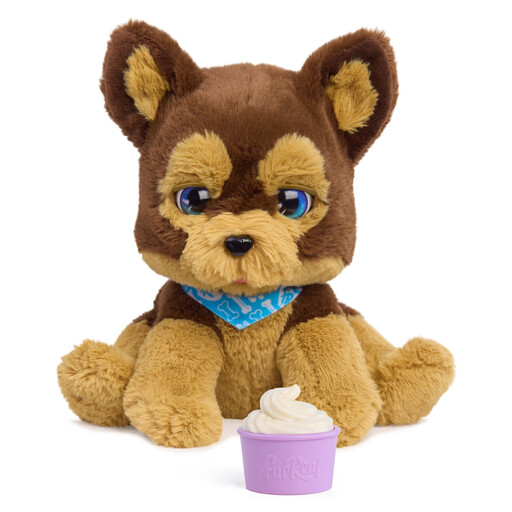 Image unavailable
furReal Benny the Kiss & Cuddle Pup
A dog-shaped plush for someone who may enjoy hugging or stroking a companion described as responding with puppy sounds and movement.
Surface-wash only; remove the batteries before cleaning.
View on Joybuy
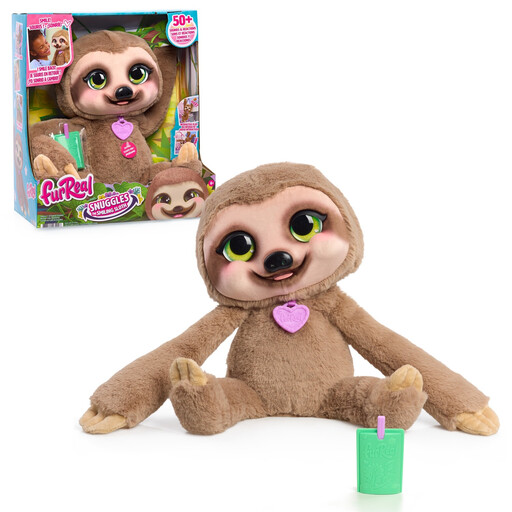 Image unavailable
furReal Snuggles the Smiling Sloth
A plush animal for someone who enjoys a soft companion and welcomes sound and movement responses to interaction.
Surface-wash only; remove the batteries before cleaning.
View on Joybuy
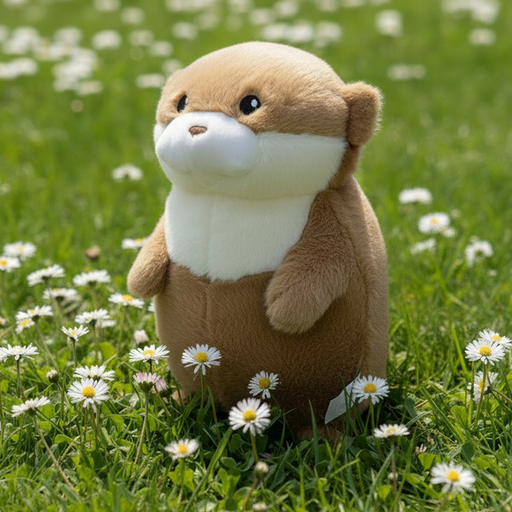 Image unavailable
Yabu Large Soft Cute Otter
A softer, lower-interaction plush option for someone who prefers holding a companion without responsive behaviour.
Product information describes polyester plush and states that batteries are not required.
View on Joybuy
Frequently asked questions
How should I introduce a companion to someone who may dislike a realistic robot?
Involve the person in choosing where possible, begin with their known likes and dislikes, and observe whether they welcome handling it. A small UK home study recorded rejection as well as acceptance of robot cats; do not insist on using one if the person is uncomfortable.
Do companion pets need charging, and can they be machine-washed?
Requirements differ by model. The listed robotic cat and pup use four C alkaline batteries each and have wipe-and-brush cleaning instructions rather than immersion. The listed Precious Petzzz cat uses a D battery and its bed is spot- or sponge-clean only. HUG’s electronics unit is removed for charging and textile cleaning; Berty has a removable rechargeable unit and a machine-washable cover. Follow the instructions for the exact product received.
Does a dementia diagnosis automatically make a companion pet VAT-free?
No. Under HMRC’s VAT Notice 701/7, zero-rating depends on an eligible customer, personal or domestic use, and qualifying goods; the supplier is responsible for checking the conditions. An eligibility declaration does not by itself make a product qualify. The Alzheimer’s Society Shop displays VAT-relief prices for some listed companions but not for its listed Precious Petzzz cat, so check the exact product and seller’s declaration process before relying on a relief price.
What if the companion is unsuitable after purchase?
Check the seller’s current terms before ordering. The Alzheimer’s Society Shop’s listed pup page states a 28-day return policy for products bought from its website; this describes that seller’s stated policy and does not establish another seller’s terms or whether a particular used item qualifies.


