
24/7 Customer Support

Free returns

Same-day & Next-day Delivery

Quality Guaranteed

Unlock Your Welcome Offers: FREE Delivery | Up to 80% OFF | Free 30-day JoyPlus trial
Download the APP
A robot vacuum cleaner and mop can reduce the amount of daily floor cleaning, but the headline specification does not always tell the whole story. Suction figures, smart features and “hands-free” claims need to be assessed alongside floor type, maintenance, navigation and the cost of consumables.
Before choosing a model, watch for these common buying pitfalls.
A 10000Pa robot vacuum may sound more capable than a model rated at 4,000Pa, but suction is only one part of cleaning performance. Brush design, airflow, carpet detection and the robot’s ability to follow an efficient route also matter.
A high figure may be specified as the maximum available in Turbo mode rather than the level used every day. Turbo cleaning can also increase noise and reduce battery life. Look for adjustable suction levels and a brush system suitable for your flooring.
A self-emptying robot vacuum still requires regular care. Some stations use disposable dust bags, while others use a bagless automatic dust collection system. Bagged docks can contain dust neatly but create an ongoing consumable cost. Bagless models avoid replacement bags, but their filters and collection chambers need cleaning.
Mopping adds further maintenance. Water tanks, mop pads, dirty-water areas and charging contacts should be cleaned according to the instruction manual. A dock that washes and dries the mop can reduce hands-on work, but it may cost more and require cleaning solution or replacement parts.
A robot vacuum with LiDAR navigation can create detailed maps and plan routes efficiently, but it cannot make every floor obstacle-free. Charging cables, small toys, long rug tassels and liquids can still obstruct or damage the appliance.
Check whether the robot supports no-go zones, virtual walls, multi-floor mapping and obstacle recognition. Also measure the robot’s height against the clearance beneath sofas, beds and kitchen units.
For a home with pets or carpets, compare the maximum suction rating with practical features such as:
A robot vacuum for pet hair should not be selected on suction alone. Hair can wrap around the roller or side brush, so check how accessible these parts are for regular cleaning.
For mixed flooring, confirm that the product is suitable for both carpets and hard floors. A robot mop for carpets and hard floors may still require carpets to be low-pile or may need specific carpet settings.
LiDAR or LDS navigation uses laser scanning to map rooms and plan cleaning paths. A smart mapping robot vacuum can be more convenient than a random-navigation model because it may allow room naming, cleaning order and targeted zones.
Useful features include:
An app-controlled robot vacuum usually requires 2.4GHz Wi-Fi, so check your router settings before setup. Voice control varies by model; compatibility with Alexa, Google Assistant or Siri should be confirmed in the product listing rather than assumed.
A larger dock can reduce emptying frequency, but published time estimates depend on the amount of dirt collected, cleaning frequency and suction mode. Runtime figures are also affected by Turbo use, carpets, room layout and mopping.
Allow sufficient clearance around the dock so the robot can return accurately. Keep the station on a level surface near a UK power outlet and away from areas exposed to splashes. Never use the appliance to collect liquids, hot ash, sharp fragments or burning items.
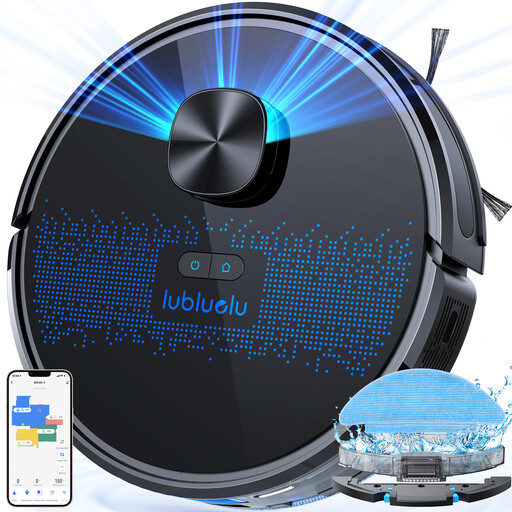
Why This Fits Their Persona: A practical option for smaller UK homes or first-time buyers seeking laser navigation, app control and basic mopping without a larger docking station.
Its LDS 9.0 laser navigation and multi-floor mapping address the limitation of less predictable random-route robots.
4,000Pa suction, smart carpet boost, app and voice control, plus cleaning resume for multi-floor use.
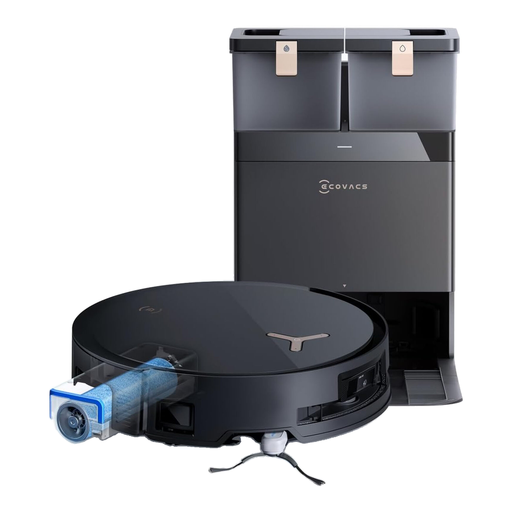
Why This Fits Their Persona: Designed for households prioritising automated mop care, carpet handling and reduced daily interaction with the appliance.
Its station combines dust emptying with mop washing and drying, while the mop can lift when carpets are detected.
18,000Pa listed suction, 12-in-1 OMNI Station, ZeroTangle 2.0 and 10mm mop auto-lift.
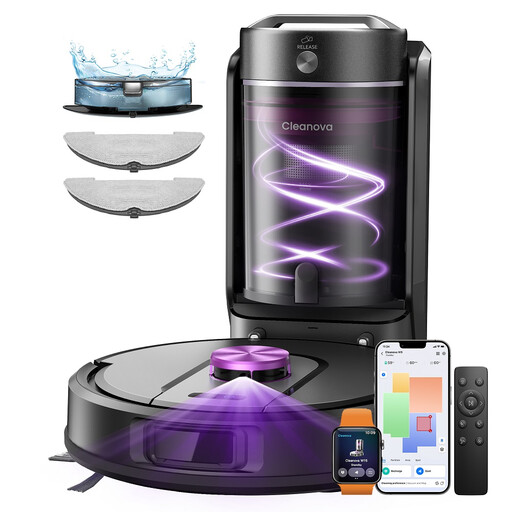
Why This Fits Their Persona: Suitable for busy families, pet owners and multi-storey homes needing strong suction, multiple maps and bagless automatic dust collection.
The 4-litre bagless station avoids replacement dust bags, while LiDAR mapping and no-go zones support more controlled cleaning.
10,000Pa listed suction, up to 180 minutes’ runtime, five maps, 15 no-go zones and app, remote and voice controls.
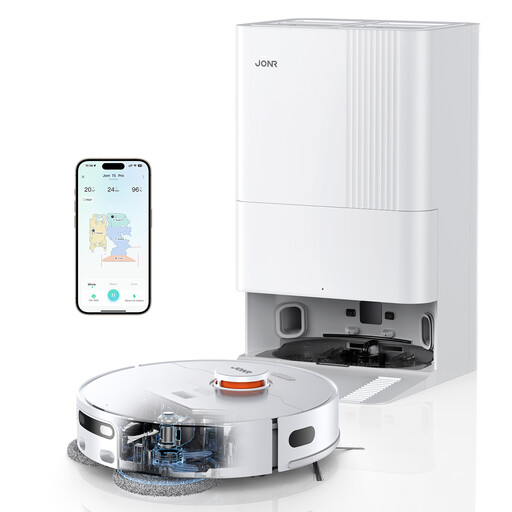
Why This Fits Their Persona: A flexible choice for homes with regular debris, pets and a mixture of hard flooring and carpets.
LiDAR navigation and AI-supported obstacle avoidance help address missed areas and repeated collisions, while the anti-tangle side brush supports hair management.
8,150Pa listed suction, all-in-one dock with automatic dust emptying, mop cleaning and hot-air drying.
We have compiled a complete, real-time list of products that fully satisfy these strict selection criteria and UK safety regulations.
It can be suitable for hard floors and low-pile carpets when the model includes carpet detection, suction adjustment or mop auto-lift. Avoid allowing a wet mop to travel over carpet unless the appliance raises or retracts the mop. Check the manufacturer’s stated floor compatibility before purchase.
Less frequent emptying does not mean maintenance-free operation. You still need to inspect brushes, clean filters, refill water and clean the dock. Bagless stations eliminate dust-bag purchases but require their collection chamber and filters to be emptied or washed as instructed.
A multi-floor robot vacuum may save several maps, but the robot usually needs to be carried between floors unless each level has a separate dock. Confirm the number of supported maps and whether the app allows room-specific cleaning before buying.