People keeping daily dust under control
If light dust and crumbs gather on accessible floors between full cleans, regular robot runs may suit that task. They do not replace every other vacuuming job.


For daily floor dust in a small flat, choose a robot whose cleaning routine suits your floors and whose charging setup fits an accessible spot. An auto-empty or mop-washing dock makes more sense when you will use those functions and can accommodate the dock; check the exact model’s placement, maintenance and safety instructions before buying.
If light dust and crumbs gather on accessible floors between full cleans, regular robot runs may suit that task. They do not replace every other vacuuming job.
When storage and circulation space are tight, the robot’s parking place matters as much as its cleaning features. Measure the proposed location and check the exact dock’s required clearances.
An auto-empty dock may suit someone willing to give it floor space in exchange for less frequent manual emptying. A wash dock is relevant if they also intend to mop suitable hard floors and maintain the dock.
For a small flat, decide where the robot will charge and what you want it to clean before choosing extra dock functions. Roborock’s general dock guidance, for example, calls for a hard, flat position with at least 0.5 m clear on either side and 1.5 m in front; the requirements for a particular model may differ.
Consider it when: Daily dry-dust pickup matters more to you than automated dock functions.
Allow for: You will still need to maintain the bin, brushes and filters, and may need another tool for surfaces the robot cannot reach.
Consider it when: Reducing manual bin emptying is worth allocating a suitable docking spot.
Allow for: The dock needs its own operating clearance and still requires upkeep.
Consider it when: You plan to mop appropriate hard floors regularly as well as vacuum them.
Allow for: The extra dock functions bring placement and cleaning tasks that may not be worthwhile for dry dust alone.
| Concern | What to check | Who this matters to |
|---|---|---|
| Routine dust pickup | Check suitability for your floor types and whether the controls let you run a practical cleaning schedule. | If I want light dust cleared from accessible floors between full cleans, repeatable vacuuming matters more to me than unused extras. Around 40% of consumers put routine dry-floor upkeep first. |
| Dock space and layout | Measure the proposed position and consult the model manual for clearance, floor and socket requirements. | With little spare floor space, I need a charging spot that does not get in the way. Space and placement are the primary concern for around 40% of consumers. |
| Emptying and mopping | Check how the bin or dock is maintained and whether any mop function suits your hard floors. | I would give a larger dock space if I planned to use its emptying or mop-care functions regularly. Around 20% of consumers prioritise that lower-touch routine. |
A dock that obstructs a narrow area can make daily use awkward, even if the robot itself is small. Roborock’s general placement guidance illustrates why clearance around a dock matters.
Mark out the intended position, then check the installation instructions for the exact model.
Bins, filters, brushes and sensors still need attention. iRobot says its Roomba cliff sensors need cleaning to function correctly.
Check the model’s maintenance schedule and the availability of its consumables before choosing a dock for convenience alone.
Navigation features do not replace the model’s safety instructions. Roborock warns against using its Q10 series on unprotected elevated surfaces.
Compare your thresholds with the exact model’s stated limits, clear loose obstacles and use barriers where its instructions require them.
GOV.UK advises that electrical products and batteries should not go into household rubbish when they are no longer wanted.
Check your local electrical-recycling arrangements or ask the retailer about a suitable take-back option.
The Q10 S5+ is an example to examine if you want mapped cleaning and an auto-empty dock.
The Roomba Plus 405 Combo illustrates a vacuum-and-mop setup with a wash and empty dock.
The 3-in-1 E20 is a model-specific option to examine if storage space and non-floor cleaning both matter.
These robot vacuums cover routine floor cleaning with different approaches to mopping and dock maintenance. Compare the space each complete setup needs before deciding which functions suit your flat.
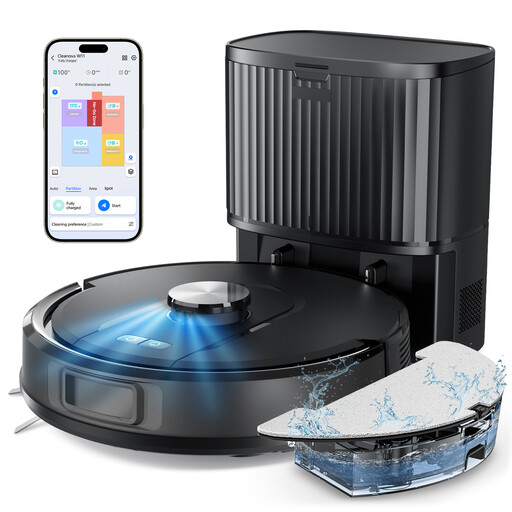 No image available
Consider this model if you want scheduled floor cleaning with a self-emptying station and optional mopping. Its listed features include laser navigation, 8,000 Pa suction and a stated runtime of 180 minutes; check the station’s required space and upkeep for your home.
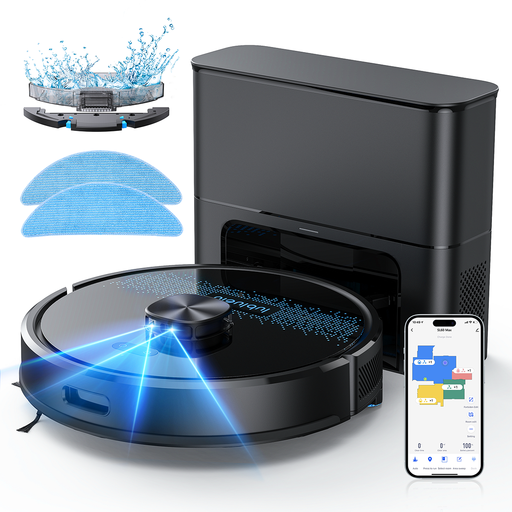 No image available
This is an option to examine if you want a suction station alongside routine vacuuming and a wiping function. The product title specifies laser navigation, app control and 4,000 Pa suction; confirm the station’s clearance and maintenance requirements before choosing it for a tight space.
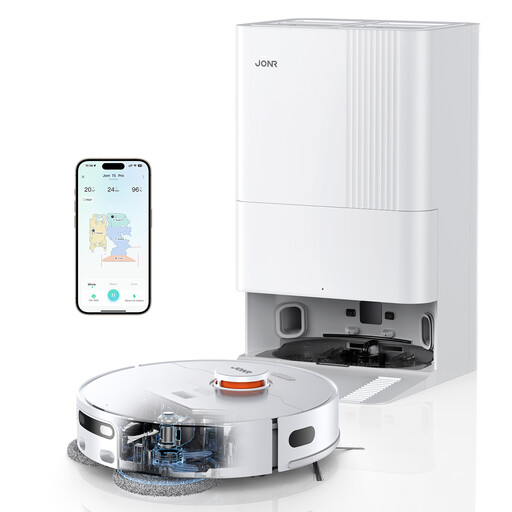 No image available
Consider its vacuum-and-mop format if you will use mopping as well as daily dust pickup. The title lists LiDAR navigation, an anti-tangle side brush, hot-air drying and 8,150 Pa suction; check whether the complete station fits the proposed location and how its mop functions are maintained.
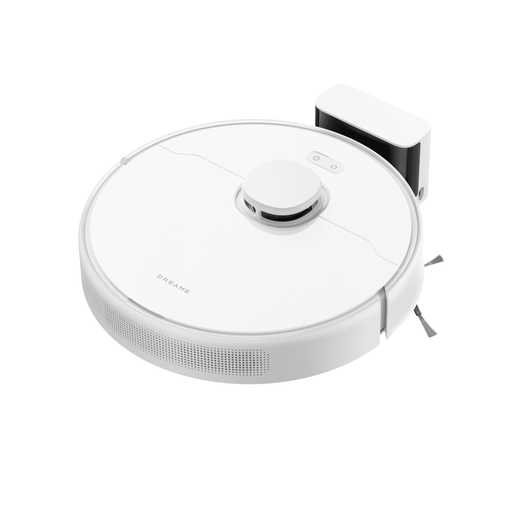 No image available
This model suits consideration if scheduled vacuuming matters and you are comfortable checking and emptying the dustbin yourself. Its title specifies LDS navigation, a 570 ml dustbin, 6,000 Pa suction and a stated runtime of 285 minutes; measure the charging spot and check the instructions for your thresholds.
 No image available
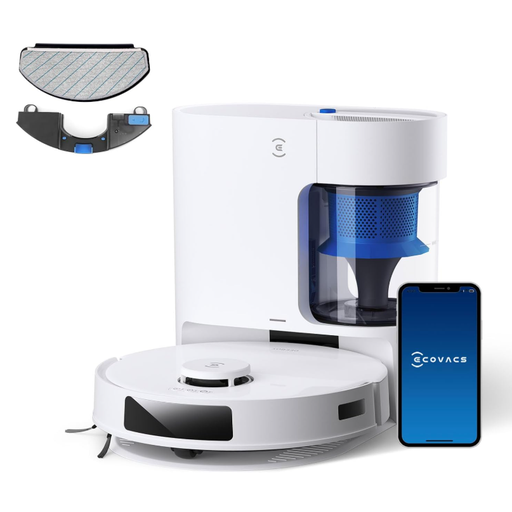
Its vacuum-and-mop format is relevant if you also intend to clean suitable hard floors. The title lists LDS navigation, 8,000 Pa suction and a stated runtime of 300 minutes. Its self-emptying description conflicts with instructions to empty the dustbin after each cycle, so confirm the exact emptying routine before relying on reduced bin handling; the mop should not be used on carpets.
Choose a self-emptying model if reducing manual bin emptying matters enough to justify its docking space. Measure the location first: Roborock’s general guidance calls for at least 0.5 m clear on each side and 1.5 m in front, while your chosen model’s instructions determine its actual requirements.
Not necessarily; choose mopping when you expect to use it on suitable hard floors and are willing to maintain the mop and any associated dock. For example, iRobot lists separate vacuum, mop and combination modes for its Roomba Plus 405 Combo.
Do not assume that it will handle every raised area safely. Check the exact model’s instructions and keep its sensors clean: iRobot says Roomba cliff sensors need cleaning, while Roborock warns against using its Q10 series on unprotected elevated surfaces.
Keep it out of household rubbish and use an appropriate electrical-recycling route. GOV.UK advises separate recycling for electrical products and batteries; check local collection arrangements for a robot whose battery cannot be removed.