
24/7 Customer Support

Free returns

Same-day & Next-day Delivery

Quality Guaranteed

Unlock Your Welcome Offers: FREE Delivery | Up to 80% OFF | Free 30-day JoyPlus trial
Download the APP
Finding the right toy for a young child can feel like navigating a maze. You want something that will capture their attention for more than five minutes, but also something that helps them learn and grow. In a world of screens, encouraging imaginative play is more important than ever. The right role play toys for kids can unlock a world of creativity, helping them develop social skills and understand the world around them.
This guide is designed to help you find engaging and developmental toys. We'll walk you through some key considerations and highlight a few standout options that encourage children to become doctors, builders and entrepreneurs in their own living rooms.
Before diving into specific products, here are a few practical points to consider during your search.
Always check the manufacturer's recommended age range. This is not just about a toy's complexity, but also its safety. For younger children, look for toys free from small parts that could be a choking hazard. In the UK, look for toys that meet EN71 safety standards, which ensures they have been physically and mechanically tested and are free from certain chemicals.
The most successful imaginative play sets are often those that tap into a child's latest fascination. Are they obsessed with construction sites? A ride on digger or construction toys for toddlers could be a perfect fit. Do they love 'caring' for their dolls and stuffed animals? A children's doctor kit can provide hours of nurturing play. Matching the toy to their interests is key to unlocking long-lasting engagement.
Look for toys that invite interaction. This could be through movable parts, realistic sounds, or a variety of accessories that allow for open-ended stories. Kids ride on toys, for example, add a physical dimension to pretend play, while a pretend play food cart with different 'ingredients' allows a child to take on the role of a chef or vendor, encouraging social interaction and basic counting skills.
Here are a few recommendations that balance fun, learning and imaginative potential.
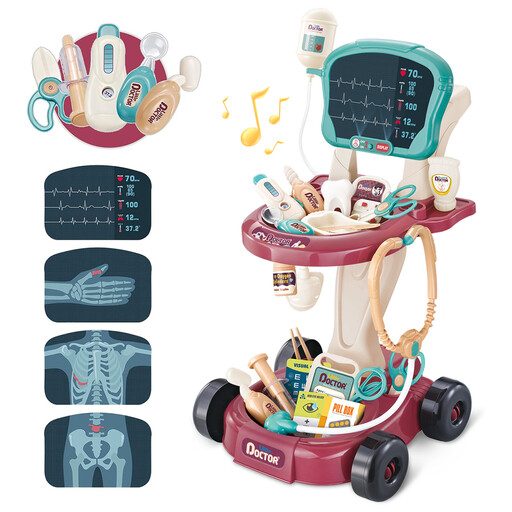
Why It Stands Out This comprehensive set goes beyond a simple bag of plastic tools. The mobile cart and interactive electronic features, like the light-up X-ray screen and stethoscope with sound, create a more immersive play experience. It’s a fantastic way to familiarise children with medical equipment in a positive, playful context, which may help ease anxiety around real-life doctor visits.
Pros:
Who is it for? Ideal for children aged 3 and up who show an interest in caring for others or are curious about what happens at the doctor's surgery.
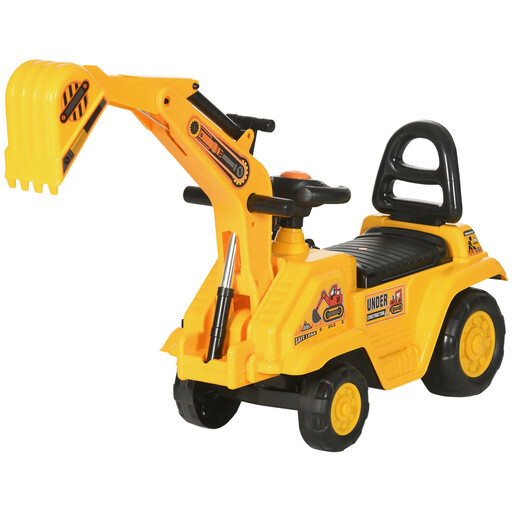
Why It Stands Out This ride on digger combines physical activity with construction-themed imaginative play. It’s a 2-in-1 design, functioning as both a foot-powered ride-on and a pull-along cart. The manually operated front bucket allows children to scoop sand, leaves or other toys, giving them a real sense of accomplishment and control as they take on the role of a construction worker.
Pros:
Who is it for? A great choice for active toddlers from 18 months to 4 years who are fascinated by vehicles and building sites.
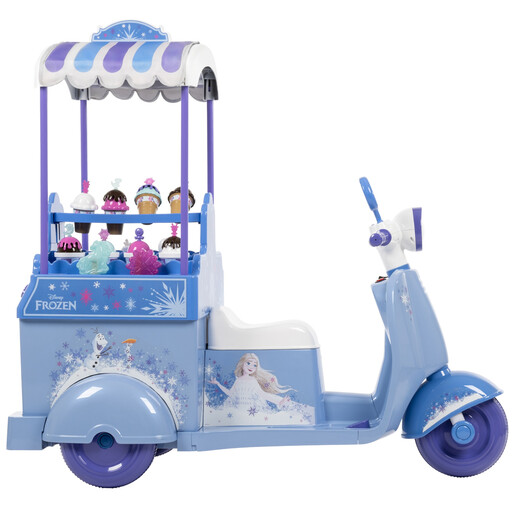
Why It Stands Out This toy cleverly merges three popular play patterns: the magic of Disney's Frozen, the fun of an electric ride on car and the social interaction of a pretend play food cart. The gentle 7.2V motor is easy for young children to control, and the included ice cream accessories immediately set the stage for imaginative scenarios where they can serve treats to friends and family.
Pros:
Who is it for? Perfect for Frozen fans aged 4 and up who would enjoy a gentle ride-on experience combined with creative, social play.
The ride-on toys featured here are just a glimpse of what's available. If your child is drawn to things that go, from push-along walkers to electric cars, there are many options to explore.
For a wider selection of kids ride on toys and other wheeled wonders, you can browse our full Vehicle Trolley category.
Role play toys are instrumental in a child's development. They help nurture social and emotional skills like empathy and cooperation, expand vocabulary as they act out scenarios and encourage problem-solving. Above all, they provide a safe and creative outlet for children to make sense of the world around them.
Simple pretend play, like mimicking feeding a doll, can begin as early as 18 months. More structured imaginative play sets, such as a doctor's kit or kitchen, are often most engaging for children aged 3 and up, as their imagination, language and social skills become more advanced.
Sometimes a child needs a little nudge. You can set up an "invitation to play" by arranging a few toys in an appealing way. Playing alongside them for a few minutes can also help get them started. Ask open-ended questions like, "What are you building today?" or "Where is the ambulance going?" to spark their creativity without directing their play.